Published on 6/19/2026
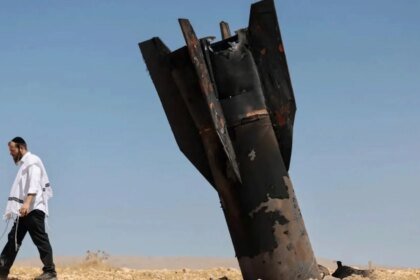
The war launched by America and Israel against Iran, and the subsequent negotiations that led to a memorandum of understanding, are considered a turning point in the history of the Islamic Republic, as questions are raised about the future of the political system and its relationship with its society in the post-conflict stage.
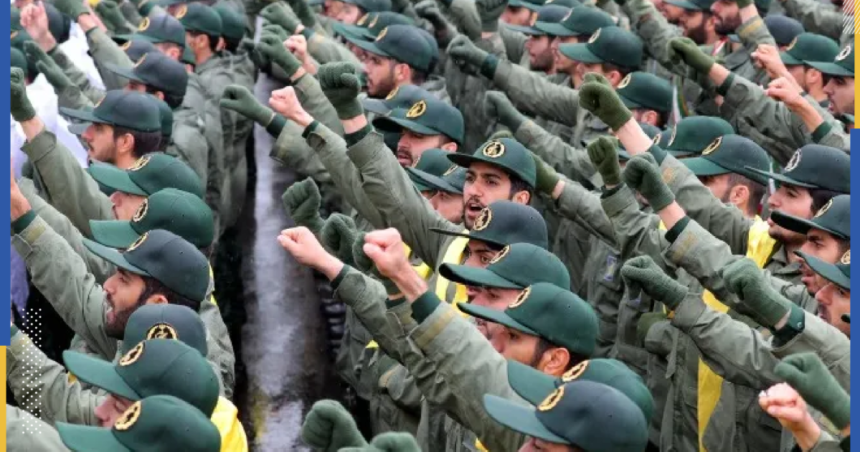
The episode (6/19/2026) of the “Scenarios” program discussed with its guests a number of questions about the profound changes in the internal structure of the regime, the extent of its ability to respond to rising social and economic demands, and the possibility of the Revolutionary Guard becoming a declared partner in governance.
In this context, journalist and Iranian affairs specialist Abdul Qader Fayez says that the most prominent challenge facing the regime is the success of the memorandum of understanding and controlling Iran’s behavior regionally and internationally to prevent a return to war, noting that the war has produced a new form of the regime in which the voice of the military prevails over the voice of the politicians, which requires restoring balance to its basic rules.
Fayez adds that the war deleted historical figures in the regime, which imposes a challenge in producing new leaders, especially with the new guide, Mojtaba Khamenei, who seeks to create his own legacy outside of his father’s mantle, and this requires harmony between the regime’s institutions to deal with internal problems.
On the other hand, researcher Roozbeh Parsi believes that the Iranian regime is based on overlapping circles, and that the president is used as a buffer layer to protect the leader from political consequences, pointing out that the negotiators around the memorandum of understanding are not reformists, but conservatives, which confirms that the agreement is a response to an existential threat and not a reformist agenda.
The relationship of power to society
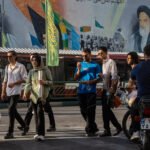
As for the senior advisor to the Al-Sharq Center for Studies, Mashallah, Shams Al-Wazeen, it is likely that the relationship between political authority and the social base will be dialectical, as the Revolutionary Guard considers itself victorious in both wars, which gives it an advantage, but the strong and educated civil society in Iran (24-25 million graduates) is pressing for structural reforms.
Shams Al-Wazeen says that the new guide faces two main challenges: making the negotiations in Geneva successful, and dealing with the increasing social demands, pointing to signs of noticeable openness in the streets of Iran, especially around the “hijab” issue, which was decided in the interest of society, he says.
Regarding the economy, Fayez believes that the frozen funds alone are not sufficient to save the economy, but rather what is required is to link Iran to the regional and global economy through foreign investment that may reach two trillion dollars, which requires the state to abandon part of the literature of the revolution in favor of the state.
Parsi agrees on the importance of structural reforms, warning that temporary pragmatism will not suffice, and that society no longer trusts the state due to its retreat from its previous commitments, stressing the necessity of permanent institutional and legal reforms, especially in combating corruption and the lack of transparency that hinders foreign investment, even if sanctions are lifted.
Fayez says that Iranian society places the economy at its top priority, and that improving the economic situation may push society to give up a little on social demands, but the crushing economic suffering makes accepting social restrictions impossible.
He adds that Iran is facing a defining moment: either it chooses the path of an economically open state, or it remains captive to the literature of the revolution, indicating that Iranian society, which enjoys enormous human resources, is capable of economic advancement if political will and international openness are present.
As for Shams Al-Waideen, he emphasizes that economic development and political development must go hand in hand, because any economic development will change the way of thinking and create new classes in society demanding their place in decision-making, considering that structural reforms are no longer an option, but rather a necessity faced by the new guide.