Published on 6/18/2026
Bethlehem- The occupation authorities released the youngest Palestinian administrative detainee after a 16-month detention, without an indictment or trial.
The occupation forces arrested the child Muin Salahat from his town of Beit Fajjar, near the city of Bethlehem in the southern West Bank, after storming his home in February 2025. He was taken in handcuffs to the prisons where he was absent without any visits to his family, with the scarcity of news coming from them in light of the ban on visits by family and lawyers.
Read also
list of 2 itemsend of list
Administrative detention is carried out by order issued by the Israeli military commander of the West Bank region against the detainee, and it usually lasts for several months, which can be extended for additional months, without the detainee being presented with an indictment or subjected to trial.
Prison, torment and fear
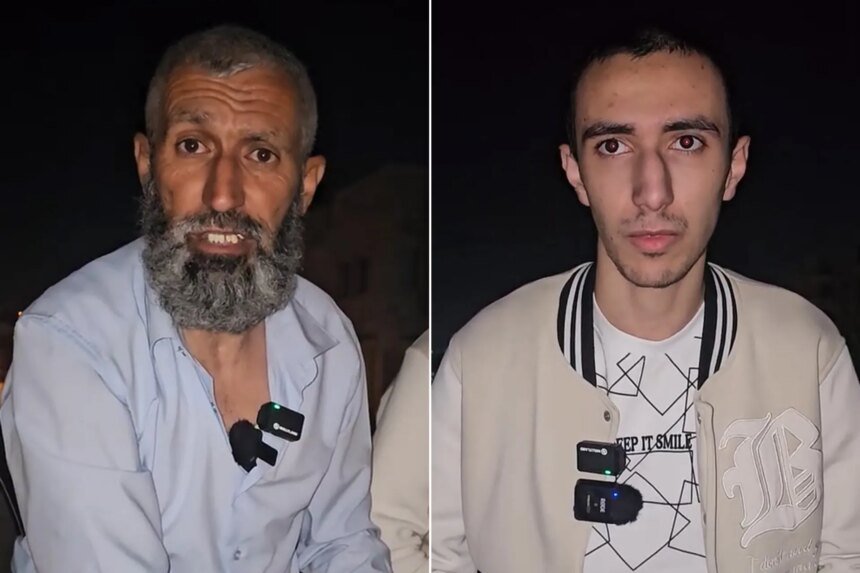
Moin (16 years old) says that his feeling of freedom is indescribable, especially since the Israeli prison authorities’ torture procedures against him continued until the last moments before his release.
He added in his interview with Al Jazeera: “They treated me like any other prisoner. There is no difference between old and young in beatings and other things. They beat everyone.” He pointed out that prisoners suffer from bad conditions inside prisons, and that diseases spread amid a lack of treatment.
Salahat described the moment he met his family, saying: “I waited 16 months to see my father, mother, and family. The situation has changed for me a lot.”
Moeen’s testimony about the severity and cruelty of prison was enough to reveal the truth of the suffering that his father, Ghassan Salahat, experienced throughout the absence of news of his son, especially in light of the systematic oppression and deprivation that the prisoners face in everything.

Fear and anxiety
Ghassan told Al Jazeera, while he was receiving well-wishers for his son’s release, that detention is more difficult for the family than for the prisoner himself. “We have tasted bitterness in food, drink, and occasions, and we have not prepared some of the foods that Moin used to love.”
The fear of the father, Ghassan, and the family for the captive child increased with each extension of his administrative detention, which was extended three times. “With each time, we lost the taste of sleep and everything. Fear for him constantly filled my heart.”
He added that they remained in this situation until the lawyer contacted them and told them that a fundamental decision (determining the period for the end of captivity) had been issued against Moin, and that the date of his release would be June 15, 2026. “Then the two testimonies were pronounced, and the joy was doubled, and the holiday was far away; it was Moin’s freedom day and my birthday, and people began offering congratulations to both me and him.”

480 days…calculation in seconds
For the father, Ghassan, the period of his son’s detention is not only 16 months, but 480 days and 69 weeks, calculated in days, hours and seconds. Moeen did not accompany his father to Friday prayers as usual.
Regarding the moment of release and the occupation authorities’ distress to the families of the prisoners, Ghassan explained that he and the family went to Salem prison camp in the north of the West Bank, where Moeen was released, traveling dozens of kilometers, instead of releasing him at the Al-Dhahiriya crossing in the south, because it is closer to that area.
The family kept waiting for the moment of relief from the morning until the evening, when he was released He ran to him.
According to the statistics of the Palestinian Prisoners’ Club (semi-governmental), the number of Palestinian prisoners and detainees in the occupation prisons reached about 9,500 prisoners and detainees, including 3,324 male detainees, about 95 female prisoners, and approximately 360 children, in addition to 1,316 detainees classified by the occupation authorities as “unlawful combatants.”