Al Jazeera correspondents
Khartoum – The priorities of the construction sector in Khartoum have moved from urban expansion projects to reconstruction efforts and repairing the damage left by the war.
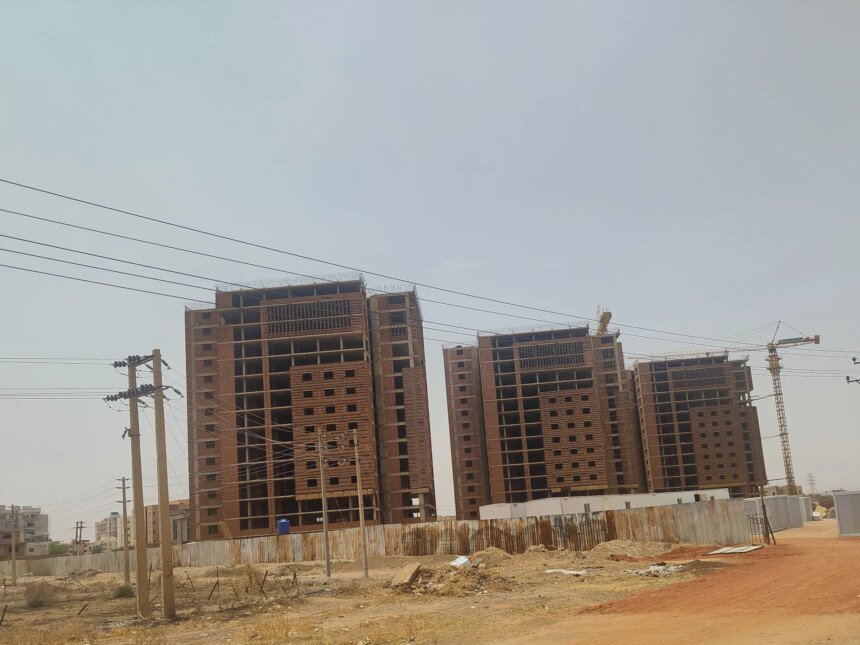
In the most affected areas, construction efforts begin from scratch, while in other areas they are limited to restoration and rehabilitation of cracked facades and buildings, in addition to completing some projects that were halted as a result of military operations.
Read also
list of 3 itemsend of list
A senior official in the Ministry of Urban Planning in Khartoum State, who preferred to remain anonymous, revealed to Al Jazeera Net preliminary indicators of the latest survey conducted by the ministry to assess the repercussions of the war on the construction sector and residential and commercial buildings.
The official said that the construction sector was the most affected by the war, adding that major construction projects and residential complexes declined sharply, and were limited to emergency and limited maintenance projects supervised by the ministry in coordination with local authorities, after their number had reached 1,200 projects under implementation before the war.
He added that the Ministry conducted field visits to a group of towers and buildings to assess the damage and direct citizens and building owners on the necessity of returning to the Ministry before starting maintenance operations. He stressed that the technical survey documented the damage and destruction of thousands of residential and commercial units worth billions of dollars.
Official estimates, according to the official, indicate that the sector has lost more than 70% of its workforce, after it was one of the largest sectors absorbing workers before the war.
The construction sector leads the losses
Sudanese Attorney General Intisar Ahmed Abdel-Al presented before the United Nations Human Rights Council official estimates of the size of the economic losses resulting from the war, stressing that the destruction of the country’s infrastructure caused the economy initial losses estimated at about 771 billion dollars.
She explained that the systematic targeting included roads, bridges, and public and private facilities, which led to an almost complete collapse of basic services.
She stressed that rebuilding Khartoum will not be just an engineering process, but rather a social and economic project that requires broad international support to ensure the return of normal life to the capital.
In the context of searching for the fate of the construction projects that were halted as a result of the war, Adam Abdel Rahim Aseel, owner of the Asteco Engineering Company, narrates how the war stopped one of the largest projects that the company was managing. Before the war, Aseel was supervising the project to rehabilitate and develop the National Museum with funding from UNESCO.

Losses and waiting
Aseel said in an interview with Al Jazeera Net that the war imposed a forced and sudden halt to modernization operations that were proceeding according to specific timetables, stressing that the current crisis facing the sector now poses complex challenges that go beyond securing building materials and supply chains.
He pointed out that projects to rebuild the damaged basic and service infrastructure will remain suspended unless huge financing packages flow, adding that the cessation of huge projects has left them stuck between accumulated financial losses that have burdened companies, and waiting for comprehensive political and security stability that reformulates investment guarantees.
In the Wad Nubawi neighborhood in the city of Omdurman, citizen Mamoun Hassan returned to his home after months of displacement, only to find that the house he had built with his efforts over many years had turned into ruins.
Maamoun explained in his interview with Al Jazeera Net that the prices of cement and iron had doubled several times compared to what they were before the war, bringing the price of a ton of cement to about 960 thousand Sudanese pounds (about 250 dollars), while the costs of contracts with engineering companies increased. He believed that returning to his home would end his suffering with displacement, but he found himself facing a new challenge represented by the cost of rebuilding.

Signs of recovery
At the exhibition grounds in Khartoum, the International Exhibition for Infrastructure and Construction constituted an exceptional event after the cessation of the war, as more than fifty companies and institutions in the fields of construction, energy and buildings participated in the International Exhibition for Infrastructure and Construction.
The organizer of the exhibition, Osama Ali Abdel Majeed, confirmed that the event represents an opportunity for companies and institutions to be a starting point towards huge projects to rebuild what was destroyed, and he believes that the exhibition carries a clear message that the capital has begun to regain its health and is preparing for a new phase of reconstruction.
The exhibition gains doubly important as it is the first of its kind after the war, which makes it an indicator of the return of economic and urban activity to Khartoum. Abdel Majeed said in his interview with Al Jazeera Net that holding these events is not limited to presenting projects only, but also shows a political and social will to restore life to normal, and confirms the readiness of national and international institutions to participate in rebuilding.
The exhibition is also seen as a platform for exchanging experiences between local and international companies, and an opportunity to sign new partnerships, in addition to being a symbolic step that reflects the beginning of a new phase of investment in the Sudanese capital.