Published on 6/17/2026
Solid-state battery technology has emerged as a suitable solution to the battery crisis that the world is experiencing, as the technology and devices that rely on batteries have developed significantly and batteries have not caught up with them and have remained trapped in ancient technologies that were used in previous years.
Companies promoted solid-state batteries as a solution to all the problems found in traditional lithium-ion batteries, from greater energy storage to higher charging speeds, which made many electric car enthusiasts view them as the turning point for enhancing the capabilities of electric cars and turning them into a product that competes with traditional cars in range and charging speed.
Therefore, many fans of electric cars are waiting for companies to start offering solid-state batteries, but a report by the American “Digital Trends” news site revealed a crisis that hinders the process of solid-state batteries, which face a major challenge in leaving the laboratories and transforming into a technology that can be relied upon on a daily basis, indicating that this technology will not become available to the public until the end of the current decade.
Why postpone the dream?
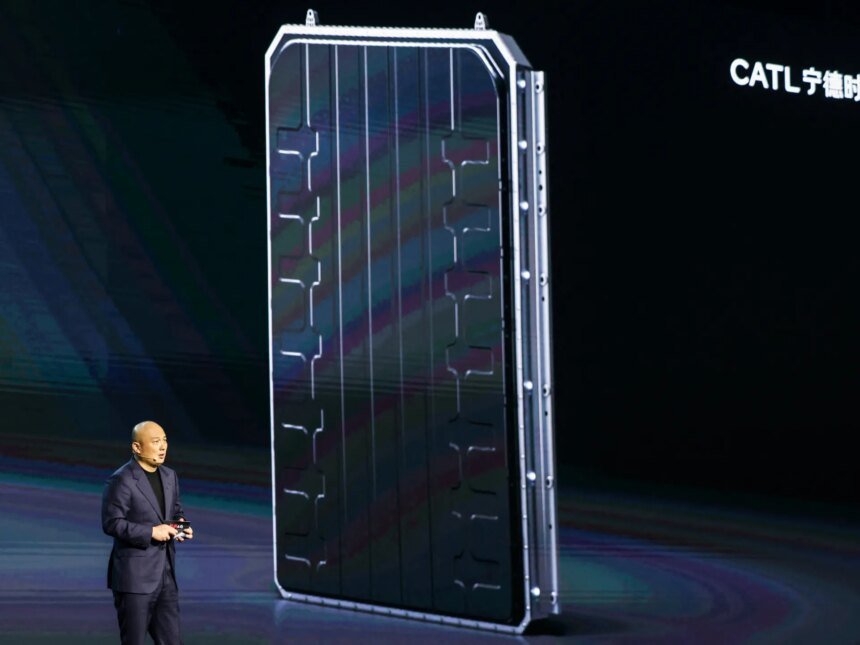
CATL Chairman Robin Zheng, the world’s leading electric vehicle battery manufacturer, has made it clear that large-scale solid-state battery manufacturing will not be available before 2030, after setting the threshold of one million electric vehicles as the production volume required to justify expansion of solid-state battery manufacturing.
Zeng added that even when the technology becomes available for general manufacturing, its prices will exceed $37,000, making it limited to luxury and flagship cars.

This is because solid-state batteries are difficult to manufacture. Catel currently uses equal atmospheric pressure at 6,000 atm to bond components together inside a battery, but materials with different densities tend to develop structural imbalances under this pressure.
These imbalances increase internal resistance and accelerate cell degradation, making solid-state batteries currently impractical.
Zeng pointed out that the current chemical development in the process of manufacturing complete solid-state batteries stands at point four out of nine points, which means that the technology is still in the laboratory verification stage, according to “Digital Trends.”
A realistic alternative to semi-solid batteries
On the other hand, a report by the American technical website “The Verge” states that companies are now working on developing another type of solid-state batteries, which are hybrid batteries that combine liquid materials and a solid state in what is known as semi-solid batteries.
The report describes semi-solid batteries as a bridge to the future thanks to their gel-like composition and offering the advantages of both, as they carry much less risk of thermal runaway that traditional lithium batteries exhibit.
Some American companies have already begun to rely on semi-solid-state batteries, such as Ride1UP, which introduced an electric bicycle that uses this technology.