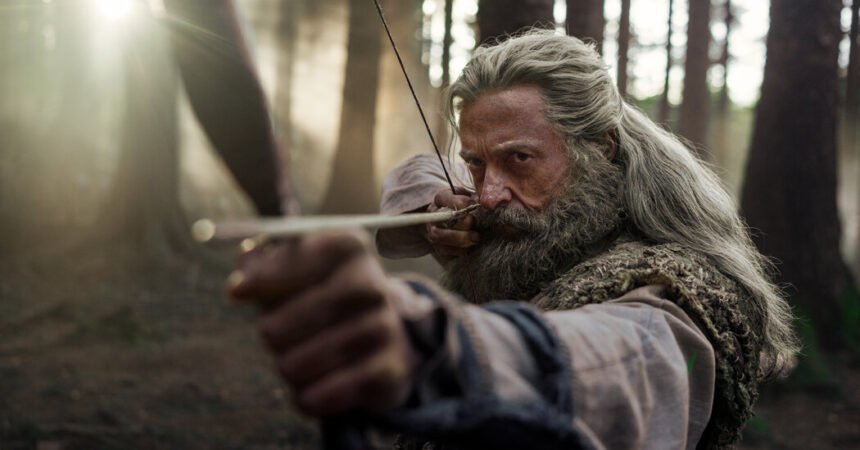
The contrast between Robin Hood’s former life and life in the convent is remarkable, almost night and day. There are elements of “The Death of Robin Hood,” which is set in the 13th century, that plead for comparison with the medieval films of Robert Eggers, including the use of language. People die in horrific ways, their heads bashed against rocks or jaws torn open; Sarnoski shoots the first section of the film in bleak colors, either washed-out day or inky black night.
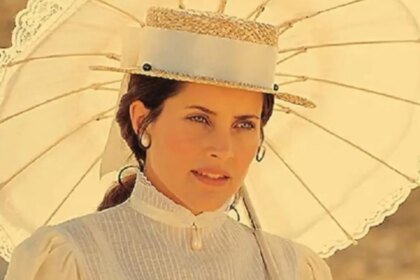
But once Robin is on Brigid’s territory, things shift. This is serenity, all gardens and candles and light. He has been yearning for death, aware that if the legend of the good thief is a lie, he might be living out another kind of story — the tormented wanderer who can’t seem to shake off this mortal coil, haunted by himself. In her, he sees brightness and life.
There are others in the convent, including a horde of children; Sister Brigid opens her gate to all who need help. That includes a leper (Murray Bartlett), who is wrapped in bandages and befriends Robin; Little John’s small daughter, Margaret (Faith Delaney), whom Robin gruffly grows fond of; and eventually, a relative of Little John (Noah Jupe) who might be seeking revenge.
Sarnoski is a remarkably sensory filmmaker; both “Pig” and “A Quiet Place: Day One” made particular use of scenes in which characters have memorable meals in order to communicate wordless emotional truths, and he does the same here. But he extends into more elemental ingredients here, too: light, fire, dirt, salty air, drops of blood that Brigid lets out of Robin’s arm, trying to heal him.
“The Death of Robin Hood” is a movie I liked thinking about more than I enjoyed watching, which is not precisely a slight against either it or its cast, who are especially good. The brutality of the first act wears out its welcome, but then the back half of the film stretches onward without a great deal of forward motion, either; at its best it feels meditative, but sometimes it seems almost to have hit pause. That rhythm does, at least, seem purposeful; it is the sort of film to which you want to apply the word “visionary,” which is to say that it’s clear the filmmaker had a vision and stuck to it admirably. Nothing in the movie is easy or comforting. Little about it even feels like a gesture toward those enamored of other Robin Hood tales.