Published on 6/17/2026
|
Last update: 6/18/2026 11:20 (Mecca time)
An Iranian Foreign Ministry spokesman said that the United States and Iran electronically signed a memorandum of understanding to end the war, paving the way for the second phase of negotiations within 60 days with the aim of reaching a final agreement.
The Iranian News Agency reported that the Iranian and American presidents signed the memorandum of understanding electronically remotely, with a short time interval between the two signatures.
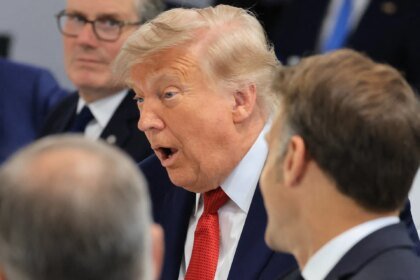
The American Axios website correspondent stated that President Donald Trump personally signed a copy of the agreement during a dinner with French President Emmanuel Macron at the Palace of Versailles, and a photo of the signed agreement was sent to the Iranians and the mediating countries. The correspondent added – quoting American officials – that the memorandum had entered into force.
CNN quoted American officials as saying that “Trump and his deputy, J.D. Vance, had previously signed electronically the memorandum of understanding with Iran, while Trump signed a paper copy of it on Wednesday evening.”
The French President tweeted: “This evening in Versailles, President Trump signed the agreement between Iran and the United States. This agreement opens the way to lasting peace, and allows the reopening of the Strait of Hormuz. It is an important step in the right direction for our citizens, and will soon enable the reduction of energy prices.”
Qalibaf: “The memorandum is a defeat for the Americans”
In the first reactions, Iran’s chief negotiator and head of the Shura Council (parliament), Mohammad Bagher Qalibaf, said that the memorandum of understanding – which was signed three months after the war – is a “defeat for the United States.”
Qalibaf said – in a statement to Iranian state television on Wednesday/Thursday night, shortly after the two parties published the text of the memorandum – that “this agreement is a defeat for the United States. People will see it and judge for themselves.”
A diplomatic source told Axios that accelerating the timetable aims to open the Strait of Hormuz before tomorrow, Friday, given the agreement of both parties on this issue, while the Israeli Channel 12 indicated political pressure on the American administration to publish the text of the memorandum.
US President Trump acknowledged – during his statements – that the negotiations had been beset by difficulties during the past two days, noting that his administration had informed the Iranians that it would return to bombing them a second night if an agreement was not reached.

Pakistan celebrates the fruits of mediation
Pakistani Prime Minister Shahbaz Sharif – whose country led mediation efforts between Iran and the United States – said that the signing of the agreement at the highest levels of government demonstrates the commitment of both parties to reaching a diplomatic solution to the conflict, noting that the memorandum of understanding will enter into force with immediate effect.
This means – according to Shahbaz – that Iran will, as a first step, immediately reopen the Strait of Hormuz, while the United States of America will lift the naval blockade immediately afterward.
In his statements, the Pakistani Prime Minister praised the commitment of President Donald Trump and his negotiating team to diplomacy, and his preference for peaceful solutions to a conflict that could have led to serious consequences for the region and beyond, as he put it.
Shahbaz also praised Supreme Leader Ayatollah Mojtaba Khamenei and President Masoud Pezeshkian “for the wisdom, farsightedness and high sense of leadership they have shown in adopting the cause of peace,” according to his statements.
When announcing the agreement, the Pakistani Prime Minister also praised the efforts of the State of Qatar, Turkey, Saudi Arabia, Egypt, and the efforts of the Pakistani Army Commander, Field Marshal Asim Munir, in reaching the signing of the memorandum of understanding.

Stop the war in Lebanon
According to the Iranian Foreign Ministry spokesman, the memorandum of understanding stipulates respect for Lebanon’s territorial integrity and sovereignty. For his part, Iranian Parliament Speaker Qalibaf stressed – in his statements – the priority of adhering to the first clause of the memorandum, which stipulates ending the war on all fronts, including Lebanon.
Qalibaf said that Iran and the United States will work to reach a final agreement within 60 days, provided that the agreement is approved by the Security Council, as stipulated in Article 14 of the memorandum.
However, Qalibaf stated – in his statements – that “even if a final agreement is reached and ratified by the Security Council, it remains untrustworthy, and our guarantee (for its implementation) is our strength,” noting that the difference between the current and previous negotiations lies in “Iran’s victory in the last war.”
Nuclear power and sanctions relief
Meanwhile, American officials revealed the details of the terms of the memorandum of understanding that was signed between Tehran and Washington, noting that it consists of 14 clauses, according to what was published by the Associated Press.
Among the contents of the memorandum is a pledge from America, Iran and their allies not to launch any military action from now on. It also includes a mutual pledge between Washington and Tehran to respect each other’s sovereignty and not to interfere in the internal affairs of the other party, according to the American official, whose name was not revealed.

According to what the Associated Press reported, citing American officials, the most prominent contents of the agreement can be summarized in the following points:
- The nuclear file: Establishing a new “minimum” standard for diluting Iran’s highly enriched uranium stock.
- Lebanon Front: Inserting provisions guaranteeing the sovereignty of the Lebanese state over its lands, after the ongoing Israeli attacks on southern Lebanon.
- Reducing penaltiesThe United States pledges to take steps toward freezing – but not canceling – some of the wide-ranging sanctions imposed on Tehran, once the agreement enters into force.
- Freedom of sea navigationThe draft guarantees the flow of maritime navigation through the Strait of Hormuz without imposing any Iranian fees for a period of 60 days, while reserving the right to impose fees at a later time.
- Frozen Iranian fundsA senior American official said that Washington pledges to make full use of Iran’s frozen funds and assets upon implementing the terms of the memorandum.
In a related context, the newspaper “Israel Hayom” quoted sources as saying that Israel wants to accelerate contact with Lebanon and conclude an agreement with the Lebanese government before signing the agreement between Washington and Tehran.
According to the Israeli newspaper, Tel Aviv believes that concluding an agreement with Lebanon would remove from the negotiating table the condition set by Iran requiring Israel’s withdrawal from Lebanon.