Published on 6/16/2026
|
Last update: 18:45 (Mecca time)
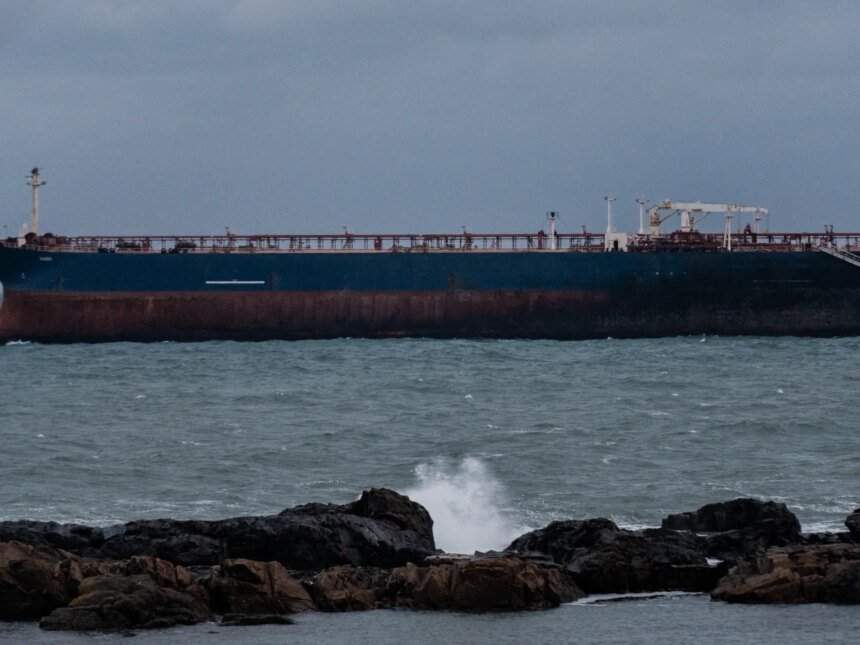
Russia’s exports of crude oil by sea have risen to a near-record pace, as Ukraine continues to target Russian refineries, pushing more barrels to the global market despite the decline in production, according to tanker traffic data collected by Bloomberg.
The average Russian crude shipments during the 4 weeks until June 14 reached 3.83 million barrels per day, unchanged from the previous week, which is the highest level since the beginning of the year, while the average flows since the beginning of 2026 reached 3.49 million barrels per day, exceeding the annual averages for every year since the start of the Russian war on Ukraine in February 2022.
Read also
list of 2 itemsend of list
The increase in exports came as Ukraine continued to strike Russian refining facilities, as last week it targeted two refineries in the Tatarstan region, more than 800 kilometers east of Moscow, before targeting the Moscow refinery overnight, according to Bloomberg.
The agency said that since the beginning of June, Ukraine has struck at least 6 Russian refineries, after record attacks last May, which may divert quantities of crude that the refineries cannot process to export markets.

Double pressures
Data from the Organization of the Petroleum Exporting Countries (OPEC) showed that Russia’s crude oil production alone fell in May to the lowest level in a year, recording 9.01 million barrels per day, that is, about 690 thousand barrels per day less than its production target within the OPEC Plus agreement.
This reflects a paradox in the Russian oil market, as domestic processing capacity declines due to Ukrainian strikes, while sea shipments remain high as unrefined crude is diverted abroad, especially to Asian buyers.
36 tankers loaded 26.72 million barrels of Russian crude in the week ending June 14, compared to 27.24 million barrels on 37 tankers the previous week, and the weekly daily average of shipments fell to 3.82 million barrels from 3.89 million barrels.
The total value of Russian crude exports declined on a 4-week average basis to $2.18 billion weekly until June 14, compared to $2.28 billion in the previous period, due to the decline in Urals crude prices with the decline in global oil prices.
According to Argus Media figures quoted by Bloomberg, the price of Urals crude loaded from Baltic ports fell by about $4.10 to $78.11 per barrel, Black Sea crude fell by $3.90 to $77.26, while Espoo crude in the Pacific Ocean fell by $4.30 to $87.30 per barrel.
Asia and alternative market
Asia remained the main destination for Russian oil, as tracked shipments to Asian customers, including tankers whose final destination was not shown, reached 3.63 million barrels per day in the four weeks to June 14, the highest level since the start of the war.
Announced Russian shipments to China declined to 1.16 million barrels per day, and shipments to India decreased to 860,000 barrels per day, but Bloomberg indicated that there are the equivalent of 1.6 million barrels per day on tankers whose final destination has not yet been announced, which may later reflect part of these quantities heading to China or India.
Moscow benefited from the turmoil in energy markets after Iran closed the Strait of Hormuz in response to the American and Israeli attacks at the end of last February, as this led to the disruption of about 15 million barrels per day of crude flows from the Arabian Gulf, before prices fell with the announcement of an interim agreement between Washington and Tehran to reopen the strait.