Published on 6/16/2026
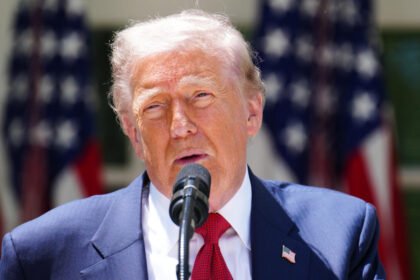
The agreement to reopen the Strait of Hormuz raised immediate hopes of relief from the global energy crisis, with US President Donald Trump confirming that the flow of oil would resume from both sides, but complex field data indicate that restoring normal navigation may be much further away than that.
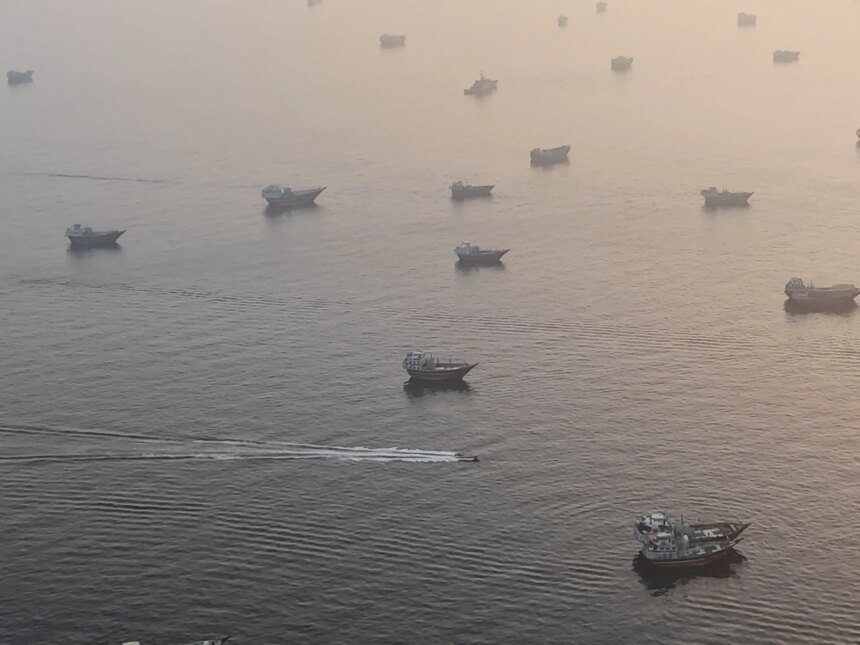
The most pressing threat remains the possibility of planting sea mines in one of the most vital corridors for global trade. However, dozens of ships crossed the strait during the war without any incidents recorded, which raises questions about the extent of the spread of these mines, the speed of their discovery, and how to neutralize them.
American intelligence estimates indicate that Iran has an arsenal of up to 5,000 marine mines, ranging from primitive floating models to advanced bottom-based mines that are guided through multiple sensor systems, which complicates detection and removal operations.
The New York Times reported that the US Navy is preparing to carry out large-scale sweeping operations, including the air, surface and depths of water, in search of any potential mines that may have been planted in the vital corridor.
The American strategy increasingly relies on drones as an essential tool in combating mines, as they provide advanced capabilities to monitor targets and determine their locations without exposing manned ships to direct dangers.

Technical complications
In this context, the US Navy replaced most of the traditional Avenger-class minesweepers with steel-hulled coastal combat ships that remain outside suspected mined areas, and instead sent helicopters and specialized drones for combing and detection.
However, this approach, despite its development, does not eliminate technical complications, as expert estimates indicate that modern mines have become more sophisticated and capable of concealment, including models that lie at the bottom of the sea and operate with multiple sensor systems, or possess delayed detonation mechanisms, which makes the process of discovering and neutralizing them an arduous process that lasts a long time.
“It’s as tedious as it sounds,” said Rand Corporation chief engineer and professor Scott Savitz, who previously served in the Navy’s Mine Warfare Command. “If the mines are sitting on the bottom of the sea, you have to distinguish them from rocky outcroppings, debris in crowded waterways, and waste that has been dumped into the sea over decades or centuries.”
Savitz added that some of these mines have “ship counters” that can be set to explode after a specific number of ships pass near them, which can cause great destruction to naval convoys. Some of them can also detect the sound of mine-sweeping equipment surrounding them, so they slide deeper under the water to avoid cutting the chains that connect them to the sea floor.
To deal with mines, the US Navy uses underwater drones that use a side-scan sonar emitter to map the sea floor to locate any mines. If this is not possible, the matter becomes a direct and personal confrontation, as bomb disposal technicians, using special equipment to reduce noise, bubbles, and even the magnetic fingerprint, dive to the suspected mine, which is one of the most dangerous scenarios, but his idea is that it is better to lose one sailor instead of two if the mine explodes.

Restore trust
In parallel with the military challenges, operational and economic constraints emerge. The Financial Times newspaper quoted the head of the largest oil tanker operating company in the world as saying that shipowners will not resume transit through the strait for at least weeks, until it is confirmed that the US-Iranian agreement has become a tangible reality on the ground, and not just a political declaration.
Mitsui OSK Lines CEO Jotaro Tamura confirmed that shipping companies will adopt a cautious approach, based on previous experiences that showed the fragility of attempts to reopen the corridor.
The International Maritime Organization also warned of the continuing dangers, stressing that it is working to evaluate the possibility of safely resuming navigation, in parallel with efforts to establish safe corridors to evacuate hundreds of sailors who have been stranded in the Gulf for more than 100 days.
This delay is gaining global dimensions, given the strategic importance of the Strait of Hormuz, through which about a fifth of global energy supplies pass, in addition to shipments of gas, grains, and basic commodities. Therefore, any hasty return without adequate security guarantees may expose international trade to serious risks.
The data confirms that opening the strait will remain subject to precise and time-consuming clearance operations, requiring broad international coordination between maritime powers, shipping companies, and insurance bodies. The removal of sea mines will also remain the most urgent factor in delaying the restoration of confidence, making the return of full navigation to the Strait of Hormuz a matter of time, and it may take weeks before one of the most important energy arteries in the world regains its normal operation.