Published on 6/15/2026
Despite the United States and Iran announcing that they had reached a preliminary agreement to reopen the Strait of Hormuz and end the war between them, international shipping companies expressed caution about resuming normal shipping traffic, stressing that restoring confidence in the sea lane may take additional weeks.
The maritime transport companies welcomed the agreement, which is expected to culminate in the signing of a memorandum of understanding between the two sides in the coming days, but stressed that the full return of operations depends on ensuring the safety of navigation and removing the remaining risks in the region, including reports related to the presence of sea mines.
Read also
list of 3 itemsend of list
Reuters quoted sources in the field of shipping and maritime security that ensuring that the Strait of Hormuz is free of mines may delay the return of shipping traffic to normal for weeks after reaching an agreement ending the war in the Middle East. Maritime security sources told the same agency that the process of removing mines from the Strait may take a period ranging between 40 and 50 days before many insurance, shipping or oil companies feel confident enough to sail through the region.
Normalization pricing
Analysts at Sentosa Ship Brokers said that the markets have already begun pricing in the return of conditions to normal, but shipowners and charterers will remain cautious until ensuring that the movement of ships through the strait is regular and safe.
Global oil prices fell by about 4% after the agreement was announced at dawn on Monday, indicating market expectations of a decline in the risks that threatened one of the world’s most important maritime energy lanes.
The Strait of Hormuz, through which about 20% of global oil and liquefied natural gas supplies pass, has witnessed widespread disturbances since the outbreak of the American-Israeli war on Iran in late February, which led to a decline in navigation traffic and the disruption of a large number of ships.
Ship tracking data showed that the natural gas tanker “Disha”, affiliated with the Indian company “Petronet”, was the only ship that crossed the strait on Monday, after it had been stuck west of the sea lane since the beginning of last March.
Data from Kpler, a company specializing in commercial navigation data, also revealed that there were about 155 oil and chemical tankers in the Gulf region as of mid-June, compared to 201 tankers at the end of last May, while Oil Brokerage estimated the number at about 215 tankers.
Anoop Singh, head of global shipping research at Oil Brokerage, said that freedom of navigation will gradually improve over the coming weeks, but he expected that shipping costs and commercial activity would continue to rise until the sector regains full confidence.
Ships stuck
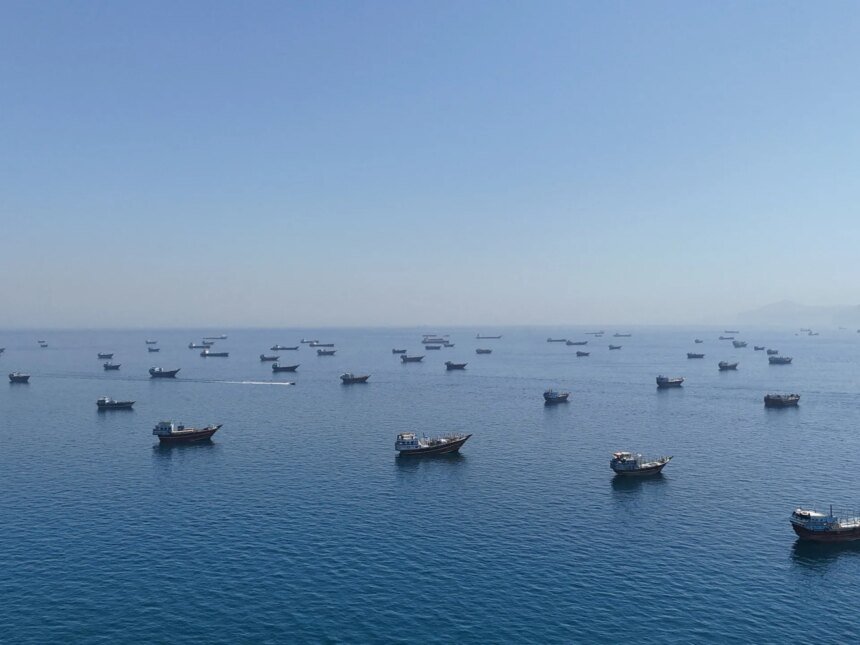
Kpler data shows that about 483 commercial ships were actually stuck inside the Gulf region, including about 220 oil tankers, as a result of the unrest that lasted for more than three months.
Analysts estimate that it may take between four and eight weeks for all the stopped ships to exit and restore the flow of commercial traffic, even if security conditions continue to improve and the pace of transit through the strait increases.
Security concerns
The Japan Shipowners Association said it prefers to wait for more information before resuming normal operations, noting that news of the agreement alone is not enough to make operational decisions in light of continuing security concerns.
Nippon Yusen, the largest Japanese shipping company, also confirmed that it hopes that conditions will return to normal soon, but it considered it too early to determine the schedules of ships stuck in the Gulf.
The possibility of the presence of sea mines remains one of the most prominent concerns troubling international shipping companies, as experts believe that removing mines and identifying safe shipping lanes represents a basic condition for restoring normal transit traffic and returning traffic levels to what they were before the war.
Maersk is waiting
In the same context, the Danish company “Maersk”, one of the largest maritime shipping companies in the world, welcomed the framework agreement between Tehran and Washington, but the company clarified that it is too early to evaluate its repercussions on the maritime transport and logistics sector.
Maersk said in a statement that its operations in the Middle East have not witnessed any changes yet, stressing that the details available regarding the agreement are still limited, while it continues to monitor developments before making any new operational decisions.