Published on 6/15/2026
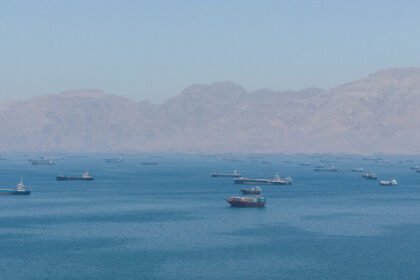
While Europe and the Arab Gulf states are working to implement the peace agreement between the United States and Iran, they are at the same time trying to find alternatives to reduce dependence on the Strait of Hormuz, the closure of which has caused great damage to the economies of these countries.
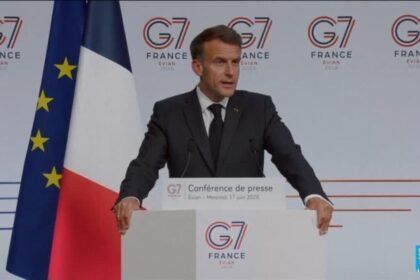
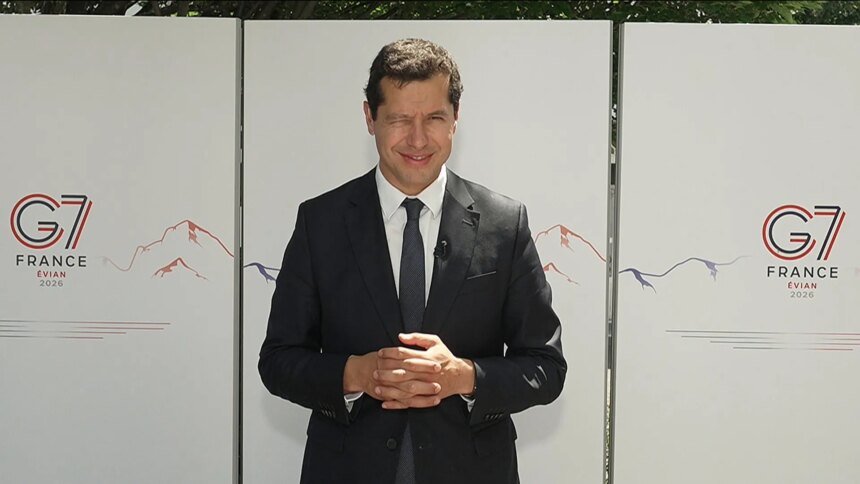
On Monday evening, US President Donald Trump arrived in the French city of Evian to participate in the Group of Seven summit, which begins today.
The summit, which includes some of the world’s largest economies, will be held in the French resort of Evian overlooking Lake Geneva-Léman, near the Swiss border, amid exceptional security measures on both sides of the French-Swiss border. It is scheduled to witness a special discussion of the Iranian file.
The leaders of Egypt, Qatar, the United Arab Emirates, and a number of countries concerned with consolidating and implementing the agreement will participate in the meetings, according to what Al Jazeera’s Paris office director, Ayyash Draghi, said.
Opening Hormuz and finding future alternatives
This discussion will focus on how to ensure the long-term implementation of the agreement supposed to be signed between Washington and Tehran in Switzerland next Friday, and on examining the mechanisms for full dependence on the Strait of Hormuz, according to what French Foreign Ministry spokesman Pascal Confavreau said.
Signing the agreement is not what is important for the summit participants, but rather ensuring its implementation and commitment to it in the long term. This is what Confafro said in an interview with Al Jazeera that French President Emmanuel Macron will discuss with the leaders of Qatar, Egypt and the UAE on the sidelines of the G7 summit.
Ensuring the return of navigation in the Strait of Hormuz and not collecting any transit fees is the main goal that Confafro said that the countries concerned are currently trying to achieve by consolidating the agreement in preparation for the arrival of French and British forces and minesweepers to work on facilitating the return of navigation.
France and Britain are ready to work on reopening the strait to ship traffic, and during the summit they will focus on discussing the mechanism of this work, as the French Foreign Ministry spokesman said.
But the most important goal, according to Confafro, is to find alternatives and provide infrastructure to reduce dependence on the waterway, through which 25% of global oil and gas consumption passes daily, to avoid exposure to any economic damage that may result from any future closure of it.
Accordingly, Draghi says that the Europeans want to adopt the agreement politically and become part of its guarantee because they are dealing with it as the beginning of a long path and not as the end of the crisis.
France, Britain and other countries that were economically affected by this war view the US-Iranian agreement as “an opportunity to breathe and relieve the pressures that resulted from the closure of Hormuz,” and they know that they will “pay the price for any setback,” according to Draghi.
This is what prompted the French President to invite the leaders of Egypt, Qatar, and the Emirates to attend the Seven Summit meetings so that the mechanism for consolidating this agreement could be discussed and working to prevent its collapse in the future due to many demons residing in its details, especially when it comes to Hormuz and Tehran’s nuclear program, according to the director of Al Jazeera’s office in Paris.

An achievement that no one has achieved
The American President considers the memorandum of understanding that was reached “an achievement, because it will reopen the Strait of Hormuz, prevent Iran from possessing a nuclear weapon, achieve a peace that no president before him was able to achieve in the Middle East, and guarantee peace and prosperity for decades to come.”
According to J.D. Vance, US Vice President, the memorandum focuses on reopening the Strait, lifting the US blockade on Iranian ports, and ensuring that Tehran does not possess a nuclear weapon.
Iran will not receive any part of its frozen funds immediately after signing the memorandum of understanding, which conditional the delivery of these amounts and the lifting of sanctions on the extent of Tehran’s commitment to the agreement.
To overcome the dispute over Iran’s frozen funds, the State of Qatar has worked over the past two days to present a formula acceptable to both parties to deal with the frozen funds, according to what Al Jazeera’s correspondent in Washington, Fadi Mansour, said, quoting an American official, that the American forces had received orders not to lift the blockade on Iran until after the signing of the nuclear agreement.