Published on 6/16/2026
|
Last update: 15:03 (Mecca time)
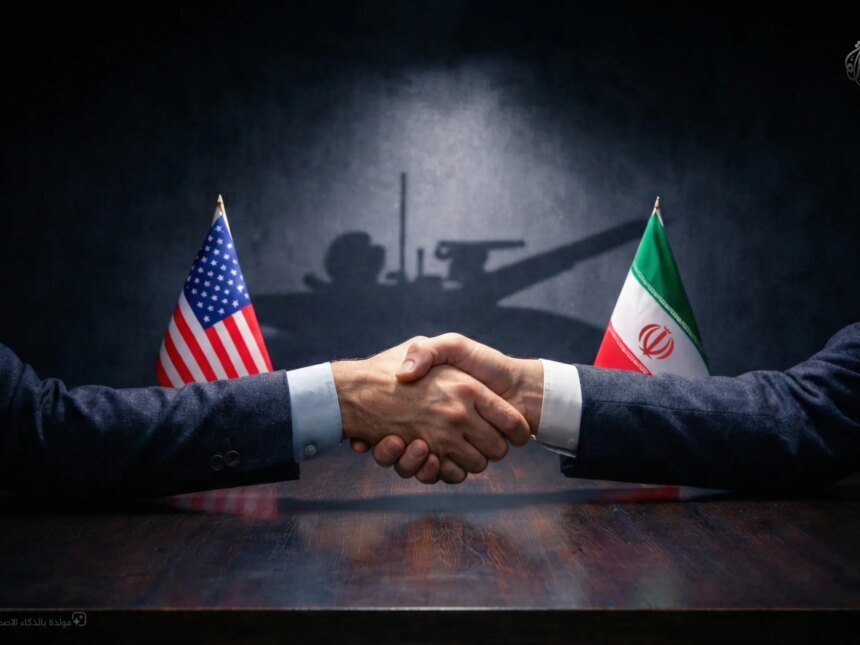
Axios believes that the agreement signed electronically by the United States and Iran – before an official signing ceremony to be held in Geneva on Friday – still faces a series of fundamental questions that will determine whether it will turn into a permanent settlement or a temporary truce that may collapse within weeks.
According to a report by the site, the agreement signed by US President Donald Trump, Vice President J.D. Vance, and Iranian Parliament Speaker Mohammad Bagher Qalibaf opens the door to a complex negotiating phase extending for 60 days, while the most prominent issues remain unresolved.
Read also
list of 2 itemsend of list
Here are 8 key questions posed by the report:
1- Has the agreement actually entered into force?
Axios says the 60-day extension of the ceasefire took effect immediately, including on the Lebanese front, but the reopening of the Strait of Hormuz will not actually begin before the official signing ceremony scheduled for Friday in Geneva.
Despite Trump’s announcement of the immediate lifting of the US naval blockade, Iranian media confirms that the status of the Strait has not changed yet.
2- Will the Strait of Hormuz be fully opened?
Washington stresses that navigation will return without fees or restrictions, but Iranian officials say the strait will not completely return to its previous status.
Iranian media reported that Tehran may refrain from imposing fees during the next 60 days, but may later introduce fees related to safety and the environment. Global shipping companies are still cautious, demanding additional security guarantees before resuming their normal activities.
3- What will Iran get in return for the agreement?
The two parties agree that Iran will obtain two main gains: stopping military operations and allowing the resumption of oil exports.
But the dispute revolves around the frozen Iranian funds, as Iranian media talk about the release of billions of dollars, while Washington denies this and confirms that any economic concessions will be linked to Iran’s commitment to the terms of the agreement. US officials pointed to the possibility of providing mutual “small steps” in the early stages of building trust.
4- Do the two parties agree on the content of the agreement?
The report confirms the existence of two different versions of what was agreed upon, as a result of the adoption of indirect negotiations through mediators, and the fact that the memorandum of understanding is a general political framework and not a detailed treaty.
5- Will the full text of the agreement be published?
Axios points out that publishing the full text could dispel much of the current uncertainty. But the US administration has not decided on the deadline for publishing the document, as officials spoke of the possibility of issuing it within two days, while Trump said that it may not be published until after the official signing ceremony.
6- Will Israel adhere to the agreement?
The agreement faces widespread criticism within Israel, especially since it imposes a commitment to a ceasefire in Lebanon.
Despite Washington’s assertion that Israel will reserve the right to respond if it is exposed to attacks from Hezbollah, Israeli officials fear that their scope for military action will be reduced.
The report revealed that Trump strongly criticized Israeli Prime Minister Benjamin Netanyahu after an Israeli strike on Beirut that almost failed the agreement.
7- Is it possible to reach a final nuclear agreement?
The next 60 days will be devoted to complex technical negotiations regarding the Iranian nuclear program. American officials acknowledge that the task will be very difficult due to mutual mistrust, especially since the bulk of lifting sanctions depends on the success of these negotiations.
8- Will war break out if negotiations fail?
Washington confirms that it will not withdraw its forces deployed in the region before reaching a final nuclear agreement. American officials say that Trump still has “pressure tools” if diplomacy fails, while Tehran believes that the United States was in a hurry to end the war and that Iran now possesses additional power cards.
The Axios report concludes that the next three weeks will be crucial to determine whether the current understandings will turn into a permanent agreement or whether the region will return again to the cycle of escalation.