Published on 6/16/2026
|
Last update: 10:47 (Mecca time)
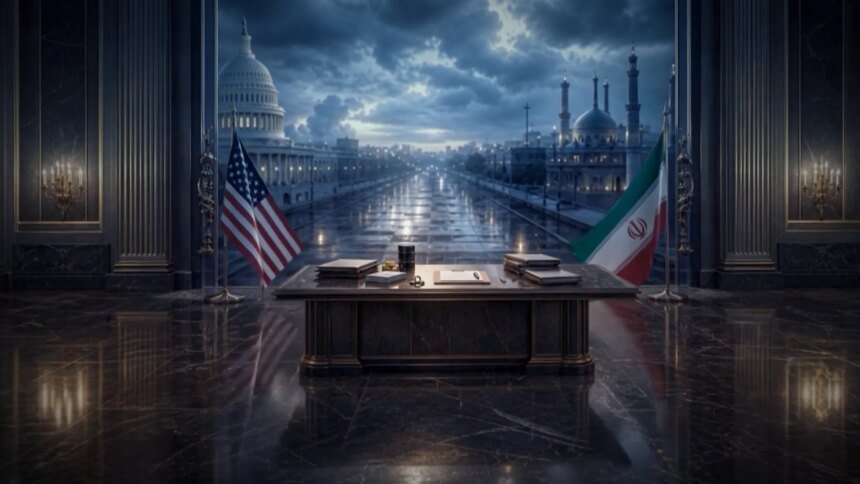
While the world awaits the signing of the memorandum of understanding between Iran and the United States within a few days, there is a lot of talk about the details and stages of implementing what appears to be a preliminary agreement on the agreement.
The memorandum, which is supposed to be signed next Friday, does not include a final text of what the two parties must do, but rather broad outlines of what must be agreed upon and adhered to during the negotiation period.
Read also
list of 2 itemsend of list
Officials from the two countries will not sit at the same table to sign the memorandum, which includes a general framework that Farah Al-Zaman Shawqi said in a report to Al Jazeera that “establishes a first stage, adherence to which will lead to moving to the second stage, which is the prelude to reaching the final agreement.”
Indeed, US President Donald Trump said that he had already signed the memorandum and that the blockade imposed on the Strait of Hormuz had begun to be partially lifted. While his deputy, J.D. Vance, told CNN: The memorandum is one and a half pages long, meaning it is “a general document, but it includes vital points.”
According to a report prepared by Farah Al-Zaman Shawqi for Al-Jazeera, the two countries will have to settle many issues during the following negotiations, according to De Vance, who confirmed that the first paragraph of the memorandum stipulates the commitment of the United States and Iran to peace in the region.
First stage
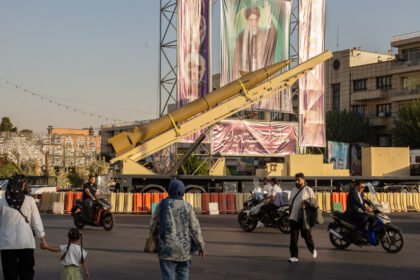
According to the Americans, the first phase of this agreement stipulates the reopening of the Strait of Hormuz and the removal of the mines planted by the Iranians in exchange for the immediate lifting of the US naval blockade of Iranian ports.
Indeed, the Iranian Fars Agency said on Monday evening that an Iranian oil tanker and a ship loaded with fodder were heading from international waters towards Iranian ports, and that it had crossed the maritime blockade zone. Meanwhile, the Iranian Press TV channel confirmed that the US naval blockade had actually begun to be lifted.
Accordingly, it can be said that the two parties agreed on important initial steps that will lead to agreement on more important matters, but through a “step-by-step” mechanism, as American sources said.

Iran will not obtain the gains it demands unless it adheres to what it agreed upon and confirms this commitment through a mechanism that has been established for monitoring and verification. According to the memorandum, America will also ensure that Iran does not possess a nuclear weapon.
On the other side, Iran also says that the strait will be opened and the blockade will be lifted, and that the war will stop on all fronts, including Lebanon, with both parties pledging commitment and respect for sovereignty.
Iranian sources also spoke of consensus on mechanisms for releasing frozen funds and allowing the sale of oil and petrochemicals. But everyone in Tehran avoided talking about the nuclear program, except for Foreign Minister Abbas Araghchi, who said that the memorandum “contains topics related to the nuclear program.”
Iranian highly enriched uranium was and still is an essential and perhaps pivotal point in these arduous negotiations and this agreement, which appears fragile in view of the negotiations that await the two parties, which will address topics on which the two parties held two very contradictory visions.
The second stage
As for the second phase, which will last for two months and can be extended according to what was agreed upon, it is subject to the full implementation of the provisions of the first phase, as informed Iranian sources said.
The city of Geneva is scheduled to host US-Iranian talks to arrange the next negotiation agenda, according to what Iranian Deputy Foreign Minister Kazem Gharibabadi said.
Regarding the conditions of the second phase, informed Iranian sources told Tasnim Agency that negotiations on the final agreement will begin after the release of part of the frozen Iranian assets and the cancellation of some sanctions, such as the sale of oil.
According to what Iranian Foreign Ministry spokesman Ismail Baghaei said, the 60-day period will discuss the nuclear file, the lifting of sanctions, Security Council resolutions, the mechanism for monitoring the obligations of the two parties, and even reconstruction, meaning the Iranian demand to pay fines due to war losses.
On the other hand, American news sites say that the second phase “will focus on addressing the basic American concerns about Iran’s nuclear program, related to activity, enrichment, facilities, oversight, and verification.”
Regarding the procedures, informed sources said that the memorandum of understanding stipulates not sending new American forces to the region and not imposing new sanctions during the sixty-day period, while Tehran is required not to take any new nuclear action.
All of the above means that American-Iranian opinions intersect at the point of postponing negotiations on nuclear details and lifting sanctions in exchange for Tehran’s performance. But the Iranians fear what is coming, as Araqchi explicitly said, “The decision to make a final agreement or not depends on the course of the second phase.”
There are fears that the Israeli side will not adhere to the clause related to the war on Lebanon, others related to a crisis of mutual trust between Tehran and Washington, and a third related to implementation guarantees.
Iran wants guarantees to obtain its frozen assets, the subsequent lifting of sanctions, and even guarantees that the war will not return. While America essentially and publicly wants guarantees of a clear and transparent nuclear commitment.
Here comes the role of the mediators, led by Pakistan and Qatar, which were able to achieve a major breakthrough in reaching the memorandum of understanding. They discussed, in extensive and repeated visits and communications with the parties concerned, files of proposals, demands, and even guarantees, most notably the issue of frozen Iranian assets and the Strait of Hormuz.
Given all these details, what was agreed upon between the United States and Iran was to return to the political path and emerge from the state of neither peace nor war, instead of remaining in the stage of ambiguity during which each party was unable to achieve its goals decisively.
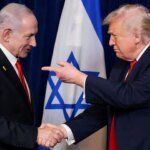
Meanwhile, Israeli Prime Minister Benjamin Netanyahu said that he was “not sure of the details of the agreement between Washington and Tehran.” Meanwhile, Iranian President Masoud Pezeshkian said that what was agreed upon with the United States “represents an important step towards stopping the war and starting the process of negotiations, stressing that a final agreement has not yet been formed.”