
Published on 6/14/2026
|
Last update: 6/15/2026 17:31 (Mecca time)
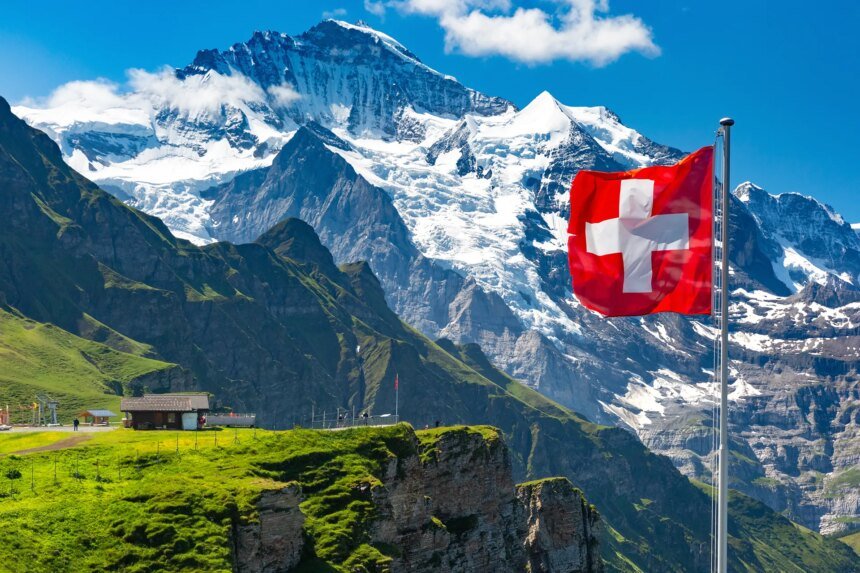
According to preliminary results, the Swiss rejected – in a referendum held today, Sunday – a controversial proposal, which stipulated setting a ceiling on the population with the aim of combating immigration.
As usual, the far-right was behind the proposal, as it was presented by the Swiss People’s Party, and it stipulated that the population should not exceed 10 million people by 2050, and if that happens, Switzerland must end freedom of movement with the European Union.
According to Agence France-Presse, Switzerland’s population currently stands at 9.1 million people, noting that foreigners represent more than a quarter of the population in the wealthy country located in the Alps.
It was noteworthy that the government urged citizens to vote to reject the proposal, and after the initial results emerged with 55% of participants rejecting it, Justice Minister Beat Jansz welcomed the results, and said – during a press conference in which he appeared alongside President Guy Parmelan – that the voters sent a message of stability, openness and credibility.
But at the same time, the minister pledged to look into “additional steps that can be taken to reassure residents about their housing and immigration concerns.”
Reuters news agency said that the result means that voters in Switzerland chose economic stability and relations with the European Union, based on fears that immigration would put pressure on public services and raise rents.
The agency added that the Swiss vote was similar to the British exit referendum from the European Union in 2016, and raised concern among companies for fear that it would end the freedom of movement of labor between Switzerland and the European Union, its main trading partner.

What are the motives?
The Swiss People’s Party has long stressed the need to impose radical measures on the issue of immigration, and it believes that “large-scale immigration” would change national identity and put pressure on infrastructure, resulting in housing crises and rising rents, as well as transportation congestion and traffic congestion.
Therefore, the party’s proposal – which is currently the largest in Switzerland – stipulates accepting exceeding the ceiling of 10 million people in 2050, on the condition that this results only from an increase in the number of births in the country without irregular immigration playing a role in it.
Before voting began, party representative Ivan Pahud said, “Switzerland is a small country that cannot expand,” and added, “We do not want to receive all of Europe.”
Mainly European immigration
About 2.5 million people who do not have nationality reside in Switzerland, most of them from neighboring countries: the Italians and Germans are at the forefront, then the Portuguese and French. Most of them came to work, taking advantage of the freedom of movement between Switzerland and the European Union.
Immigration to Switzerland is therefore largely European, according to the Swiss Info website, which points out that immigration statistics during the decade 2013-2022 show that two-thirds of arrivals to Switzerland came from European Union countries or member states of the European Free Trade Association.
The European predominance in immigration to Switzerland is due to the preferential conditions granted by agreements on the free movement of people, while male and female citizens of non-EU/EFTA member states are subject to quotas and strict immigration conditions, and only highly qualified workers are allowed to enter and on the condition that they meet the needs of the Swiss labor market.
The composition of the foreign population reflects the different waves of immigration and the immigration policy in Switzerland, as Italian nationality tops the list of foreign nationalities in Switzerland (14%), followed by German (13%), Portuguese (11%), then French (7%), according to statistics at the end of 2023.
As for those outside Europe, Asian nationalities represent the largest percentage (8%), followed by African (5%) and American (less than 4%).

Why was the rejection?
- The government recommended rejecting the proposal, noting that the Federal Council and a number of members of Parliament believe that this initiative will lead to creating new problems instead of solving existing issues.
- According to what pollster Urs Berry told Reuters, the initiative was not approved because people were not convinced by the plan and were concerned about its potential side effects despite great concerns about population growth.
- Voters were concerned about negative repercussions on Switzerland’s relationship with the European Union and on the labor market.
- People were also concerned about things like having enough health care workers.
- There is also a feeling that in the current international climate, it does not make sense for a small country to take such action.
- According to a citizen who spoke to Agence France-Presse, she had voted against the proposal, justifying this by saying, “In light of globalization, it is foolish to try to close borders and limit the number of people who can be here.”
Important details in this regard
- The vote was conducted based on Switzerland’s system of semi-direct democracy, which gives citizens the power to make legislative decisions and directly amend the constitution.
- Switzerland’s population currently stands at 9.1 million, and has grown much faster than neighboring European Union countries.
- Foreigners make up about 28% of Switzerland’s population, which official estimates expect will reach 10 million people by the early 2040s.
- Participation was around 50%, higher than the previous average of 48% for Swiss referendums.
- Opinion polls predicted a close result. In the end, the No camp’s victory was clearer than many analysts expected.
- The proposal to limit the population came at a time when support for policies aimed at reducing immigration was growing across Europe.

What does rejection mean?
- Approving the proposal meant putting an end to immigration because what was meant was related to the total population in the country.
- In more detail, passing the proposal would have meant restricting the granting of asylum, as well as restricting the right to family reunification, as well as getting closer to ending the freedom of movement agreement with the European Union, which allows reciprocal rights to live and work across borders, even though Switzerland is not a member of the Union.
- The rejection of the proposal prompted the business community to take a breath, as business groups welcomed the result, and recalled that setting a ceiling on the population would have restricted the entry of foreign workers, harmed the economy, and strained relations with Brussels, especially since the European Union is Switzerland’s main trading partner.
- The business association EconomySuisse urged the Swiss government to exploit the driving force of this result in order to ratify the agreement it concluded with Brussels in late 2024 to strengthen bilateral economic relations.
- European Commission President Ursula von der Leyen said that Brussels and Bern will continue to work together in the interests of their citizens and companies.
The genie is out of the bottle
Opponents had described the plan as a recipe for chaos given the unrest it might cause. They also asked: Is it wise to clash with Brussels after the difficult year 2025? When US President Donald Trump imposed the highest US customs duties in Europe on Swiss goods.
Federal representative from the Green Party, Sibylle Arslan, said that the result showed Switzerland’s commitment to working with its European neighbors, but she warned that what happened meant breaking an order that was prohibited, and it is not unlikely that it will reappear again.
The representative seemed pessimistic in this regard, as she said that the damage had already occurred, and that putting the matter to a referendum gave a kind of legitimacy to talking publicly about setting a maximum population limit.
More briefly, the representative said, “The genie is out of its bottle,” and she may be right if we expand the circle to include the extreme right and the recent rise it is achieving in many European countries.