Published on 6/15/2026
|
Last update: 16:16 (Mecca time)
Beijing monitors military and political developments in the Arabian Gulf region from the perspective of energy security before any other consideration. The Strait of Hormuz, through which about a fifth of global oil and gas trade passed before the outbreak of war, is considered a vital artery for China’s imports of crude from the region and from Iran in particular.
As Washington and Tehran approach signing a peace agreement that guarantees the reopening of the sea corridor, the Chinese press is treating the event as a glimmer of hope that gives China the ability to secure the flow of oil at stable prices in a still fragile regional security environment.

Oil prices breathe a sigh of relief
The Chinese news agency “Xinhua” reported that the confirmation of the United States and Iran that an agreement had been reached, along with expectations that the Strait of Hormuz would be reopened soon, led to a sharp decline in oil futures prices at the beginning of the new trading week.
Read also
list of 4 itemsend of list
In the markets’ first direct reaction to the news of the agreement, the price of light crude oil futures on the New York Mercantile Exchange fell to its lowest level at $80.25 per barrel, a decrease of 5.45%. The price of Brent crude futures on the London Stock Exchange fell to $83.51 per barrel, a decrease of 4.37%.
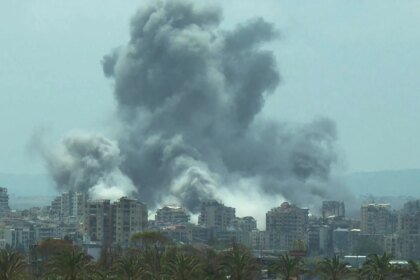
Xinhua notes that the American and Israeli attacks on Iran since the end of February have disrupted navigation in the Strait and reduced supplies, which sparked a wave of rise in global oil prices that has burdened energy-importing economies, led by China.
The agency also presents the agreement as a first step towards rebalancing the global energy market, with its focus on Beijing’s fundamental gain of breaking the bottleneck that has affected its crude supply lines through the Gulf region.
Open corridor?
The South China Morning Post paints a more cautious picture, noting that the Strait of Hormuz remained almost free of ship traffic during the hours following the announcement of the peace agreement, despite US President Donald Trump’s confirmation that the passage will be reopened after the agreement was officially signed on Friday.
The newspaper relies on data from the Marine Traffic platform, which showed that only one patrol ship was moving in the strait, while hundreds of commercial ships remained stuck in the area.
The newspaper quoted Shaw Muyu, an analyst at Kepler, a company specializing in oil trade information, as saying, “The agreement appears fragile, and the details of reopening the corridor are still vague, including the sequence of lifting the US blockade on Iran and releasing its frozen assets.”
It also conveys its skepticism about the rapid return of navigation to normal, whether due to the dangers of mines or shipowners’ reservations about security risks.
The newspaper recalls the International Energy Agency’s warning that fully reopening the strait may take 6 to 8 months even if an agreement is reached, which means that any Chinese benefit from lower prices may remain restricted by the time of uncertainty in shipping movement.
Lee Haidong:
Washington and Tehran share a common interest in ending the war, but for different motives
Calculations of war and peace
The Global Times newspaper, which is close to the official Chinese approach, places the upcoming agreement within a broader context of the struggle of wills between Washington and Tehran, noting that the two sides sent conflicting signals about the timing of signing the final agreement.
While Pakistani Prime Minister Shahbaz Sharif, the mediator in the negotiations, was quoted as saying that the world is “as close as possible to a peace agreement,” and that a virtual signing by video conference is being prepared, without specifying a definitive date.
In this context, Professor Li Haidong of the Chinese Foreign Affairs University told the newspaper, “Washington and Tehran share a common interest in ending the war, but for different motives: the United States fears the cost of a long war strategically and internally, while Iran fears the cumulative economic, social, and security effects if the fighting continues.”
On the other hand, Iranian Foreign Minister Abbas Araqchi insists, according to what the newspaper reports, that “his country emerged from the war victorious, and that the temporary agreement gives it the bulk of what it sought, in exchange for one major American gain, which is the reopening of the Strait.”
The newspaper adds an Israeli dimension to this equation, noting that the potential agreement “raised concern” in Tel Aviv. What this means – for China – is that these wide margins of tension make any bet on permanent stability in Hormuz remain fraught with the risks of regional escalation.

On paper
The China Daily newspaper shied away from the details of the tactical differences to confirm, citing Trump’s announcement, that “the agreement with the Islamic Republic of Iran has been completed” and that the official signing will take place on Friday in Switzerland.
The newspaper continues that the announcement of “the removal of mines after the signing of the agreement, which will make oil flow from both sides again to the region and the world,” is directly consistent with China’s priorities in restoring the safe and stable flow of oil through Hormuz.
Although the details of the agreement have not yet been published, China Daily reports that Kazem Gharibabadi, the Iranian Deputy Foreign Minister, confirmed that the war would end “immediately and permanently” on various fronts, including Lebanon, and that the US naval blockade of Iranian ports would be lifted, in a move that would reconnect Iran with global energy markets.
Former US official Tom Watkins summarizes the cautious international mood and declared to the newspaper, “If this news is true and comes true, it will be good news for the people in the region and the world.”
Persistent strait headache
Through these readings, it becomes clear that energy security, represented by oil supplies, is the central lens through which the Washington-Tehran agreement is evaluated in the Chinese media, whether from the perspective of the immediate decline in prices or in terms of the expected time for the return of normal navigation in the Strait of Hormuz.
While the decision-maker in Beijing is betting that signing the agreement and lifting the blockade on Iranian ports will allow the resumption of Iranian and Gulf oil imports at a stable pace, Chinese estimates do not ignore the fragility of the security arrangements, the fluctuation of the American and Iranian positions, and the Israeli objection, as factors that may make securing supplies an ongoing challenge even after the signing of the memorandum of understanding.
In light of this, China appears ready to deal with an agreement that provides a breathing space in the energy market, but it treats it as a temporary stop in a longer energy security equation, and not a guaranteed end to the Strait of Hormuz headache.