Published on 6/13/2026
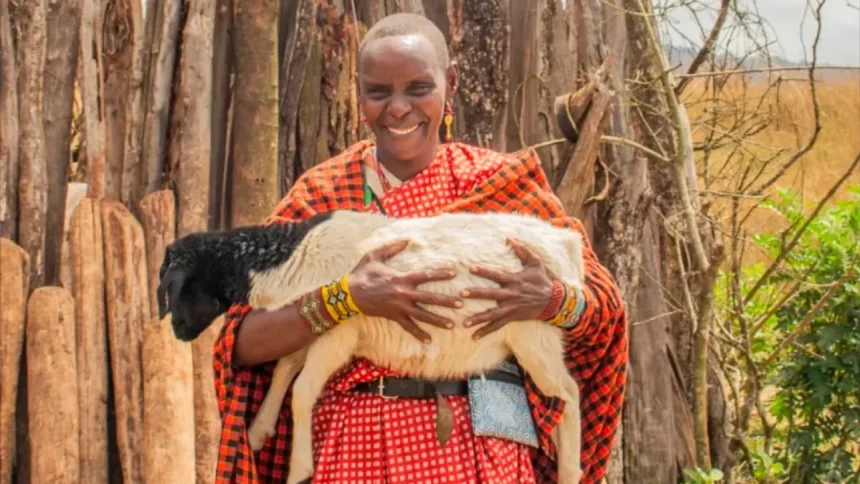
When drought wiped out most of her family’s livestock, Nesirkar Longidungi, a 30-year-old mother of four from the village of Silila in northern Tanzania, found herself with limited options. But today, she makes her living by growing and selling drought-resistant fodder. She explained to Al Jazeera, saying: “Before I grew fodder, I lost most of our goats. But now people come from other villages to buy fodder, and I can support my children. I no longer fear drought.” With this income, she built a house and bought five goats.
From an individual story to a growing trend
The Lungidungi story has become part of a broader, rapidly growing trend in northern Tanzania, where Maasai women – a community of about 430,000 people – have transformed fodder production from a means of survival into a climate adaptation business. This is coordinated by the Pastoral Women’s Council, a women-led membership organization that operates in three northeastern provinces spanning more than 28,000 square kilometers and serving about 456,000 people, most of whom are Maasai. Founded in 1997, the council today includes about 6,500 members in 90 villages, and its work focuses on land rights, economic empowerment, and girls’ education.
According to the Tanzanian Ministry of Livestock and Fisheries, at least 306,000 heads of cattle, goats, sheep and donkeys died between September 2021 and January 2022 due to the ongoing drought.
For the Maasai people, cows represent more than just livestock, they are the center of daily life, economy and identity. When rains are delayed, the impact is immediate, as animals become weaker and families suffer.

Seed banks and collective farms
In response to this crisis, the Pastoral Women’s Council established ten major grass seed banks in 8 villages in Mondoli and Longido districts. Today, about 75 hectares are subject to fodder production, with another 37 hectares expected to be added in the 2025-2026 season. About 250 women directly manage these farms, while thousands of shepherds depend on them during dry seasons.
In 2025, one seed bank generated revenues of 6.6 million Tanzanian shillings (about $2,500) from seed sales, in addition to selling 1,111 bales of hay at 6,000 shillings (about $2.3) per bale. With support from organizations such as the Global Fund for Women and Oxfam, the council is seen as a replicable model for protecting a multi-million dollar livestock economy.
To counter the declining rains, women plant resilient grasses such as Rhodes grass and Maasai love grass on designated communal plots, as these grasses stay green longer than natural pastures during dry periods. After harvesting, they are packed and sold to local shepherds. The seeds are “also stored and sold later when demand is high,” says Longidonghi, adding that this cycle now supports many families in arid areas.
Rachel Letiti, one of the council’s founding members, explains: “Women who were completely dependent on their husbands now have their own income. Families are becoming more stable, and men are beginning to appreciate women’s contributions, especially during periods of drought.”

Existing challenges
However, this progress is not without obstacles. According to Longidongi, some farms are damaged when they are overrun by weeds or fences are broken, causing livestock and wild animals to enter and destroy the carefully cultivated areas. She added: “I saw parasitic plants destroying large parts of our farms, and sometimes animals enter and destroy what we have worked on for months. It is not easy to guard these fields every day.” She also pointed to tensions within the groups due to disagreements over responsibilities and income sharing.
About 200 women are currently participating directly in the project with support from organizations such as Justdiggit, Trees for the Future, and SwissAid, while many others benefit indirectly, especially during dry seasons when pastures are scarce.
“This work prevents the death of our cows and keeps them healthy,” says Naryamo Laser, a mother of three and secretary of the Naisho Group, which runs a seed bank. “If all women seize this opportunity, these projects can boost our economy.”
Longidonghi concludes that growing fodder is no longer just a way to get through the difficult seasons, saying: “Now it helps women bring money into their homes, and families are becoming more stable.”