
The preliminary deal to end the war between the United States and Iran seeks to quickly reopen the Strait of Hormuz, but companies said on Monday that they need more details before navigating the waterway.
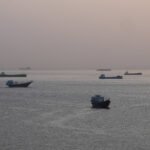
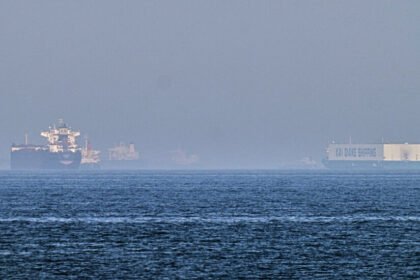
Since late February, when the United States and Israel attacked Iran, the strait has been effectively closed, leaving hundreds of ships stranded in the Persian Gulf, unable to transport oil and gas to global markets.
“There are a lot of questions that need to be clarified,” said S.V. Anchan, the chairman of Safesea Group, a shipping company based in Piscataway, N.J., that has two ships in the gulf, both of which had been attacked since the war’s start. One of the ships was so badly damaged that it was not operating and the other was waiting to leave the gulf.
Mr. Anchan said he wanted a clear commitment from Iran that ships could pass through the strait safely. “We want to hear from the Iranians that they will not attack us,” he said.
The United States and Iran were expected to sign the agreement on Friday in Geneva. Critical issues that have divided the countries, including the fate of Iran’s nuclear program, have been deferred to later negotiations. The text of the agreement, which Iranian officials described as a memorandum of understanding, has not been released.
“Let’s hope this time it’s for real,” said Harry Vafias, the chief executive of Stealth Gas, which has had three vessels stuck in the Persian Gulf for more than three months. He said he hoped he would get certainty after the signing of the agreement on Friday, but added, “I don’t give it a big possibility.”
President Trump said on Sunday that the agreement with Iran would ultimately ensure that the Strait of Hormuz was “permanently toll-free.” As of Monday, Iranian officials had not commented on the specifics of the agreement.
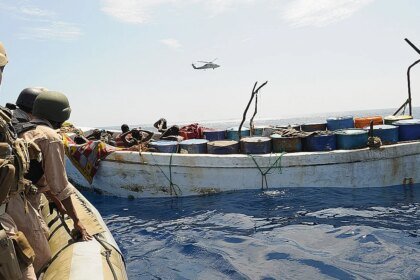
In retaliation for the U.S.-Israeli strikes, Iran has attacked vessels to deter ships from passing through the strait without its permission. This campaign pushed up oil prices and gave Iran valuable leverage against the United States. Some ships that were able to transit the strait did so with Iranian permission or with U.S. military assistance.
Kpler, a ship tracking company, said about 500 large commercial vessels remained in the gulf. The Japanese Shipowners’ Association said that it would wait for “more concrete information.” There are 38 Japanese-related vessels stranded in the gulf, the association said.
Another shipping executive, Andreas Enger, chief executive of the Norwegian shipping company Höegh Autoliners, said that news of the agreement alone was not enough to allow for the immediate resumption of ships through the strait.
“But let’s hope that it is the start of the process that will get us there,” he said. Mr. Enger said it could take weeks or even months for him to feel comfortable sending ships into the Persian Gulf. “There very well may still be uncertainties and unresolved issues that would drag this out even longer,” he said. His company had one stranded ship that was able to leave the gulf with heavy naval and air protection from the U.S. Navy.
Arsenio Dominguez, the head of the International Maritime Organization, said on Monday that the agreement was “an important step toward restoring safety in this vital maritime corridor for seafarers and ships.”
But he added that it would take time to ensure that security guarantees were put in place to evacuate the roughly 11,000 stranded seafarers.
There are also significant logistical steps that need to be taken for ships to begin to safely pass through the strait.
Shipping companies would want a neutral body, like the International Maritime Organization, to identify safe routes and a sequence for ships to exit, said Jakob P. Larsen, the chief security officer at Bimco, the world’s largest shipping association.
“If they all go in one big pile, there’s a really big risk of navigational incidents, collisions, things like that,” he said.
Pankaj Khanna, the chief executive of Heidmar Maritime Holdings, which has one ship stranded in the Persian Gulf, said he hoped the agreement would provide a framework for how ships could safely transit the strait, including what route to take to avoid possible mines.
Some ships that have exited the gulf have run close to the Iranian coast, most likely with permission from Iran, while others have traveled close to Oman, in coordination with the U.S. military.
“Do we hug the Iranian coast or the Omani coastline?” Mr. Khanna said.
In recent weeks, a small number of ships have entered the Persian Gulf. A test of any final agreement would be the willingness of companies to resume traffic into the gulf in large numbers.
“We would need clear assurances from both sides that the strait is fully open and safe,” Mr. Larsen said. “It’s not enough that transits are permitted. They also need to be safe.”
Hisako Ueno contributed reporting from Tokyo.