The Sápmi Triennial reflects Sami contemporary art
Published at 04:00


The Sàpmi Triennale, Kin Museum of Contemporary Art, Kiruna
From the train window is mostly forest. Struggling, a bit gnarly. Inside the train window full of backpacks, hiking boots and functional garments. A mixed clientele that will take possession of Kungsleden. I think It’s so early in the season.
They are going out into nature, I am going into what is new Kiruna. Into Giron, which, whether new or old, has always been part of Sápmi. At Kin, the Art Museum in the north, the Sápmi Triennale is shown. 28 artists have been selected in a jury-judged process. Kin, which is one of the positive things about Kiruna’s move, is a bit squeezed into the “Crystal” town hall, designed by Henning Larsen and inaugurated in 2018. It does not, parenthetically, reach the level of the old town hall. Artur von Schmalensee listed buildings from the 1960s were brutally demolished already in 2019. Unforgivable.
The town hall’s old bell tower has been installed in the square. It was the one that remained and it mostly looks a little lonely among a flock of food trucks that entice with overpriced food, a thrift store playground and the newly built large residential barns. No, the new Giron is not a pleasant place.

But the Sápmi Triennial then? Its tour started back in August 2024 in Bådoddjo (Bodö) in Norway and since then it has traveled around until now when it is shown at Kin on its last stop. What is unique and interesting about the triennial is that it is an open process – which gives the opportunity to capture new names, perhaps broader themes, new insights. A bit like a spring salon but on a smaller scale.
At the same time that it is now approaching that the Truth Commission for the Sami people will finally submit its final report (September 30, it is said), the “Sami issue” has really not left the debate and editorial pages. Or for that matter the election campaign. Indigenous rights seem to be seen as a temporary trend – and here art can enter in the trickiest of ways, namely as an instrumental force to increase understanding of cultures, living conditions, perspectives.
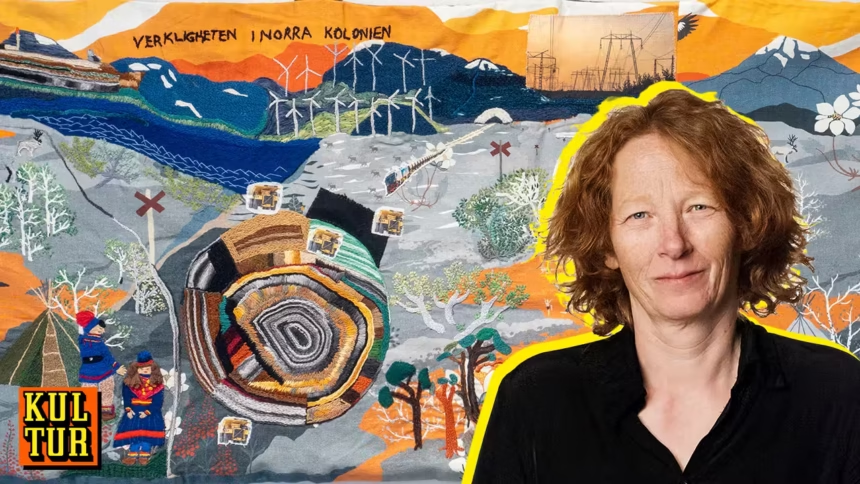
Helena Lagerqvist Kuoljok’s application “Råvaruboden” is, for example, a clear demonstration of how the view of Sápmi, in the countryside in the north, is romanticized in popular culture. She has turned a completely ordinary fabric print with an idyllic motif into “Reality in the northern colony”, with power plants, luxury tourists, reckless deforestation, mines and pollution. The northern counties as pantries without end.
We know that, but for some reason the words don’t seem to be enough.

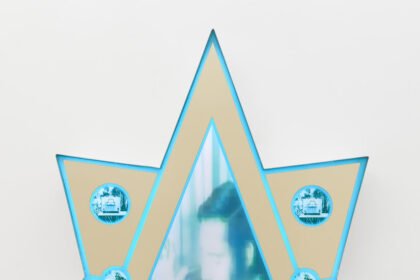
What is preserved at the triennial is the breadth that is presented – fashion, film, photography, textile crafts, painting. Traditional Sami crafts, duodjipresent but with a twist: as Jouni Laitis “The earth aches (IV)” where the cowl is pierced with a nail. Dysfunctional, a victim of abuse. Or is the nail an expression of longing away from tradition?
Contemporary Sami art is exciting because it works in the borderland between craft and art, often based on reclaiming and also making visible one’s own traditions, language and symbols. To take back is to create space.
The combined light and blacken the sun i Odd Marakatt Sivertsens painting “Party Day on the Beach of Life” has a special attraction for me. Here we are, at the midnight sun position and at the time of year when tourists travel to Sápmi. Almost on the beach where the phases of life are depicted. In cosmic harmony whether we want it or not. The sun’s blackness gathers in its rays climate threats, exploitation, protest.
Ulrika Stahre is editor and critic at Aftonbladet Kultur, responsible for art coverage.
ART
» The soap triennial
Kin Museum of Contemporary Art
Until August 16