Published on 6/13/2026
In a remarkable development coinciding with the start of the 2026 FIFA World Cup, one of the most prominent surveillance and intelligence programs in the United States has expired, sparking a wave of concern within security and political circles, at a time when the country is hosting one of the largest sporting events in the world amidst a large international audience.
This development comes at a sensitive moment in which the United States is witnessing a huge public influx from various countries of the world, coinciding with the continuing state of political division in Washington over the future of intelligence collection tools.
Read also
list of 2 itemsend of list
A pivotal intelligence tool has expired
A key legal provision referred to as (Section 702) expired on June 12, which allowed US intelligence services to collect communications of foreign targets outside the country without the need for a judicial warrant, including cases that might involve parties inside the United States.
This clause is considered one of the most important tools that Washington relies on in combating terrorism and espionage, but the failure of Congress to reach an agreement to extend it led to its suspension, which opened a wide door to discussion about its security and legal implications.
What is Section 702?
It is a provision within an American law that allows American intelligence agencies to:
- Collect communications of foreign persons outside the United States.
- Without the need for prior individual judicial authorization.
- Even if by chance these communications pass through servers or parties inside America.
In the midst of these developments, FBI Director Kash Patel confirmed that securing the World Cup is a top priority for American security services, given the size and breadth of the event.
Kash Patel said in an official statement: “Preventing terrorist attacks during the World Cup is a top priority for the office, and we are treating the tournament as one of the largest sporting events the United States will ever witness.”
He added: “In the past, extremists have exploited major sporting events to cause harm and spread their extremist ideas, and therefore we will work non-stop to ensure the safety of players, fans and all visitors.”
On the political side, the top Democrat on the Senate Intelligence Committee, Mark Warner, warned that the current situation has not been tested in practice before, raising questions about the ability of agencies and companies to deal with the resulting legal vacuum.
Mark Warner said: “This issue has not been actually tested yet, and what we believe is that communications and technology companies will not provide the required information without a legal cover to protect them.”
He added, warning: “If service providers do not obtain the necessary legal immunity, they may stop cooperating in exchanging information, which may create a dangerous gap in security work.”
Critical timing, coinciding with the World Cup
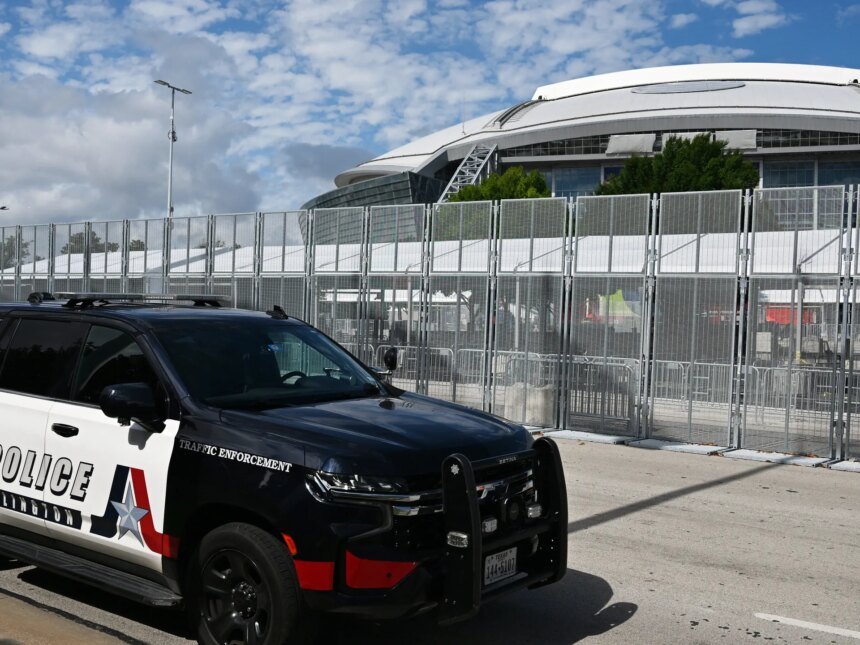
This development coincides with the United States hosting the FIFA World Cup, a massive global event in which 48 countries participate, attracting millions of fans to more than a dozen American cities.
Fears are increasing in light of the escalating international tensions, which puts the security services before additional challenges to ensure the protection of the tournament from any potential threats.
In this context, the security authorities stressed that the size of the event requires the highest levels of coordination and preparedness, especially with expectations that it will be one of the largest mass gatherings in the country’s history.
The expiration of the intelligence clause has deepened the differences between political factions in Washington, between those who see the necessity of imposing strict restrictions on surveillance operations to protect privacy, and those who consider these tools necessary to maintain national security.
This controversy comes at a sensitive time, as legislative institutions are trying to find a consensus formula that allows the system to be restored without compromising legal guarantees.
A “time bomb” at the heart of the political debate
Security experts warn that the continuation of this situation may affect the ability of the competent authorities to deal with potential threats during the World Cup, especially with the significant increase in the number of visitors and the multiplicity of participating nationalities.
On the other hand, official estimates indicate that some previous judicial permits are still valid until next year, which may partially alleviate fears, but it does not end the current state of controversy.
In a remarkable development, the top Democrat on the Senate Intelligence Committee, Mark Warner, described the situation as a “time bomb,” warning of the repercussions of continued political stagnation during a sensitive period such as the World Cup.
Warner said: “As we enter the World Cup stage, any security breach may occur. If that happens, the responsibility falls on the management, and we do not want to enter this tournament without having our full tools.”
Between political controversy, legislative division, and security concerns, the United States finds itself facing a complex test that coincides with hosting the largest sporting event in the world.
As the debate continues about the future of surveillance tools, the biggest challenge remains achieving a balance between protecting national security and ensuring privacy, at a time when the world’s eyes are directed more to the stadiums than to the policy offices in Washington.