With the starting whistle for the 2026 FIFA World Cup, the eyes of billions of people are turning to the North American continent, where the United States, Mexico and Canada are making history by hosting the first triple edition of the most popular sport on the planet.
This global football celebration does not merely represent a competition for a gold cup, but rather a massive human festival in which cultures intersect, and crowds of millions move with it, painting a picture of passion and enthusiasm in stadiums, arenas and airports, transforming the entire continent into an open theater pulsing with the rhythm of the charming round.
Read also
list of 2 itemsend of list
However, behind this festive brilliance and overwhelming joy, complex geopolitical, security and health challenges hide, putting the tournament’s host countries before a real test that reveals the deep gaps between the continent’s countries and their societies.

Forgotten epidemics threaten communities of millions
In a meticulous investigative report published by The Washington Post, health and epidemiologist writer Lina Sun sheds light on the hidden side of this huge human population.
The newspaper quoted infectious disease experts as saying that the real concerns are not related to strange viruses that make headlines, such as Ebola, but rather to diseases that are more traditional and spread faster in crowded places such as airports, hotels, and stadiums, most notably measles, dengue fever, the Corona virus (Covid-19), and sexually transmitted diseases.
Among these experts, Krutika Kuppally, a physician specializing in infectious diseases and associate professor at the University of Texas Southwestern Medical Center, said, “Measles is what worries me most,” noting that large human gatherings in airports, hotels, stadiums, and fan zones provide an ideal environment for transmission of infection.
The Washington Post notes that measles, which is one of the most contagious viral diseases in the world, has spread again in various parts of the Americas and the world.
The newspaper also quoted California epidemiologist Caitlin Gitlina as saying that the disease exists in many regions of the world, and that “all it takes is a small focus for it to spread like wildfire.”
What increases the depth of the crisis is that the United States recorded about two thousand cases of measles this year, especially with the decline in vaccination rates after the pandemic, as the state of South Carolina alone witnessed a huge outbreak of 997 cases.

Patients with dengue fever in a hospital in Dhaka, Bangladesh (Getty Images)
Major threats
However it is not limited Fears On measles alone, in addition to measles, dengue fever stands out as a major threat, especially since the tournament is being held at the height of the mosquito activity season in cities such as Miami, Los Angeles, and Dallas.
Dr. Kubali believes that diseases transmitted through insects – such as chikungunya, orobo (known as sloth fever), and malaria – may impose themselves on the agenda of doctors who will deal with audiences coming from different parts of the world.
The Covid-19 pandemic also remains present in the accounts of health authorities despite its retreat from the forefront of global attention, and the Washington Post indicates that experts are also monitoring influenza, respiratory syncytial virus, and other respiratory diseases, as well as sexually transmitted diseases that are usually associated with large crowd gatherings and the nighttime activities that accompany them.
In the face of these challenges, the American authorities strengthened epidemiological surveillance systems, and Georgetown University, in cooperation with MedStar Health, established an independent center to monitor health threats during the tournament, relying on hospital data, wastewater monitoring, and international health alerts to monitor any early indicators of disease outbreaks.
Trump took advantage of his country’s hosting of the tournament to “demonstrate American power,” which is what FIFA President Gianni Infantino agreed with, who awarded the American president the new “Peace Prize.”
The divided World Cup
But the concerns surrounding the tournament do not stop at the health aspect. There are political and geopolitical aspects as well, which was covered by The Atlantic magazine in an analytical article by journalist Rafaela Jinic.
The author saw that the tournament, which was originally designed to embody North American unity, turned into a test that revealed the extent of the political divisions between the three host countries.
She said that the narrative of unity on which the idea of the three countries hosting the tournament was built since 2017 and was manifested in the name “joint file” to show prosperity and solidarity in North America, today seems a strange idea and far from reality in light of the strict restrictions on immigration, trade disputes, and the rising American nationalism under the administration of President Donald Trump.
The author points out that when the International Federation of Association Football (FIFA) granted joint hosting rights to the United States, Mexico, and Canada in 2018, it envisioned an event that reflected partnership and integration between the three countries. However, political developments in recent years, especially after Trump’s return to the White House, have changed the scene significantly.
The magazine quoted former Mexican ambassador to the United States, Arturo Sarukhan, as saying, “Few things can connect communities as much as joint hosting of the World Cup,” adding that he saw the project as an opportunity to highlight “optimism” and “shared prosperity” for the continent.
However, this vision – according to the article by The Atlantic – collided with escalating disputes over immigration, trade and security, because Trump re-presented controversial ideas regarding relations with Canada and Mexico, and also threatened economic measures and political pressures that raised questions about the future of continental cooperation.
The magazine highlights that the tournament coincides with a sensitive date represented by the renegotiation of the trade agreement between the United States, Mexico and Canada next July, which gives the sporting event an additional political dimension.
Jules Boykoff, professor of political science and author of a book on the 2026 World Cup, believes that this edition may be “the most politically combustible World Cup we have ever witnessed.”

In her article, Jinesh also touched on the political repercussions that accompanied this version of the World Cup, citing the strict immigration measures taken by the Trump administration that directly affected the tournament.
In this regard, it was reported that American immigration officials detained the star striker of the Iraqi national team for 7 hours, and the team photographer and a FIFA-certified Somali referee were prevented from entering the United States, while the South African national team faced humiliating delays in visas, and the Iranian national team was forced to choose the Mexican city of Tijuana as its camp due to the refusal to grant visas to 15 of its officials.
The writer criticized the handling of this global event by the American authorities at their highest levels. She said that Trump took advantage of his country’s hosting of the tournament to “demonstrate American power,” which is what FIFA President Gianni Infantino agreed with, who awarded the American president the new “Peace Prize.”
The writer believed that the fans may be the biggest losers from this charged atmosphere, as many fear the impact of the strict security measures and fears of deportation on the atmosphere of the sports celebration.
However, the magazine points out that football often imposes its own reality, and that fan enthusiasm can overcome political tensions once matches start.

Mexican cartel crisis
In a related context, writer Ian Lovett – in a report in the Wall Street Journal – painted a bleak picture of a very sensitive security and social aspect represented by the organized crime crisis and the disappearance of tens of thousands of people.
The report focused in particular on the city of Guadalajara, one of the cities hosting the tournament, where the authorities deployed hundreds of thousands of security personnel and used advanced technologies, including helicopters, surveillance vehicles, and anti-drone systems, to secure the matches.
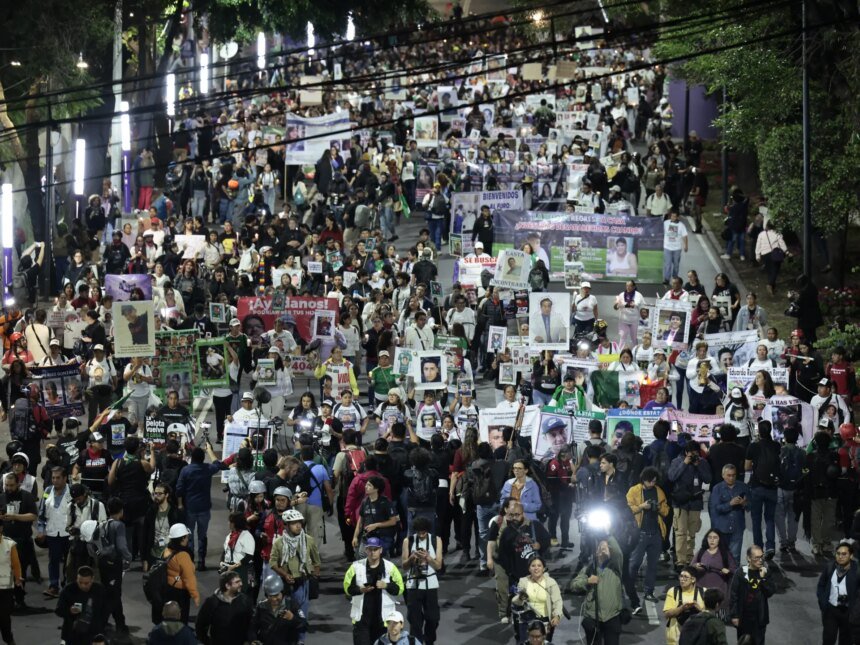
On the other hand, human rights organizations are seeking to exploit global interest in the tournament to shed light on more than 130,000 missing people in Mexico.
The newspaper quoted activist Hector Flores – co-founder of the “Light of Hope” organization – as saying, “We want people to know what is happening in Mexico. People are disappearing every day, and it seems that no one cares except the families.”
From an economic and security standpoint, analysts – according to the Wall Street Journal – believe that drug gangs will avoid any clashes with tourists during the tournament that might lead to American intelligence intervention, in an effort to preserve the huge economic gains they can achieve from the influx of visitors.
The newspaper explained that a study conducted by the World Trade Organization in conjunction with FIFA expected that one fan would spend more than $400 per day, which would revive its parallel and illegal markets of drug trade and unlicensed services.
Thus, the 2026 World Cup begins amid a complex scene in which sports intersect with health, politics and security, and while millions dream of watching a historic tournament that brings together the best teams in the world, reports issued by the Washington Post, The Atlantic and the Wall Street Journal state that the event does not only reflect the passion for football, as it also reveals the deep challenges facing the host communities.
Source: Atlantic + The Washington Post + Wall Street Journal