Published On 10/6/2026
|
Last update: 17:36 (Mecca time)
A joint report between the International Labor Organization and the United Nations Economic and Social Commission for Western Asia (ESCWA) confirms that a quarter of professions in the Arab world may witness displacement or transformation related to artificial intelligence, amid a labor market that was fragile even before the emergence of artificial intelligence technologies.
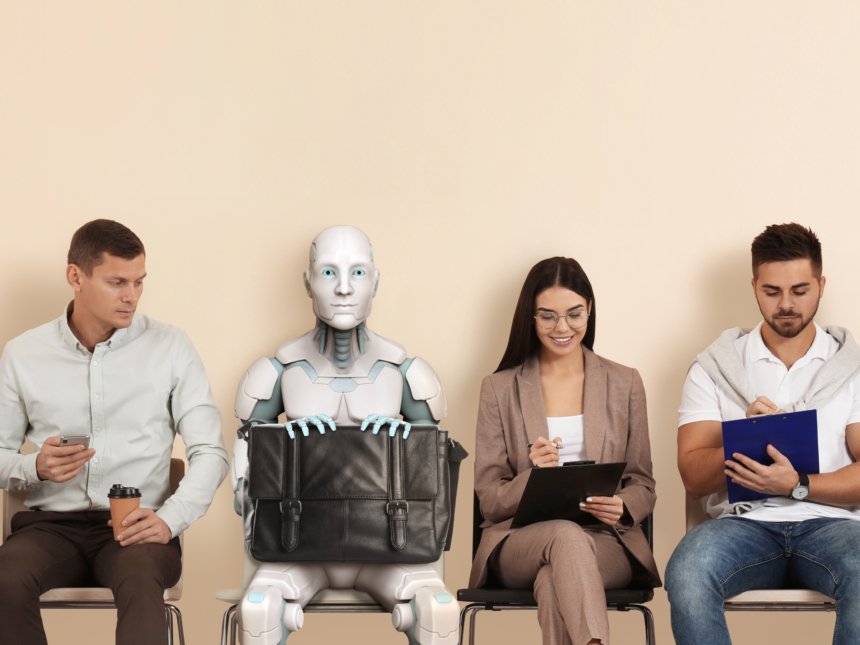
This wave raises several pivotal questions about the future of hybrid jobs and work environments between humans and artificial intelligence inside and outside the Arab world, as the concept of hybrid work environments that combine humans and artificial intelligence agents in their various jobs has prevailed around the world.
Artificial intelligence is usually mainly responsible for entry-level or entry-level jobs, which causes companies to abandon human employees in these jobs, which raises a more important question: If entry-level jobs are absent, who is training the new generation to work?
Division among experts
The New York Times report reveals a clear division between business and artificial intelligence experts. Ethan Mollick, a professor at the Wharton School at the University of Pennsylvania and author of “Shared Intelligence” and the upcoming book “Coexistence,” believes that the real question is not about the ability of artificial intelligence to perform jobs, but rather what kind of world we live in and the extent to which artificial intelligence has penetrated it.
He added in his statements to the newspaper that what is happening with programmers is the best example of this transformation, as the programmer has transformed from a person who writes good and regular code to a person who manages engineering tasks and projects, stressing that other transformations will appear in what people’s jobs are expected to be like in the future.
In contrast, Daron Acemoglu, an MIT economist and Nobel laureate, and Clara Shih, a former Salesforce and Meta executive and founder of the non-profit New Work, stand in contrast.
In her speech to the American newspaper, Shih wondered about the impact of artificial intelligence on the classes of workers younger than managers, and Acemoglu confirmed that the economy will not be able to support 100 million entrepreneurs for companies that work with artificial intelligence.
Dean Ball, a former advisor in the field of artificial intelligence to the administration of US President Donald Trump, adds that the impact of artificial intelligence is limited to already automated tasks that can be largely delegated to computers, so he is optimistic about artificial intelligence technologies.
While the debate continues between the four experts about which jobs may be affected by artificial intelligence and how the technology will directly impact daily life and jobs in general, they ultimately agree on the technology’s ability to significantly transform and enhance jobs.
Flexibility is the watchword
Shih emphasized in her speech that artificial intelligence skills are moving targets that do not stand still for a long time, as they are constantly changing without a final destination, and therefore the flexible ones who are able to constantly learn new skills will prevail, adding: “Working as a manager has become easier thanks to artificial intelligence.”
For his part, Pal believes in his words to the same newspaper that those with general knowledge and the curious will do well in the future of artificial intelligence, adding that the ability to think broadly and critically will help them succeed in hybrid work environments that mix artificial intelligence and humans.

In contrast, Acemoglu believes that technical jobs such as electricians and heating technicians will become more complex, because there is already a shortage in these professions, in addition to the intervention of artificial intelligence in them, which may make them more productive, but investments are not directed to this area.
Xie later added that those who know how artificial intelligence and its agents work can easily get their dream job, while the jobs of beginners who do not have these skills will disappear completely.
Hybrid work environments are the new age
Experts agree – according to the New York Times – that artificial intelligence will lead to the birth of a new type of work environment that combines human employees and artificial intelligence agents, and that the majority in the future labor market will be for those who have the necessary skills to deal with these different environments.

This is consistent with a report published by “Time” magazine in 2025 about a set of tips that pave the way for employees to enter and succeed in hybrid work environments. At the forefront of these tips was thinking as a manager to guide teams and different technologies and benefit from them.
But in general, these trends raise several pivotal questions that are difficult to answer today. Will artificial intelligence become a partner employee in different work environments and companies? Or is he on the path to completely replacing employees so that he can perform all the tasks alone?