Published On 11/6/2026
|
Last update: 11:23 (Mecca time)
Hardly anyone mentions the South African national team without mentioning the 2010 World Cup, which was a unique event of its kind in the world of football when it was held on the African continent for the only time so far. The opening match of the World Cup between South Africa and Mexico is hardly mentioned in any context, except for this name: Siphiwe Tshabalala.
This is because each edition of the World Cup has its immortal moments that remain firmly established in the memory of the fans, no matter how many years pass. The 2006 World Cup in Germany immediately brings to mind the famous headbutt of Zinedine Zidane, while the 1986 World Cup in Mexico is linked to Diego Maradona’s hand-goal. As for the 2010 World Cup in South Africa, it will remain linked to that exceptional goal scored by South African winger Siphiwe Tshabalala in the opening match against Mexico.
Read also
list of 2 itemsend of list
As the start of the 2026 World Cup approaches, one of the most influential moments of the tournament comes back to mind, especially since the opening will bring together the teams of Mexico and South Africa in an exceptional replay of the 2010 World Cup.
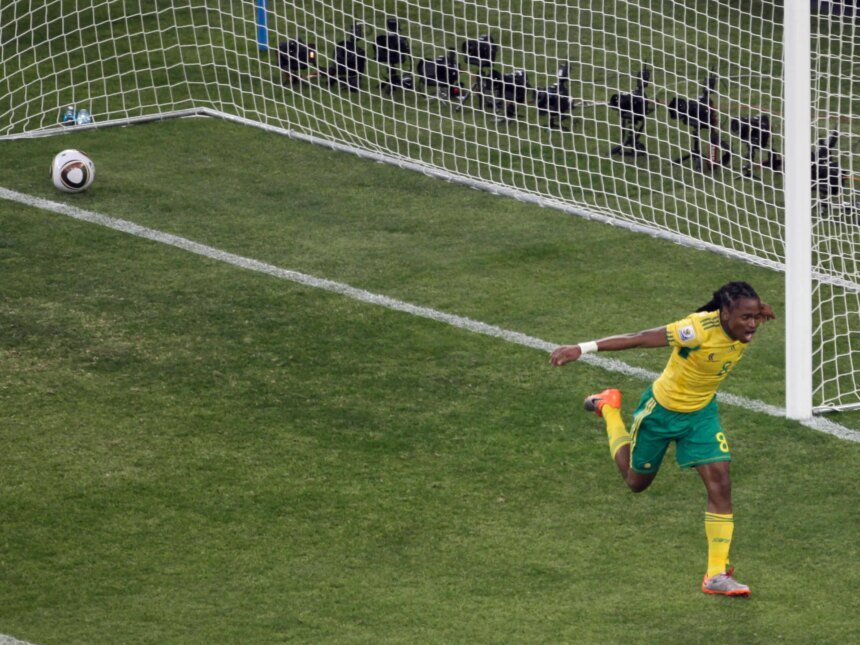
On June 11, 2010, Tshabalala fired a stunning shot into the top corner of the goal, giving his country the first lead in the tournament amid an exceptional festive atmosphere inside Soccer City Stadium in Johannesburg.
It was not the goal alone that gave that moment its historical value, but rather the player’s famous celebration on the touchline added a special character to it, before the English commentator Peter Drury immortalized it with his famous phrase: “A goal for Bafana Bafana… a goal for South Africa… a goal for all of Africa”.. and since then these words have become an integral part of the World Cup memory.
The goal ignited the enthusiasm of more than 85,000 spectators gathered in the stands, at a time when South Africa was experiencing a historic moment as the first African country to host the World Cup finals, and since that evening, Tshabalala has turned into one of the most prominent football icons on the African continent.

New life
After the curtain came down on his football career, Tshabalala headed to various fields outside the green rectangle. He published a number of books aimed at children, and also joined the Executive Program for Players of the International Federation of Football Associations, in addition to his continued participation in community and charitable initiatives aimed at supporting children and less fortunate families, including campaigns to provide school shoes for the needy, according to the British newspaper “The Mirror”.
Tshabalala also continues to appear in events for African football legends, and revealed through his social media accounts that he recently participated in educational programs at Harvard Business School in the American city of Boston.
Greater than any personal achievement
In previous statements to the FIFA website in 2020, Tshabalala confirmed that his goal against Mexico will remain the most prominent event in his sporting life, no matter what other achievements he achieves.
He said: “That goal will remain the biggest event in my career because it gave happiness to a huge number of people and left an impact on the lives of many. I love this goal very much, but it has become bigger than me as a person.”
He added: “Even though many years have passed, I still receive daily messages from fans talking about that moment. This makes me feel humble and proud at the same time. It was an exceptional goal at the time, and it remains so today, and I believe it will remain special forever.”
Memories of the historical target
In the same statements to FIFA, the former South African star revealed the details of the goal that entered the history of the World Cup, explaining that he initially thought about playing the ball falling over the goalkeeper after noticing his progress from his goal, before he backed down from the idea at the last minute.
He said: “In the end, I decided to rely on force instead of technical touch. Just before the shot, the ball bounced a little off the ground, which helped me. As soon as it left my feet, I felt that it was heading toward the net.”
He added: “I was imagining before the match that I would perform well and score a goal. Even the celebration was prepared in advance. We had great confidence in our ability to score.”
A distinguished march
Tshabalala began his journey on the field with South African club Free State Stars, before moving to Kaizer Chiefs, the club that witnessed the best years of his career between 2007 and 2018.
He then had a short professional experience in Türkiye with BP Erzurumspor, before returning to South Africa through the AmaZulu portal, where he ended his career as a professional player.
At the international level, Tshabalala is one of the most prominent names in the history of the South African national team. He made his first appearance for the national team in a friendly match against Egypt in early 2006. He later participated in three editions of the African Cup of Nations in 2006, 2008 and 2013. He was also part of his country’s squad in the Confederations Cup in 2009.

But despite all these participations, his missile goal at the opening of the 2010 World Cup remains the moment that created his historic legacy, not only in the memory of South African fans, but in the memory of the entire World Cup.
When Mexico and South Africa face off hours later in their second edition of the opening of the World Cup, the eyes of the entire world will look to a “new Tshabalala” in that match.