Published On 11/6/2026
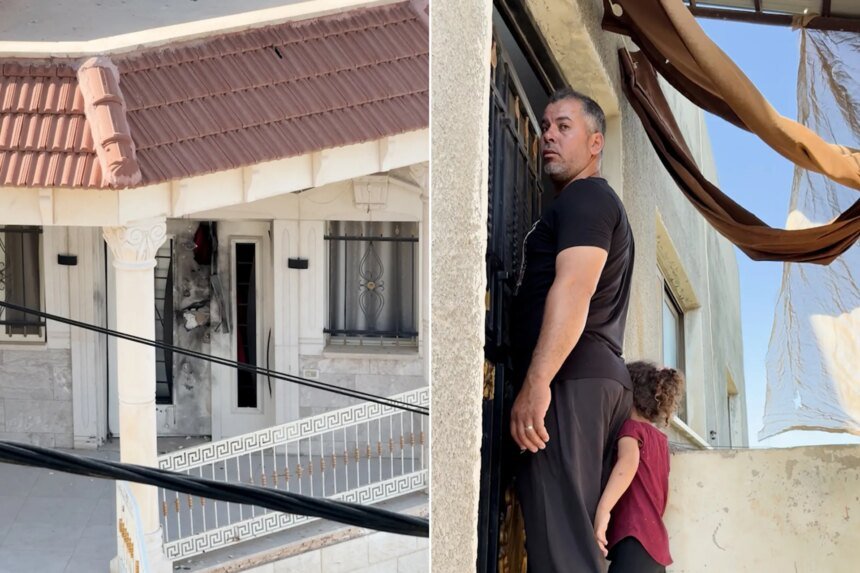
fetus – On the outskirts of Jenin camp in the northern West Bank, Moatasem Siti does not enter his house through its main door, as that entrance has been closed for months with piles of dirt and barbed wire, placed by the Israeli occupation forces during its aggression against the region.
This reality prompted Steti to rely on a back door that he created himself, through his neighbors’ house, as the only option to reach his home, and over time it turned into a daily crossing point, conditional on caution.
Every movement within the region requires careful monitoring of the field situation, in light of the frequent Israeli military presence, in addition to the occupation launching reconnaissance planes over the region from time to time. This reality reflects part of what the residents of Jenin camp are suffering from, especially those living on its outskirts, where their movements have become linked to complex procedures.
This is what prompted him to return from his displacement
Stity’s suffering began after the Israeli military aggression against the Jenin camp on January 21, 2025, as part of an operation called “The Iron Wall” and is still continuing to this day. This was followed by an expanded military operation that still affected the Tulkarm and Nur Shams camps in the northern West Bank.
According to Jenin Municipality data, Israeli military operations led to the displacement of about 22,000 citizens from the camp and its surroundings, in addition to extensive damage to the residential structure, as the municipality monitored the destruction of 300 buildings in the camp, equivalent to approximately 1,500 housing units.
At the beginning of the aggression, the occupation army expelled the Siti family from their home, forcing them to move to a rented house outside the camp. Steti explained that the occupation forces turned his house into a military barracks for a period of 31 days, and after they left, they burned it with all its furniture, smashed the windows and broke the doors.
A small barn in the courtyard of the house was not spared from the attack, as some of the sheep and chickens that lived in it were subjected to intentional shooting from the occupation soldiers.
As a result, the young Palestinian man made a bold decision to return home despite the great dangers surrounding the area, justifying the matter by his inability to pay the costs of renting an apartment, in light of difficult economic conditions.
He pointed out that he is still using the back road he built through his neighbors’ house, after the main entrance was completely closed. He says that he returned home and brought new furniture, and carried out restoration and painting work on the house to rehabilitate it for habitation, hoping that those affected would be compensated and the destroyed houses would be reconstructed.

Due to the army raids
Steti pointed out that the situation around the house is still unstable, as occupation forces incursions into the area are repeated from time to time. He counted about 59 times in which he witnessed the presence of military vehicles in the vicinity of the house, and sometimes the use of drones.
He added that his daily life has become linked to a state of constant anticipation, in light of the possibility of incursions occurring at any time, in addition to the continued presence of barbed wire and the isolation of the area from its surroundings. He pointed out that the occupation closed the area with dirt and barbed wire and partially isolated it from the rest of the camp, which made movement to and from it more difficult.
He explained that the changes that occurred in the camp, as a result of the Israeli aggression, are clear, and that some houses that were previously invisible have become exposed as a result of the demolition operations, as is the case with his relatives’ house in the camp, which “I did not see before, and now it appears clear due to the demolition of the houses.”
Despite the dangers surrounding him and his family, Steti continues to live in his home, and says that he is “forced and has no other choice,” in light of difficult living conditions that prompted him to return and stay, trying to adapt to an unstable reality imposed by field developments in the region.