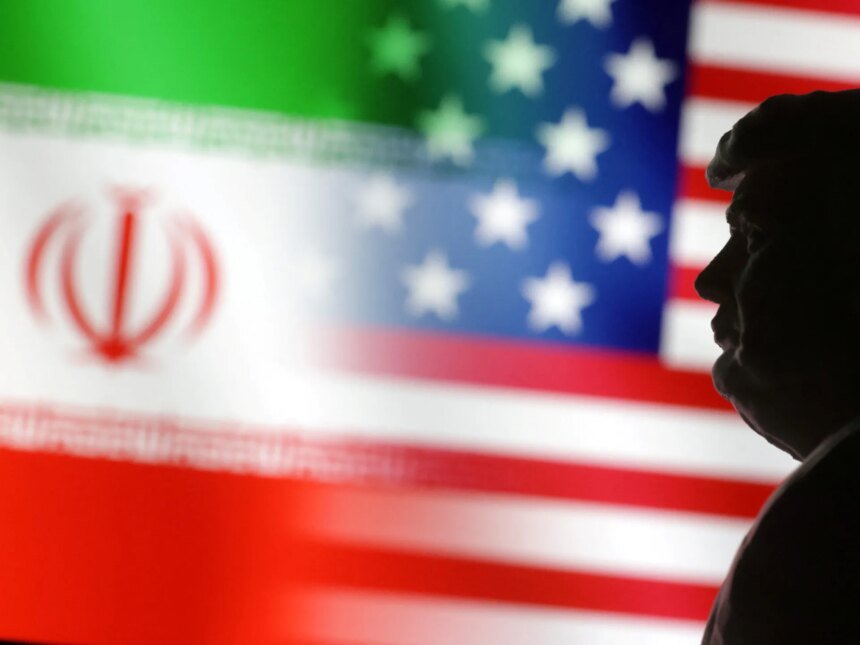
After months of military confrontation, political tensions, and mutual pressures that pushed the region to the brink of a broader military confrontation than before; All eyes are on what appears to be an unprecedented diplomatic breakthrough in the course of negotiations between Washington and Tehran.
The indicators issued by both parties – in addition to the intensified movements of the regional mediators – suggest that the two sides have apparently succeeded in overcoming most of the knots that have hindered the negotiations over the past period, a development that may constitute – according to observers – a turning point in one of the most complex crises in the Middle East.
While Iran talks about an “almost ready” understanding awaiting the completion of its final procedures, US President Donald Trump confirms that the agreement is close, at a time when leaks and identical positions indicate that most of the fundamental differences between the two parties have been resolved.
These indicators reinforce reports of an intense diplomatic movement led by Qatar in recent days, which contributed to bringing viewpoints closer between the two sides and pushing the negotiations towards their decisive stages.
American optimism and Iranian caution
Between American optimism and Iranian caution, Washington and Tehran seem closer than ever to an understanding whose impact may not only be limited to bilateral relations, but also extends to thorny regional issues that have been at the heart of tensions between the two parties for decades.
In the latest official positions, the Iranian Ministry of Foreign Affairs announced that “the text of the understanding is almost ready,” but stressed that the agreement with Washington has not yet become final, explaining that the country’s highest authorities will study all the terms of any possible understanding before making a final decision regarding it.
The ministry said that most of the terms of the agreement had been decided during the previous rounds of negotiations, but the American side sought – in later stages – to add new demands, stressing that Iran did not back down from what it considered its red lines in the negotiations. It also denied the validity of what is being circulated regarding the date or place of signing the agreement, and described this information as mere media speculation.
The Iranian Foreign Ministry confirmed that the mediators are continuing their efforts between the two sides, noting the active role of both Qatar and Pakistan in bringing points of view closer together. It also revealed that it had discussed with a Qatari delegation that recently visited Tehran a number of points related to the negotiation process.
On the other hand, US President Donald Trump seemed more optimistic, declaring that the United States had reached a “great settlement” with Iran, and expressing his belief that the Iranian leader (Mojtaba Khamenei) had agreed to the understanding proposed between the two sides, and that the signing of the agreement would be soon.
He said that a detailed memorandum of understanding had been reached and that Iran wanted to sign it, considering that the agreement would be beneficial to the United States, the Middle East, and Iran alike. Trump added that Iran agreed not to possess nuclear weapons, and that the Strait of Hormuz would be opened after the signing of the agreement.
These statements intersected with what was reported by the American website Axios, citing informed sources, which reported that the main differences in the negotiations between Washington and Tehran were resolved during talks held by Iranian officials with Qatari mediators.

Agreement in its final stages
According to the sources, the Qatari and Iranian sides reached a text formula that is likely to be accepted by the American administration, which put the negotiations on the cusp of their final stage.
The website added that the talks included a mechanism for releasing frozen Iranian assets, in addition to arrangements related to opening the Strait of Hormuz during the ceasefire period, which were considered among the most prominent outstanding issues between the two parties.
The Israeli position
In Israel, the matter seemed different, as recent developments revealed discrepancies regarding the level of Israeli knowledge of the negotiation process, as Axios quoted an informed source as saying that Israeli Prime Minister Benjamin Netanyahu was not informed in advance of the recent developments related to the agreement, and that he was surprised when Trump issued his initial statement regarding the understanding with Iran.
This came despite Netanyahu’s office announcing that the US President had made a phone call with the Israeli Prime Minister regarding the memorandum of understanding being prepared with Iran in preparation for the start of official negotiations.
The Israeli Prime Minister’s Office confirmed that Tel Aviv is not a party to the memorandum, but indicated that Trump renewed his commitment to preventing Iran from possessing military nuclear capabilities, working to remove enriched materials and dismantling the enrichment infrastructure, limiting missile production, and ending Tehran’s support for its allies in the region.
In reading these developments, Professor of Conflicts at the Doha Institute for Graduate Studies, Ibrahim Freihat, believes that the current round differs from dozens of previous stations during which Trump announced that an agreement was close to being reached, without this leading to tangible results.
Freihat told Al Jazeera that Trump announced for the fortieth time the imminence of reaching an agreement with Iran, but this time may be different because the parties have actually become closer to the agreement.
Freihat pointed out that the current announcement is not similar to previous announcements that were preceded by a wide gap between the statements and the negotiating facts. He added that the agreement is already close, and that the general framework of the understanding has been completed, while the discussions are currently focused on some limited details.
He explained that a two-hour meeting between the concerned parties was supposed to witness the announcement of the agreement, but that did not happen due to detailed issues. According to his assessment, Trump had agreed to the essence of the draft, but the subsequent stage witnessed attempts to exert more pressure with the aim of extracting additional conditions and improving some provisions before the final announcement.
Freihat pointed out that this behavior is consistent with Trump’s negotiating style, which is based on continuing pressure until the last moments to achieve the greatest possible gains.
The professor of conflicts at the Doha Institute for Graduate Studies explained that the most prominent factor in reaching this stage was the intense diplomatic activity led by the State of Qatar in recent days.
According to Fraihat, this diplomatic movement had a direct impact on achieving the current breakthrough, which explains the growing state of optimism about the possibility of soon announcing a long-awaited agreement between Washington and Tehran.