Published On 11/6/2026
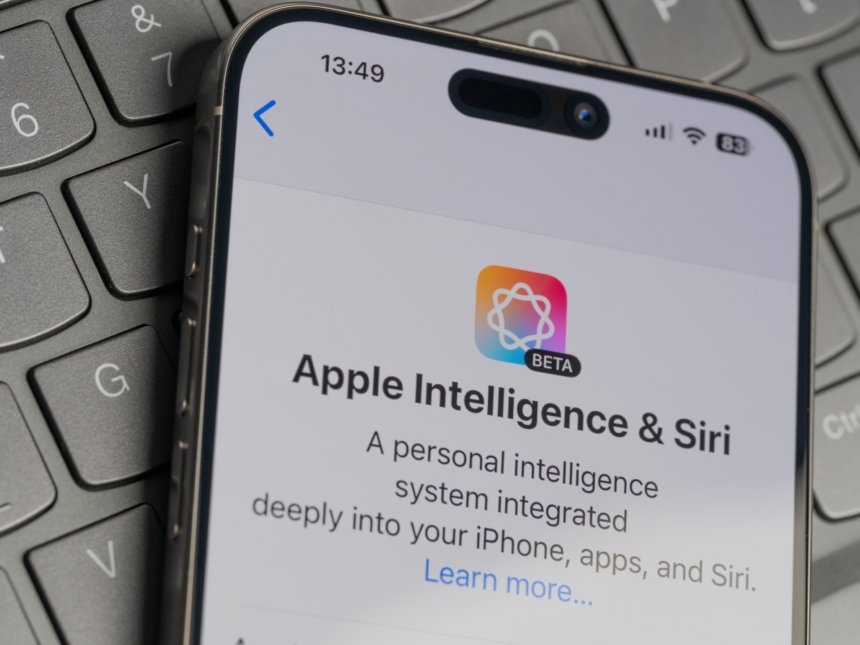
iPhone users in Europe will not get the most prominent features that Apple announced at the recent developer conference it held at its headquarters in California recently, which is “Siri AI,” which users have been waiting for since 2024, while users in the rest of the world get it, despite the fact that Europe represents the second largest global market for Apple with sales amounting to $111 billion annually, according to the company’s announcement at its recent annual developers conference.
The company blamed the regulations and restrictions imposed by the European Union on the company and the introduction of its new benefits to its citizens, stressing that the European Commission refused to deal constructively with it to ensure privacy and security on its devices, according to a Reuters news agency report.
The difference between the European Commission and the company stems from the Digital Markets Law, which the Commission approved in 2022 and then amended in the past months to strengthen European sovereignty over its citizens’ data and digital services.
This law forces large technology companies such as Apple to make their products highly interoperable, which in the case of Siri means allowing external developers to provide competing digital assistants that work with artificial intelligence instead of making this part limited to Apple’s personal assistant.
For their part, European law regulators criticized Apple’s announcement and blamed the European Union’s executive rules, noting that the European Commission rejected the company’s request for an 18-month exemption from compliance with the laws.
But why did the matter develop to such a degree that European citizens were prevented from accessing the latest Apple technology?
Apple accuses the Commission… and the Commission responds… the decision is its decision
Apple believes that personal assistants enhanced by artificial intelligence will have unprecedented access to a wide and large range of users’ personal data, according to a Reuters report.
Therefore, granting this level of access to a third-party app developer carries the risk of users’ personal data, including passwords and photos, being stolen or even being spied on directly.
Apple explained in a Reuters report that it detailed its plans for the new personal assistant, Siri AI, to the European Commission six months ago, in addition to submitting a technical proposal that would require a secure third party to access that user data.

The company’s chief marketing officer, Greg Joswiak, added, “In essence, the Commission is asking us to conduct a very dangerous experiment on many, many tens of millions of users,” noting that they want to make artificial intelligence capabilities available experimentally at first.
For its part, the European Commission rejected these criticisms, as Commission spokesman Thomas Renner explained to reporters in Brussels: “The decision not to launch Siri AI in Europe is Apple’s decision alone,” noting that the law does not prevent the company from launching new products in European markets.
The New York Times report reveals that Europe is Apple’s second largest market after the United States of America, with sales reaching $111 billion annually, and China comes in third place.
European user without Siri AI
Apple insists on its position that providing personal assistants enhanced with artificial intelligence on the iPhone from external development represents a major security risk to user data, so it proposed to the Commission to also allow the installation of external assistants, but undermine their access to user data, which the Commission rejected, according to the “New York Times” report.
Therefore, Apple does not currently have a clear timetable for making the new personal assistant available on user devices in Europe, with the exception of Mac computers, which will receive the new personal assistant simultaneously with the rest of the global markets, according to the New York Times report.