Published On 11/6/2026
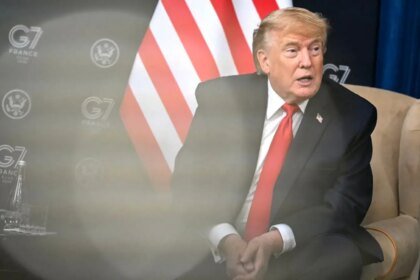
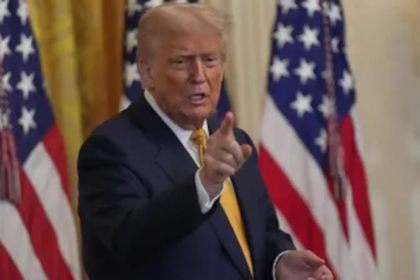
The Middle East region has entered a very critical phase after US President Donald Trump threatened to launch a direct military strike against Iran, describing it as “appropriate punishment” for what he called Iranian procrastination.
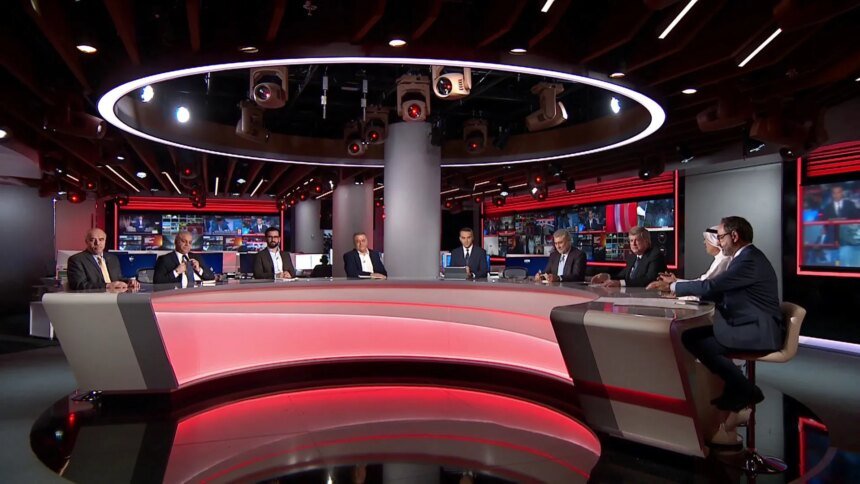
This sudden military shift, which coincided with the assurances of his deputy, J.D. Vance, that an agreement would soon be reached, opened the door to an exceptional political debate witnessed on Al Jazeera’s screen within the “Discussion of the Hour” program, to dismantle the options of war and peace and their repercussions on the security of the region.
Washington and Tehran.. direct clash
In reading the seriousness of the threats, the deputy editor of the Washington Times, Tim Constantine, believes that the tone of the White House has changed radically. After Trump had previously spoken in general terms, his final threat was decisive and direct by saying, “We will strike.”
Constantine attributes this military transformation to Washington’s awareness that shooting down the Apache helicopter and deliberately targeting American soldiers represents a development that cannot be overlooked, pointing at the same time to a state of fatigue prevailing in the American administration regarding Iranian behavior.
On the other hand, Hassan Ahmadian, professor of Middle Eastern studies at the University of Tehran, stressed that the current escalation is an integral part of pressure tactics at the negotiating table.
Ahmadian explained that Iran has moved its security doctrine from “patience” to “strategic symmetry,” stressing that if Washington embarks on a military adventure, the Iranian response will be strong and direct to include vital targets in Israel and American interests in the region.
Behind the scenes of diplomacy… secret concessions and the “Obama complex”
For his part, the senior researcher at the Al Jazeera Center for Studies, Liqaa Makki, analyzed the dimensions of the situation, revealing that two weeks ago, Trump sent amendments that included important concessions, most notably agreeing to reduce highly enriched uranium within Iranian territory, as Tehran was demanding.
Makki stated that Trump was expecting a quick Iranian response, but Tehran’s calculations focused on the issue of financial compensation and the release of frozen funds, which the US President rejects in order to avoid repeating the Obama administration scenario.
This frustrated Washington and prompted it to accelerate the option of military pressure, coinciding with the movement of a Qatari delegation to Tehran as a last-minute effort.
In this context, Middle East politics expert, Mahjoub Zweiri, pointed out that the Iranian strategy follows a Persian proverb, which states that “the counting of chicks takes place at the end of autumn,” which means focusing on the final outcome, not immediate reactions.
Al-Zwairi pointed out that Trump is facing severe internal pressure with US inflation rising to 4.2 percent, which is eating up the 3.2 percent wage increases, which makes him driven by the search for a quick political achievement to end the state of “no war and no peace,” ruling out at the same time that Washington has a real appetite to fight a comprehensive and open war.
The Gulf position and regional expansion… energy security and the right of collective response
In terms of regional repercussions, opinions varied about the Gulf position. The head of the Al-Madar Center for Political Studies, Saleh Al-Mutairi, believed that the joint statement of the foreign ministers of the Gulf Cooperation Council countries issued from Manama represented a decisive step to establish the right to respond collectively or unilaterally to Iranian threats, announcing a move towards the Security Council to protect vital installations such as Kuwait Airport and gas refineries.
Al-Mutairi criticized the American position that focuses on the interests of Washington and Tel Aviv without taking into account the strategic security of its partners in the region.
Meanwhile, Professor of International Conflicts at the Doha Institute for Graduate Studies, Ibrahim Freihat, confirmed that the issue of revenge for the Apache helicopter has practically ended, and that the current focus is on the “clash of wills” and not the conflict of weapons.
Freihat explained that the Gulf move towards the Security Council aims to build “international and regional legitimacy” for any future step, warning that the escalation getting out of control could drag the region down complex paths, especially with the organic intertwining between the Iranian front and the Lebanon and Yemen fronts.