Most Americans still remember the saying of James Carville, Bill Clinton’s campaign advisor: “It’s the economy, stupid,” which took root over time and even became an iron rule in the American elections. Polls may show voters’ interest in democracy, national security, or foreign policy, but when they get to the polls they usually remember the gas station they stopped at that day, or the credit card statements they have to pay within days.
Donald Trump is more aware of this fact than most living politicians, as he arrived at the White House in 2016 benefiting from economic anxiety, then was partially damaged by an economy destroyed by the Corona pandemic in 2020, before returning to power in 2024 based on a clear promise to eliminate inflation and reduce gasoline prices to less than two dollars per gallon “within twelve months.”
But now, less than two years into his second term, that promise is crumbling before our eyes, as the November 2026 midterm congressional elections approach like a speeding train that cannot be ignored.
“I don’t care about the midterm elections.”
During one of his repeated speeches in which he stressed to reporters the necessity of opening the Strait of Hormuz, Trump said that Iran believes it can “wait until my term is over.” Because of the approaching midterm elections, he added that he “does not care about the midterm elections.”
When Trump ran for president in 2024, he won a second term supported by a clear superiority in the economic issues, inflation, and energy prices. Only a year and a half later, those advantages are beginning to turn into potential weaknesses, as voters grow increasingly dissatisfied with rising prices ahead of the upcoming fall elections.
US inflation rose to 3.8% year-on-year in April, the highest level since 2023, and much of this rise was the result of the large jump in energy prices that has continued since the start of the war with Iran. Oil and gas prices also rose to their highest levels since 2022, and the average price of a gallon of regular (cheaper) gasoline reached $4.50.
Only 26% of Americans approve of Trump’s performance on inflation, while satisfaction with his performance on gasoline prices does not exceed 21%, with noticeable dissatisfaction even among some of his supporters. Analysts believe that this is not just a passing political problem, but rather a major electoral crisis by all standards.
Hormuz trap
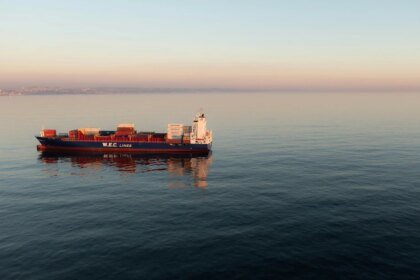
The Strait of Hormuz crisis embodies how geopolitics and economics have become two sides of the same political problem. Although the United States imports a limited amount of oil through the Persian Gulf, domestic auto fuel prices are affected with every rise in global oil prices.
Energy Secretary Chris Wright indicated that the era of cheap gasoline has temporarily stopped, warning that a return to prices of less than three dollars a gallon may not happen before 2027, which means that the suffering of voters at gas stations will continue until after polling day.
With Americans forced to change their spending patterns; Due to the increase in the price of gasoline by more than 50% From the beginning of the war, the Democrats had already begun to build StrategyElectoral charges on this poignant issue. They point out that the cost of filling a fuel tank has not been this high since August 2022, when Republicans focused relentlessly on fuel prices and regained control of Congress. History seems to repeat itself, but in the opposite direction.
Presidents who retreated in the face of the economy… the record of history
Trump is not the first American president to face this difficult test, in which economic anxiety puts pressure on electoral calculations, as history does not spare us examples of American presidents who made or failed to make fateful decisions in the election year.
During the economic recession in 1974-1975, then US President Gerald Ford followed the style of economic frankness, and his campaign raised the slogan “End inflation now,” in reference to the inability to confront inflation. As the recession deepened, Ford found himself politically exposed, losing to Jimmy Carter in 1976.
Democrat Jimmy Carter and his oil crisis in 1979 represented the example most relevant to what is happening today, as the Iranian revolution disrupted global oil supplies, causing queues of cars to extend in front of gas stations throughout the American states. Carter and then Federal Reserve Chairman Paul Volcker were forced to choose the difficult remedy, which was to raise interest rates to about 20%. Inflation was eliminated then, but Carter’s presidency also ended, with Republican Ronald Reagan ascending to the White House with a landslide victory in 1980.
In 1990, George H. W. Bush (Republican) raised taxes after pledging during his famous election campaign, saying: “Read my lips: no new taxes.” Although the decision was financially justified in the opinion of many analysts, it was politically disastrous, and paved the way with the 1991-1992 recession for the victory of Bill Clinton, the Democratic Party candidate.
As for Clinton himself, he raised taxes in 1993 to address the fiscal deficit before the elections. Although the decision caused his party to lose the 1994 elections, the end result was a budget surplus and a thriving economy, and he was easily re-elected in 1996.
In 2008, George W. Bush faced the collapse of the global financial system weeks before the election. He was forced to choose between adhering to free market ideology, or adopting a $700 billion bank rescue plan. The shaken president chose the bailout, which he believes saved the global economy, but also contributed to the Republicans losing the White House.
Then came Democratic Barack Obama, who inherited the crisis and approved an economic stimulus package; He saved the auto industry in 2009. His party was punished in the 2010 elections, but the economy recovered, and Obama won a second term in 2012.
The danger of “I don’t care”
When Trump says that he does not care about the midterm elections, this may express a real strategic determination towards Iran, but his ignoring the elections does not necessarily mean ignoring the economic pressures that might push him to make more realistic and pragmatic decisions.
I am not claiming here that democracies are perfect, but one of their advantages is that electoral accountability ultimately forces leaders to feel the effects of the policies they implement. As for the president who believes that he is above this accountability, he may continue with a proven harmful approach for a longer period than necessary.
Some Republican strategists now believe that even if the war with Iran ends soon, voters may not feel that their financial conditions have improved before the midterm elections, confirming the harsh rule of economic policy: the pain is felt immediately, but the recovery takes months or years.
Despite reservations about his personality and style, many do not deny that Trump is a brilliant politician who has repeatedly defied expectations, which creates the possibility that he has a plan to end the crisis with Iran and reduce prices before November.
But the history of American presidents and elections teaches us one lesson that does not change: You can say that you do not care about the economy, and you can say that you do not care about the elections, but the American voter who fills the tank of his car with gas on the morning of Election Day will decide at that time whether that is true or not.
The opinions expressed in the article do not necessarily reflect the editorial position of Al Jazeera Network.