Published on 6/6/2026
The US-Israeli war on Iran did not lead to a freeze in the real estate market in Tehran as expected, but rather contributed to reviving a market that had been stagnant for years, with Iranians rushing to buy housing and land as a haven to protect savings from accelerating inflation and the decline in the value of the local currency, according to a Bloomberg report.
According to estimates by the Tehran Real Estate Agents Association, housing prices and rents in the capital have risen by about 80% since the outbreak of the war in late February, at a pace that is almost equal to the annual inflation rate, which reached 84%, which is the highest level the country has witnessed in decades, according to government data reported by Bloomberg.
The report indicates that this recovery does not reflect an improvement in economic confidence as much as it reflects escalating fears of savings losing their real value, at a time when real estate trading volumes are still relatively limited within a city inhabited by about 10 million people.
Real estate outperforms gold
The shift towards real estate coincided with the decline in gold prices inside Iran after a historic rise, which prompted many investors and families to search for alternative tools to preserve value.

The Bloomberg report quoted a real estate broker in Tehran as saying, “An apartment that was worth 30 billion tomans before the war was sold this week for 58 billion tomans,” adding that the war “only brought more price increases.”
The broker explained that many sellers are postponing the listing of their properties in the hope of achieving greater gains in the future, while buyers are rushing to convert liquidity denominated in riyals into tangible assets before the money loses an additional portion of its value, describing the market as “in a state of chaos.”
The wave of rise was not limited to the capital, as the rural areas surrounding Tehran, in addition to the coastal cities overlooking the Caspian Sea that received large numbers of displaced people during the war, recorded significant increases in prices and rents.
All-cash market
The Iranian real estate market differs from many global markets due to the absence of an advanced mortgage system, as the majority of purchases depend on direct cash payment.
According to a Bloomberg report, in many cases, buyers are forced to pay the entire value of the property within a short period of a few months, or even in one payment, which makes owning real estate increasingly limited to those with large amounts of liquidity.
This comes at a time when the Iranian economy has been facing high inflation rates, chronic monetary imbalances, and weakness in the banking sector for years, in addition to repeated accusations of widespread corruption and economic mismanagement.
Reformist Iranian economic analyst Saeed Laylaz said, according to Bloomberg, that the authorities used to hold sanctions responsible for economic problems, but today they are “hiding behind war,” adding that the full economic repercussions of the conflict have not yet emerged, and that its effects will become more clear in the coming months.
The riyal loses more than half its value
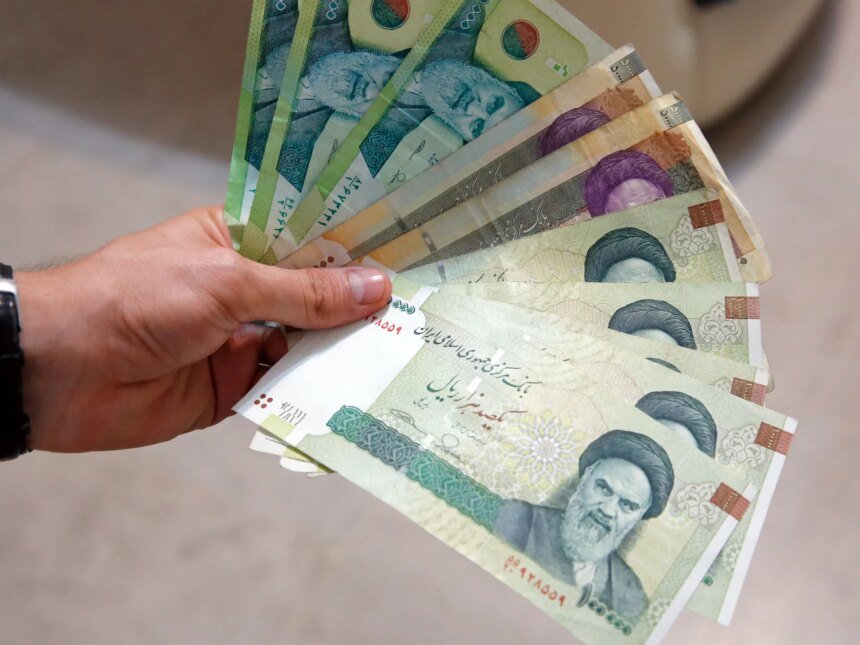
The demand for real estate reflects the extent of the pressure on the Iranian currency, as the riyal has lost about 53% of its value against the dollar on the open market during the past twelve months, according to a Bloomberg report.

This prompted Iranian families to search for any means to protect their savings from erosion, at a time when prices of basic commodities are witnessing unprecedented jumps.
Official data show that the prices of edible oil rose by 354% year-on-year, while the prices of eggs increased by 343%, chicken prices by 287%, and imported rice by 223%, while the prices of dairy products rose by up to 139%.
“Buying a house in Tehran has become just a fantasy,” said a 58-year-old housewife who lives in a middle-class neighborhood in Tehran, according to Bloomberg, adding that maintaining the ability to buy food has become a priority that outweighs the idea of owning real estate.
Does the property provide protection?
Despite the recent rises, the Bloomberg report indicates that the Iranian real estate market has witnessed a state of relative stagnation over the past five years, with investors turning towards gold and foreign currencies rather than real estate assets.
The latest official data available before the outbreak of war showed that house prices nationwide were rising by only about 35% annually, much less than the general inflation rate.
However, some experts question the ability of real estate or other assets to fully protect savings from the current wave of inflation.
Economic Advisor Siavush Qasemi said, in statements reported by Bloomberg, that Iranian families may not be able to keep up with inflation this year, whether they invest in real estate, cars, gold, or foreign currencies, in light of prices accelerating at a pace that exceeds the ability of most assets to maintain their real value.