Published On 3/6/2026
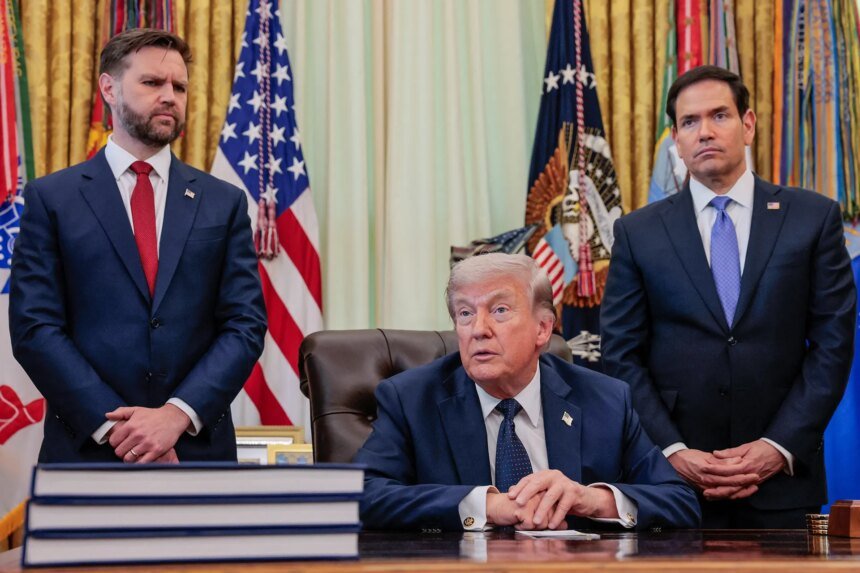
Although US Representative J.D. Vance and Secretary of State Marco Rubio have not yet expressed interest in succeeding Donald Trump in the 2028 presidential election race, Trump believes that their candidacy together makes them “unbeatable.”
The debate is raging within Republican circles about the most likely candidate to represent the party in the 2028 elections, two years before the start of the primary race.
Vice President J.D. Vance and Secretary of State Marco Rubio are widely viewed as both strong candidates and rivals.

Equal chances
Regarding his view of them, Trump said in a New York Post podcast today, Wednesday, “Both of them are excellent. I appreciate them both,” without specifying which of them is most likely to run in the presidential race or whether one of them might occupy the position of vice president.
He added, “I don’t know how they could be defeated if they formed a team together,” noting that the two men “get along great.”
By virtue of his position, J.D. Vance is more closely linked to the results of the current president’s performance, but Trump’s popularity is declining, especially affected by the war with Iran.
The US Vice President tried to distance himself from this conflict without severing his relationship with Trump, in risky political behavior that may not be completely clear to voters.

Republicans praised the Secretary of State when he replaced White House spokeswoman Carolyn Left in the press room in early May, when she was on maternity leave.
In December 2025, in an interview with Vanity Fair magazine, Rubio confirmed that he would not stand in the Vice President’s way if he decided to run in the upcoming presidential elections.
“If J.D. Vance runs for president, he will be our nominee, and I will be one of his first supporters,” Rubio said at the time.

Presidential elections are scheduled to be held in the United States on November 7, 2028 to choose a new president and vice president for a 4-year term.
Trump had won his first term from 2017 to 2021, and began his second term on January 20, 2024, but he is not entitled to run for a third term according to the American Constitution.