Published On 3/6/2026
Increasing scientific and international warnings indicate that the world may be on the cusp of one of the strongest El Niño climate phenomena in modern history, at a time when countries or societies do not appear to be adequately prepared to deal with the potential repercussions.
The British newspapers The Guardian and The Independent referred to United Nations warnings about this phenomenon, especially after the record heat waves that large areas of the world witnessed during recent months, which some scientists consider to be merely a prelude to what may happen during the next two years if the phenomenon develops into what is known as a “super-strong El Niño.”
Read also
list of 2 itemsend of list
According to the Independent newspaper, the El Niño phenomenon is a natural climate cycle that occurs in the tropical Pacific Ocean as a result of an unusual rise in water surface temperatures. Under normal conditions, trade winds push warm water westward towards Asia and Australia, while cold water rises from the depths of the ocean near the coasts of South America to compensate for it.
The phenomenon – according to the Guardian – is due to periodic changes in the water temperatures of the tropical Pacific Ocean. Under normal conditions, trade winds push warm water towards the western ocean, but when these winds weaken or change their direction, warm water accumulates in wider areas of the ocean, leading to disturbances in global weather systems.

Recent data indicate that sea surface temperatures in the reference areas of the Pacific Ocean have already approached the limits used by scientists to announce the start of El Niño, driven by an increase in the temperature of subsurface waters, which enhances the possibilities of the phenomenon developing during the coming period.
Urgent climate alert
Scientists confirmed that the world is already facing the effects of rising temperatures resulting from human activity, and that any natural phenomenon that leads to further heating will increase the severity of climate crises, expand their geographical scope, and accelerate the transmission of their repercussions across borders.
The newspaper said that the World Meteorological Organization indicated that the probability of the El Niño phenomenon forming before next September is about 80%, and it may rise to 90% before November, while most climate models expect the phenomenon to have a moderate to strong impact.
The world may face new record levels of temperature if the return of the El Niño phenomenon coincides with a continued upward trend in global temperatures
Although some estimates have been circulated regarding the possibility of a “Super El Niño” occurring, the United Nations – according to the Guardian – confirms that the final degree of intensity is still undecided due to the differing results of climate models.
United Nations Secretary-General António Guterres described the expected phenomenon as an urgent climate warning, stressing that it will double the negative effects resulting from global warming caused by human activities. He also warned that the world may face new record levels of heat if the phenomenon’s return coincides with the continuation of the upward trend in global temperatures.
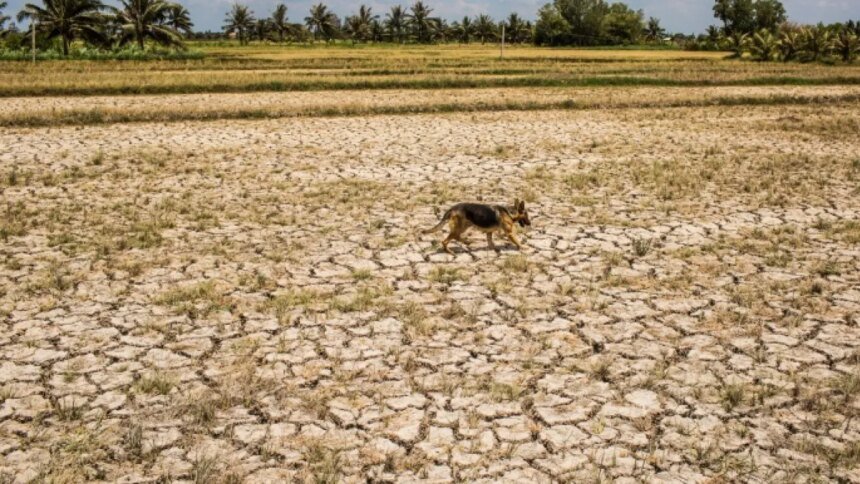
These fears are based on the recent experience of the El Niño phenomenon between 2023 and 2024, when it was among the strongest recorded phenomena and contributed to recording record temperatures worldwide. Consequently, the World Meteorological Organization expects that the coming months will witness a rise in temperatures above their normal levels in most regions of the world, in addition to an increase in the possibilities of heavy rains, severe droughts, and climate disasters.

Strengthening early warning systems
The effects of El Niño vary from one region to another, as it is associated with increased rainfall in parts of South America, the Horn of Africa, and Central Asia, while leading to drier conditions in other regions such as Australia, Indonesia, and the Caribbean. It also affects tropical cyclone activity and patterns of natural disasters faced by coastal countries.
The Independent newspaper warned that the seriousness of the phenomenon lies in the fact that its effects are not limited to the Pacific region, but rather extend to various parts of the world, as it can cause severe droughts in the Americas in some regions, while heavy rains and devastating floods in other regions.
The United Nations calls for accelerating global efforts to confront climate change by reducing dependence on fossil fuels, expanding renewable energy sources, and protecting the groups most vulnerable to risks.
This phenomenon may also affect the patterns of tropical cyclones – according to the newspaper – increasing their activity in the Pacific Ocean while reducing their intensity relatively in the Atlantic. As for Asia, many countries may be exposed to sharp fluctuations in the monsoon seasons, which directly affects food security and agricultural production.
In this context, the United Nations stressed the importance of strengthening early warning systems and preparedness for climate disasters, expressing its concern about the decline in international funding allocated to these programs.
The organization concluded its warnings by calling for accelerating global efforts to confront climate change by reducing dependence on fossil fuels, expanding renewable energy sources, and protecting groups most vulnerable to risks, stressing that the world faces an escalating climate challenge that requires an urgent and coordinated response.