Published On 1/6/2026
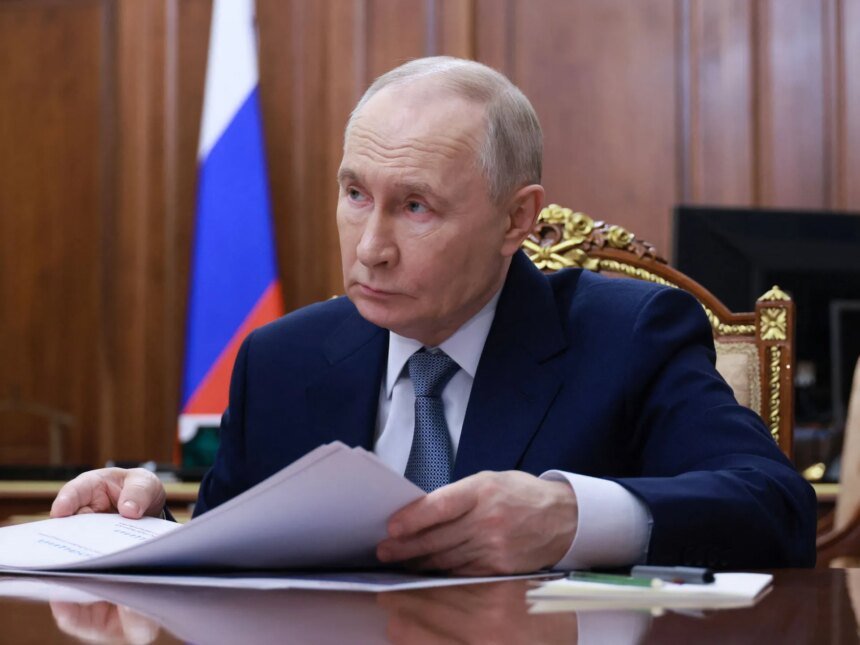
Russia’s top economic officials have warned President Vladimir Putin that current levels of spending on the war in Ukraine have become “unsustainable,” in a sign of mounting disagreements within Moscow’s decision-making circles over how to deal with growing pressures on Russia’s public finances and economy.
Bloomberg reported, citing informed sources and documents it had seen, that officials in the Ministry of Finance and the Russian Central Bank informed the Kremlin that current defense spending threatens to expand the budget deficit to dangerous levels, calling for additional cuts in military expenditures.
Read also
list of 3 itemsend of list
But the Ministry of Defense and some officials close to the Kremlin oppose any reduction in military spending, considering that reducing it may harm the Russian economy, large sectors of which have become dependent on contracts related to defense industries.
According to the sources, President Putin asked the Ministry of Finance to look for reductions in other spending items before affecting military spending, while the final decision regarding any amendments to the budget remains with the Russian President himself.
Growing gap
Estimates within the Russian government indicate that military spending may require additional funding amounting to three trillion rubles (about 36 billion dollars) during the current year to fill a growing gap in war allocations.
When preparing the 2026 budget, Russian officials were also aware of the possibility of a financing gap ranging between 1.2 and 1.5 trillion rubles (about 16.7 to 20.9 billion dollars) emerging during the second half of 2026, amid previous expectations that the war might end and the need for high military spending would decline.
However, these expectations were not met, forcing the government to face increasing financial pressures as the war continued for the fifth year in a row.
Previous warnings
These developments are consistent with previous warnings revealed by the Financial Times a few days ago, based on an internal letter issued by the Russian Ministry of Finance last February.
The document showed that the ministry expected war-related spending to exceed budget allocations by at least two trillion rubles (about 28 billion dollars) during 2026, with the gap potentially rising to four trillion rubles (about 56 billion dollars) in the worst-case scenario.
The Russian Ministry of Finance also estimated that war-related excess spending would reach about 4 trillion rubles annually (about 55.6 billion dollars) during the years 2027 and 2028, calling for freezing trillions of rubles in non-defense expenditures during the coming years.
Increasing disability
Pressures on Russian public finances are increasing as the budget deficit expands faster than expected.
According to official data, the budget deficit during the first four months of 2026 amounted to about 5.9 trillion rubles (about 82.1 billion dollars), or 2.5% of the gross domestic product, exceeding by about 50% the target figure for the entire year.
Moscow had previously expected the deficit to reach only 3.8 trillion rubles ($52.9 billion) during the entire year.
This deterioration prompted the Ministry of Finance to ask government agencies to reduce unnecessary spending by 10%, at a time when the government resorted to withdrawing from the National Welfare Fund to compensate for the decline in revenues.

Limited oil
Although Russia has benefited from the rise in oil prices since the outbreak of the US-Israeli war on Iran last February, Russian officials do not believe that these gains are sufficient to address the worsening financial problems.
Bloomberg quoted government sources as saying that oil prices need to remain above $100 per barrel for a full year in order for there to be a tangible improvement in the financial situation, noting that the rise in crude prices does not address the structural problems associated with growth, inflation, and the banking sector.
Russian Finance Minister Anton Siluanov also recently said that additional revenues from energy exports last April were largely offset by weaker revenues in March, as well as higher government payments to domestic oil companies to curb fuel prices.
These pressures come at a time when the Russian Ministry of Economy reduced its GDP growth expectations to only 0.4% during 2026, compared to previous estimates of 1.3%.
Official data showed that the Russian economy contracted during the first quarter of the year for the first time in three years, which reinforced fears that the economy was approaching recession.
Observers believe that the Kremlin faces an increasing dilemma between continuing to finance the war and bear its economic consequences, or reducing military spending and risking the impact of this on its goals in Ukraine and on economic sectors that have become largely dependent on defense demand.