Al Jazeera correspondents
Tehran – In one of the streets of the Afsariyeh neighborhood, east of Tehran, as the noon hours approached, Mehdi (38 years old) walked quickly, carrying a prescription paper in his hand, while his elderly mother, who suffers from diabetes, was waiting for him in the car, exhausted by the fatigue of searching for insulin doses to no avail.
While Mahdi enters the third pharmacy in less than an hour, he emerges from it seconds later, empty-handed like the previous ones. He says, “I no longer know where to look. The insulin produced inside the country, which my mother used to take for years, has completely disappeared from the shelves, and when I ask about the imported alternative, they tell me that it is available, but at a price that I can no longer afford.”
Read also
list of 3 itemsend of list
He explained to Al Jazeera Net, with a look of despair on his face, “Every month I pay an amount greater than the previous month, as if the medicine had become a luxury and not a right,” adding in a voice dripping with frustration, “What if I lost my mother because of a vial of insulin that I could not find in time?”
Mahdi’s suffering was no exception. A few kilometers away, Zahra Mahtab (52 years old) was roaming the pharmacies of the Ali Abad neighborhood, south of Tehran, carrying a prescription for her husband, who had undergone a kidney transplant months ago, searching for the antibiotics he needed on a regular basis, before she, too, came across almost empty shelves and a growing shortage of some basic medicines.

Exhaustion and scarcity
Speaking to Al Jazeera Net, Zahra recounts her double suffering from the treatment that is still available on the black market, but she is afraid that buying a medicine of unknown origin may harm her husband instead of benefiting him, and she does not have the money to buy the more expensive alternative, adding, “I feel that we are in a race with the unknown. Every day that passes without my husband taking his treatment is a day that is stolen from his life… Don’t we have the right to find the medicine in the pharmacy as people find it everywhere else?”
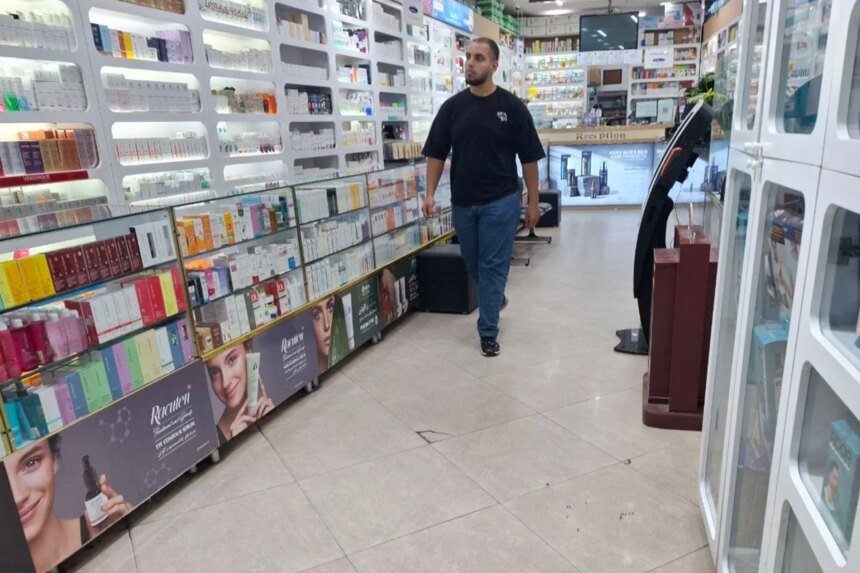
In the midst of this tense scene, Al Jazeera Net met pharmacist Haider in one of the pharmacies in central Tehran, where he explained that “some medications have become rare in recent months, and others have become scarce,” adding – while pointing to shelves that seemed less full than usual – “For example, diabetes medications, including locally produced insulin, have become rare, while foreign alternatives exist, but they are very scarce.”
Haider pointed out in a statement to Al Jazeera Net that patients are forced to resort to imported alternatives at exorbitant prices that exceed the capabilities of many families, explaining that the treatment prescription, which previously cost about one million Iranian riyals (about 0.74 dollars), today requires up to 25 million riyals (about 18.5 dollars) to obtain an alternative medicine.
Import obstacles
As for the causes of the crisis, the pharmacist reveals a darker picture, saying, “Iranian drug manufacturing companies do not answer our questions at all. We deal with distribution companies only, and they in turn simply tell us: We do not have the drug available to supply it to you, but the reason appears to be that the raw material for producing these drugs is imported, and their import has recently been hampered by the naval blockade on Iranian ports.”
Haider continues his speech, revealing details that reflect the extent of the change that affected the pharmaceutical market after the war, saying, “Before the war, pharmaceutical manufacturers used to send their products with incentive concessions to sell them, but after the war, even with the higher prices, we sometimes do not find a medicine to offer to the patient. In my pharmacy, about 90 brands have disappeared so far. We are trying to manage matters by offering similar or alternative medicines,” confirming the availability of many rare medicines on the black market. He says, “There are people who have stored, monopolized, or imported them beforehand.” They sell them at ridiculous prices.”
Haider continued, “After the 12-day war (between June 13 and 24, 2025), I had expected a drug crisis, so I stored very large quantities of medicines in my warehouses. Thanks to that storage, my pharmacy is still standing and has medicines.” Then he concludes his speech with a sentence that summarizes the crisis, “Last year, I was selling a dexamethasone (anti-inflammatory) injection for 70,000 Iranian riyals ($0.05), but today, because of the high price. I started selling it for 670 thousand riyals (half a dollar). All this pressure falls on the patient.”

Why did the crisis worsen?
After leaving the pharmacy, the steps to search for broader answers led us to the clinic of Dr. Mahdi Abdos, a doctor who is active in the field of facilitating the provision of medicines to patients. He seemed ready to open deeper files. He said, “With regard to targeting pharmaceutical companies during the last war, the majority of those companies were not harmed except for one company only, and this has no impact on the pharmaceutical industry, and we believe that the signs of the current crisis began before the war.”
Speaking to Al Jazeera Net, Abdos attributed the causes of the pharmaceutical crisis to the sanctions imposed by the US administration on various Iranian sectors, adding that foreign economic pressures led to the Iranian government canceling the share of many sectors – including medicine – from the preferential currency amounting to 285 thousand riyals per dollar, just as happened with animal feed, which led to a recent increase in foodstuffs.
Then the Iranian doctor went on to explain the accumulated series of collapse in the pharmaceutical sector, and said, “This difference in hard currency prices caused a shortage of liquidity among some pharmaceutical companies, so they were unable to secure some raw materials, until the result of this decision has emerged now, because companies usually buy the raw material months before production.” Abdos added that pharmaceutical companies in the private sector, which for many years enjoyed state support and huge financial facilities, failed to continue working at the previous pace following the cancellation of their share of the preferential currency, and government or semi-governmental companies also The government did not fully perform its mission in the recent state of emergency.

Strategic stock
The same speaker proposes forming a council headed by the President of the Republic, and including the President of the Central Bank, the Minister of Economy, the Minister of Health, the Food and Drug Organization, and representatives of the oversight bodies, to take a decision to open an air bridge between India, China, and Turkey on the one hand, and Iran on the other hand, to facilitate the import of the required medicines without complicated conditions.
As for the strategic stock of medicine, Abdos reveals a remarkable paradox: “One of the good decisions that the government took after the 12-day war was to create a strategic stock of medicine and other basic commodities, as much of this stock is now being used and covers the majority of the shortages, but the drug stock is not complete and has not continued,” calling for a new budget to be allocated to compensate for the shortage in the medical sector.
Then he stops at a question that seems to be troubling him: “Why are the heart and diabetes medications and antibiotics needed by the general public running out of pharmacies, while the expensive weight-loss medications are not in short supply?” Then he concludes his talk about the reasons for the high prices by saying that in addition to canceling the preferential currency for drug producers, there is an increase in the prices of side materials used in the drug industry, such as preservatives, aluminum, and plastic, in addition to the continued pace of Iranian drug smuggling to some neighboring countries.