Published on 5/31/2026
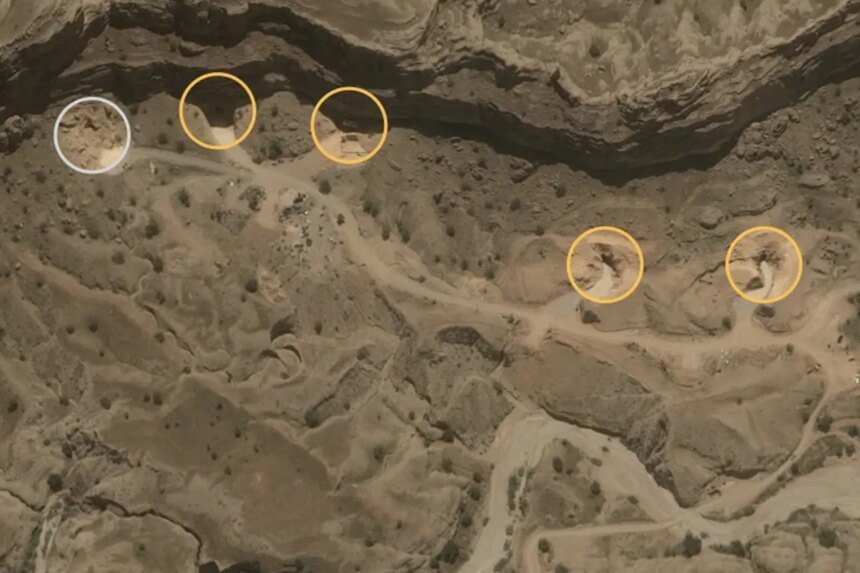
Satellite images revealed that Iran has so far succeeded in reopening 50 out of 69 tunnel entrances in 18 underground missile facilities targeted by the United States and Israel during the past forty-day war.
CNN reported that the image it reviewed showed how Iran used simple equipment such as bulldozers and dump trucks to confront the campaign by Washington and Tel Aviv that targeted its underground missile sites by destroying roads and burying tunnel entrances.
She explained, according to experts, that this indicates that Tehran’s missile capabilities cannot be destroyed by targeting tunnel entrances only, and also reveals the limits of the American bombing plan.
Experts believe that Tehran still has 1,000 missiles stored in underground sites, which would put it in a position to continue launching missiles if the war resumes.
The American network quoted an American official as saying that Iran has exceeded all timetables set by the intelligence services to rebuild its capabilities.
Since a ceasefire agreement took effect on April 8, Iran’s efforts to dig bases have accelerated significantly, and Tehran has also repaired parts of other bases, including roads that were bombed by Washington and Tel Aviv to prevent the use of missile launchers.
According to CNN, satellite images showed that most of the craters resulting from the bombing have now been filled in, and in two locations the roads have been completely resurfaced.

Experts pointed out that it is unlikely that the stocks located at great depths under the surface were subjected to significant damage as a result of the strikes that targeted the surface of the Earth, especially taking into account that the Israeli army targeted the entrances to the tunnels in the same way during the Twelve Day War last year.
At one base outside Isfahan, the United States and Israel carried out multiple strikes to seal four tunnel entrances during the war, and at least 18 bomb craters could be seen at two of the entrances, demonstrating the power of the munitions that were used to seal the tunnels.
But in early May, satellite images showed that a dump truck was being used to fill the craters, and the two other entrances, also blocked by craters and rubble resulting from the bombing, were opened and the roads leading to them, which had previously been destroyed by the bombing, were repaved.
At a base outside the city of Khammin in mid-April, a photo showed at least 10 construction vehicles working on efforts to reopen one of the entrances.
These developments come at a time when diplomatic efforts are still at a standstill, between statements from both sides indicating the nearness of reaching an agreement, and American threats to return to war, while mediation efforts clash with each party’s adherence to its demands and conditions in any deal.