With the end of the mandate of the United Nations Interim Force in Lebanon (UNIFIL) approaching, the issue of its presence is entering a critical phase that reflects the intersection of the security dimension with several considerations, as this comes in light of American and Israeli pressure pushing towards ending the mission or radically modifying it in exchange for a clear Lebanese commitment to the continuation of the international presence.
With the expectation that the Secretary-General of the United Nations will submit a report to the Security Council by June 1, the sensitivity of this issue increases at a time when Israeli violations of the ceasefire in Lebanon continue and Hezbollah responds with attacks on the occupation in light of the presence of Israeli forces in border areas and the existence of an incomplete negotiating path.
UNIFIL was established in 1978 and its tasks expanded after the 2006 war under Resolution 1701, which mandated it to monitor the ceasefire and support the deployment of the Lebanese army in the south.
Over the course of decades, the international force has formed a basic mechanism for reducing escalation through field patrols and a tripartite communication mechanism with both parties, but its presence has not prevented the outbreak of repeated rounds of war and conflict, which reflects the limits of its effectiveness in a complex security environment.

International umbrella
Lebanon is seeking to find an international force to replace the United Nations peacekeeping force deployed for decades in its south, whose mandate expires this year, under American and Israeli pressure, in light of the Israeli attacks on Lebanon and the confrontation between Israel and Hezbollah.
A Lebanese official told Agence France-Presse that Lebanon prefers, after the end of UNIFIL’s mandate on December 31, to maintain “an international presence under the umbrella of the United Nations.”
The Lebanese position revolves around maintaining an international presence under the umbrella of the United Nations as a basic pillar of stability, as Beirut believes that the continuation of a force similar to UNIFIL, even with a reduction in its number or modification of its tasks, remains necessary to ensure the implementation of Resolution 1701 and monitor field commitments.
Lebanese officials also consider that the absence of such a force weakens the possibility of verifying any future understandings and undermines the mechanisms for controlling tension along the Blue Line.
This position is also based on UNIFIL’s role in supporting the Lebanese Army, which seeks to expand its deployment in the south. In its resolutions, the Security Council urged strengthening the capabilities of the Lebanese army to ensure that it gradually assumes responsibility for security, which is consistent with the Lebanese vision for the post-international force phase.

International options
Within the international framework, discussions revolve around several main scenarios, the first of which is maintaining UNIFIL in a modified form by reducing the number of forces or redefining its tasks in line with field developments.
The second option is to expand the role of the United Nations Truce Supervision Organization to undertake greater tasks in southern Lebanon, despite its current limited deployment.
However, such options face political challenges within the Security Council, as the United States and Israel tend to end the mission or significantly reduce it, while other countries support a continued UN presence.
Funding also represents a pressing factor after the reduction in allocations for peacekeeping operations, which has already been reflected in UNIFIL during the recent period.
What are the alternatives?
In the event that it is not possible to agree on a new international formula that highlights alternative options outside the umbrella of the United Nations, these options include establishing a European-led multinational force or adopting bilateral military arrangements between Lebanon and countries currently participating in UNIFIL, such as France, Italy, and Spain, in addition to a possible role for Germany.
Although these countries have expressed their willingness to continue deploying forces inside Lebanon, this path raises challenges related to the multiplicity of decision-making centers and the difficulty of coordination between the various parties.
This may weaken the effectiveness of the mission compared to the unified international framework that might have provided a clear political and military reference.
Last February, Lebanese President Joseph Aoun asked Germany, which leads the UNIFIL naval force, to play a “fundamental role” after the UN force leaves.

Void scenario
The most dangerous scenario remains the withdrawal of UNIFIL without finding an organized alternative, and this possibility heralds a security vacuum that may lead to escalation of tensions and increased possibilities of escalation of direct confrontation between Lebanon and Israel.
The absence of a “neutral” international body will also make it difficult to verify violations and the growth of what is known as a conflict of narratives, as each party seeks to impose its interpretation of the events.
This dimension confirms the importance of the oversight role that UNIFIL currently plays through its field reports, as some see it as form An international reference, a function that is not available to any other party there at the present time, despite the repeated Israeli violations whose attacks have affected the UN force itself.
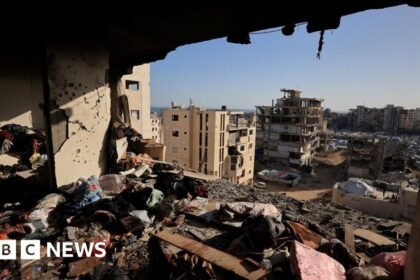
Fears are increasing over the possibility of the UNIFIL force leaving without an alternative, at a time when Israel is occupying border areas in southern Lebanon, evacuating villages, and constantly bombing the areas, while the two countries are conducting direct negotiations.

Field challenges
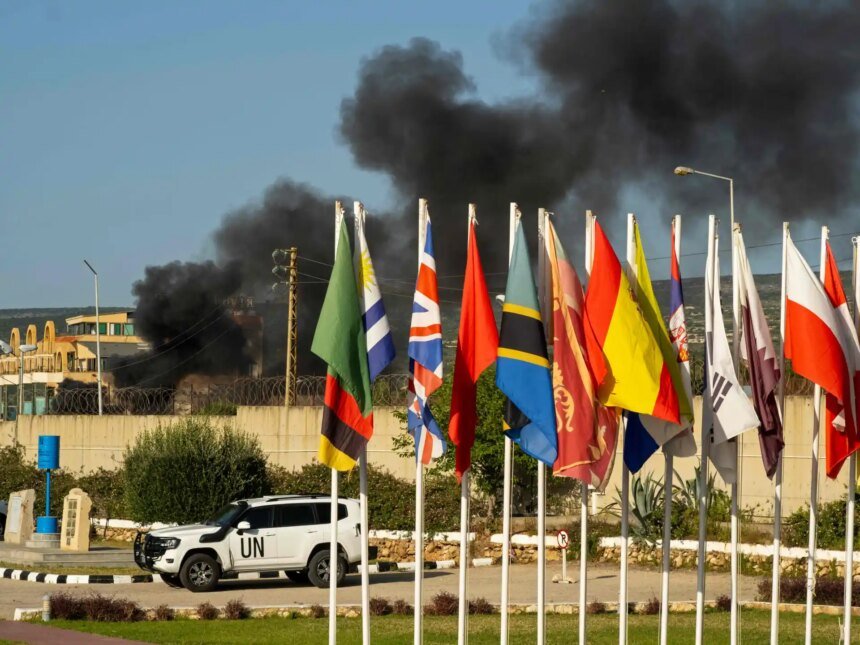
At the field level, UNIFIL is facing increasing challenges as a result of its positions and patrols being exposed to gunfire and bombing from the Israeli side during the past months, which led to injuries among its ranks, while the United Nations confirms that these incidents represent a violation of Resolution 1701 and demands that they stop.
These developments reflect the fragility of the security situation, especially in southern Lebanon, and increase the need for an international monitoring force capable of operating in a complex environment and documenting violations in an impartial manner.
International pressure
This file coincides with intense discussions within the Security Council regarding the future of the international force. A French draft was presented last year to extend the mandate for an additional period with the start of a gradual reduction that ends with an organized withdrawal by the end of 2026.
On the other hand, the United States is exerting pressure to reduce or end the mission, supported by a similar Israeli position. This trend was reinforced by previous American financial decisions that reduced funding for peacekeeping operations, in addition to positions opposing UNIFIL’s budgets, while the continuation of the force enjoys broad support from a large number of countries, including China, which stressed, along with other countries, the importance of preserving the role of UNIFIL and protecting its members.

Security Council Resolution No. 2790 previously established a transitional framework for the post-UNIFIL phase by extending its mandate one final time until the end of 2026, followed by a gradual and orderly withdrawal within one year, in parallel with strengthening the role of the Lebanese army as the sole body responsible for security in the south.
The resolution combines pressure to implement Resolution 1701, withdraw Israeli forces, and stop violations, and a call on the international community to support the capabilities of the Lebanese state and its army, reflecting an international trend towards trying to gradually end the UN mission without disturbing the requirements of stability and security.
In the face of all this, Lebanon faces difficult choices ranging from maintaining a modified international framework that guarantees the continuity of the international role, moving to alternative arrangements that are less coherent, or even facing a security vacuum fraught with dangers.
The Security Council resolution and international balances remain the decisive factor in determining the final path of this file, with its direct repercussions on the stability of southern Lebanon and on the equation of confrontation with Israel.