Published On 5/27/2026
|
Last update: 16:16 (Mecca time)
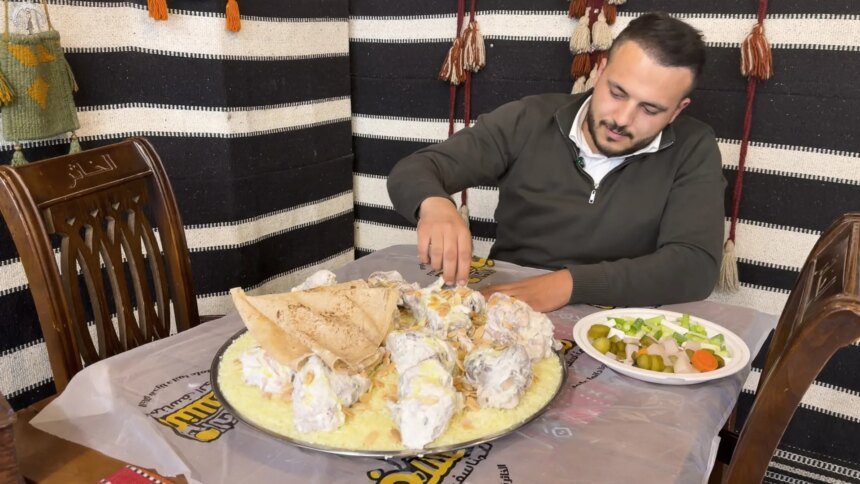
Oman – On the first day of Eid al-Adha, with homes and gatherings filled with the smell of sacrifices and Eid feasts, Mansaf tables take center stage in the Jordanian capital, where restaurants turn into real competition arenas to serve “the first Eid dish,” without which the Eid is not complete there.
Between the crowding of orders and the high demand from families, visitors and expatriates, competition is heating up between Al Mansaf restaurants, which seek this season to provide an experience that goes beyond food, to touch on Eid rituals and the meanings of generosity and hospitality rooted in Jordanian memory.
Read also
list of 4 itemsend of list
According to official figures issued by the Jordanian Ministry of Industry, Trade and Supply, in the capital, Amman alone, there are more than 50 restaurants specializing in selling mansaf, an indication of the expansion of the market and the high demand for the most famous popular dish in the Kingdom.

The secret is in the “jameed”
The owner of one of the Mansaf restaurants in Amman, Mahmoud Al-Bashabsha, told Al Jazeera Net, “The secret of the demand for Mansaf lies in its local ingredients and its taste linked to the Jordanian environment,” noting that “jameed” is the most important element in the dish, especially that made in the Karak Governorate in southern Jordan.
Jameed is made from milk after turning it into yoghurt, then churned in traditional leather bowls known as “shakwa”, before separating the butter from it and drying it under the sun after adding salt and forming it into solid balls that are later used in cooking mansaf.
According to Al-Bashabsha, mansaf is associated with Jordanian social occasions, as it is served at weddings, funeral homes, and official banquets, which makes these occasions a permanent space for promoting restaurants and enhancing their presence among people.
Umm Muhammad Al-Malhama, a woman from Karak Governorate, says that making jameed and local ghee is not just a seasonal profession, but rather part of the heritage of Karak families and their daily lives, adding that women in the villages begin preparing at the beginning of spring, taking advantage of the abundance of sheep’s milk and wild herbs that give jameed its distinctive flavour.

She pointed out in her interview with Al Jazeera Net that “Al-Karki jameed is known for its quality because sheep graze on natural grasses such as those known in Jordan as “dandelion and chamomile,” stressing that cleanliness, choosing fresh milk, and patience during the manufacturing stages are the secrets of the product’s success and quality, pointing out that many families still depend on selling jameed and ghee as a basic source of income that helps them cope with the burdens of living.
Al-Malhama explains that it annually prepares quantities of local jameed and supplies it to a number of mansaf restaurants in the capital, Amman, which prefer the Karaki jameed because of its quality and distinctive flavour, especially during the wedding and banquet seasons when the demand for Jordanian mansaf increases.
As for the owner of the competing restaurant in the capital, Laith Al-Bashabsha, he confirmed to Al-Jazeera Net that Jordanian expatriates “are looking for Mansaf restaurants upon their arrival in the country,” considering that the use of original local ingredients, such as jameed, ghee, and local meat, constitutes a major factor in attracting customers despite the high costs and intense competition in the market.
Jordanian mansaf is distinguished by its local natural ingredients, whether local meat, shrak bread, or jameed made from sheep’s milk, in addition to the herbs used to give it its special flavour.

Mansaf is on the UNESCO list
The presence of mansaf is not limited to being a popular dish, but rather represents an essential part of the Jordanian cultural identity, which strengthened its position after it was included on the Representative List of Intangible Cultural Heritage in the United Nations Educational, Scientific and Cultural Organization (UNESCO) in 2021, within a file titled “Mansaf in Jordan: A Celebration Feast and Its Social and Cultural Connotations.”
The mansaf dish is prepared by cooking lamb meat with jameed milk, then pouring it into the “sidr” covered with shrak bread, and layers of rice and meat are placed on top of it, while the head of the carcass is in the middle of the dish, indicating generosity and appreciation for the guest.

Fears of tampering with the history of Mansaf
Heritage and history researcher Hazem Saleem says that the Jordanian mansaf went through historical stages of development before reaching its known form today, as mansaf was originally made from lamb porridge, yogurt, and shrak bread.
Saleem explains that bulgur later became the main component of mansaf, before rice entered the dish in the late nineteenth century after it spread in the region.
He points out that mansaf is not just a meal, but rather “an integrated social ritual with its own standards and associated hospitality protocol,” explaining that the way mansaf is presented reflects the guest’s status and appreciation, as the head of the sacrifice is sometimes presented to the chief guest as the highest level of honor in traditional Jordanian culture.

Saleem expressed his fears of “tampering with mansaf” and deviating from its traditional image, noting that some restaurants began serving mansaf in ways that he described as “commercial and distorting the heritage identity,” by selling it in small cups or presenting it in a way similar to pizza or even sushi.
He believes that these methods – despite their modern marketing character – make mansaf lose its social and cultural symbolism associated with hospitality rituals and group gatherings, and transform it from a traditional dish that carries connotations of generosity and solidarity into a mere quick meal subject to market considerations and modern food fashions.
Despite the recent transformations in the restaurant sector, Mansaf still maintains its traditional rituals, whether in the method of preparation, presentation, or even eating it with the right hand on large social occasions.