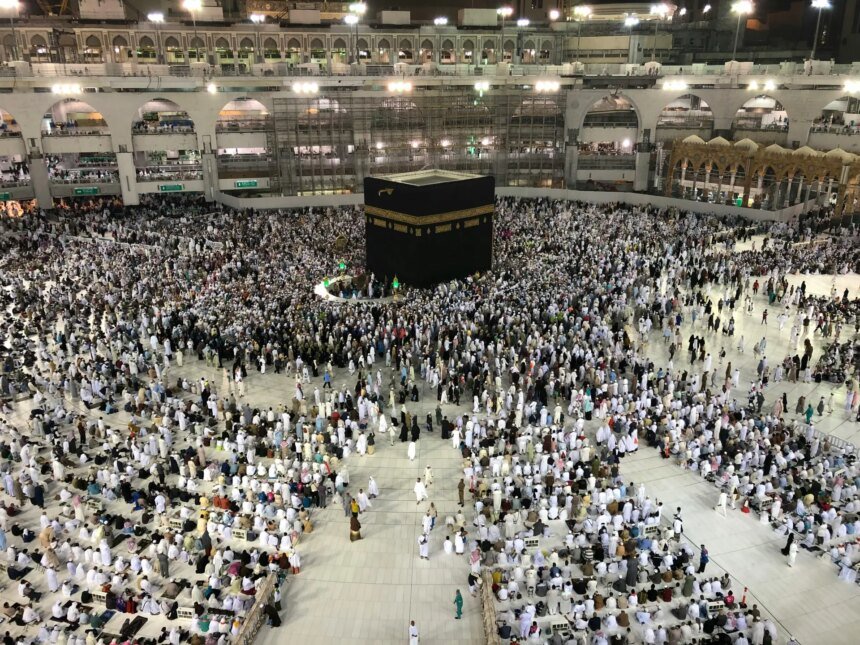
The Hajj season will come upon us in great days that God has sworn by, according to the words of the majority of commentators, to bless deeds and push all Muslims, whether those who have arrived in Mecca or those who remain in their homes, to shake off the dust of laziness and turn to God by being sincere in religion to Him, sincerely, hoping for His pardon and forgiveness.
Pilgrims gather in Mecca from all over the world, as this blessed spot included 1,673,230 male and female pilgrims in the year 1446 AH/2025, according to the Hajj Statistics Bulletin published by the General Authority for Statistics in Saudi Arabia, and it is expected that the number of pilgrims will reach a number close to that.
The Hajj obligation requires pilgrims from all over the world to gather on Mount Arafat, gathering in a specific spot within a limited time frame under the often intense sunshine.
This crowding of people and the physical effort exerted while standing in Arafat or walking to perform other Hajj rituals (tawaf, sa’i, and stoning the Jamarat) result in some daily injuries, which are mostly concentrated in the lower extremities (legs and feet), especially in Mina and Arafat, which disturbs their peace during the performance of one of the greatest acts of worship, which it is enough for a Muslim to perform once in his life for him to return after that as his mother gave birth to him.

Daily foot injuries during the Hajj season
A cross-sectional survey study published in 2021 in the Journal of Pain Research showed that 80% of the pain felt by pilgrims was concentrated in the lower extremities in general, with foot and ankle pain predominant at a rate of 38.34% within the sample included in the survey (1,715 male and female pilgrims).
Pilgrims also suffer from foot pain resulting from fractures, sprains, or the appearance of blisters, in addition to ulcers and infections caused by infection for those with chronic diseases, especially high blood pressure and diabetes, which constitute 40% and 49%, respectively (according to a prospective cross-sectional study conducted by researchers from the Kingdom of Saudi Arabia in 2021), and they are among the most prominent causes of complications of foot injuries during Hajj.
Researchers and specialists attribute the large number of foot injuries during the Hajj season to the long distances that pilgrims walk on hard, hot surfaces in the midst of crowded crowds. Pilgrims cover a distance ranging between 5-15 kilometers per day, in addition to walking with bare feet, which is very common among pilgrims. Foot pain among them is also linked to wearing uncomfortable shoes, and obesity also plays a role in increasing the incidence of foot pain.
How do long walks and heat affect foot injuries?
Walking for long hours on hard ground – such as asphalt – causes an increase in the feeling of pain as a result of the repetitive pressure on the feet with every step they hit the ground. As the pressure builds up over the days by taking thousands of steps, the rate of stress placed on the feet increases, increasing the chance of them being exposed to painful injuries.
As for wearing inappropriate or uncomfortable shoes, long walks in them lead to an increase in the rate of friction between the shoe and the skin over the protruding areas of the bone, which raises the risk of the emergence of painful ulcers and blisters. The matter is made worse by the high temperatures and humidity that contribute to softening the skin, making it weak and scratched easily and becoming vulnerable to infections and inflammations that find in these conditions a suitable environment for their reproduction and growth.
Foot ulcers are classified among the most common problems in the feet during Hajj, and according to a cross-sectional study published by researchers in the Umm Al-Qura University Journal of Medical Sciences in 2023, the incidence of blisters was 61.5%, while the percentage of skin ulcers in the foot was 20.9%. This leads to skin irritation and sloughing due to direct friction between the foot and the shoe or due to walking without shoes, as intense sweating in the feet and friction between the skin and the shoe during long walking increases the rate of foot ulceration. Blisters and ulcers, especially when wearing flip-flops or sandals, which constitute the largest percentage of pilgrims’ foot choices.
According to the researchers, the spread of chronic diseases among pilgrims, such as high blood pressure and diabetes, and the increase in the rate of obesity, had a clear role in increasing the rate of foot amputations, especially with the need for many of them to carry personal bags while moving, which increases the rate of vertical weight on the feet.

Tips to prevent daily foot injuries during Hajj
In order to ensure that the pilgrim enjoys unparalleled clarity of mind that is not distracted by urgent physical pain, he must follow some recommended instructions to avoid common foot pain, so he is cut off from this world on a day in which God will brag to the angels of heaven about His servants on earth who have come to him from all walks of life seeking His pardon.
The most prominent tips and instructions unanimously agreed upon by studies to avoid foot pain during Hajj:
- Make sure to choose comfortable and appropriate shoes that protect the entire feet, and avoid narrow shoes that increase pressure on the skin or wide shoes that increase the rate of friction. It is also preferable to choose shoes that contain thick, flexible protection layers designed to absorb shocks facing the foot while walking, thus reducing friction and pressure.
- Avoid walking without shoes, regularly clean and sterilize your feet, and avoid moisturizing creams, which researchers have proven quickly cause the skin to heat up and weaken its endurance. Thus, contact with skin moisture accelerates thermal changes that increase the risk of blisters and skin ulcers forming.
- Using lubricants made of Vaseline or silicone before wearing shoes, as applying a thin layer of these lubricants every 3 to 4 hours on the skin in the forefoot, the sole of the foot, or on the heel reduces the rate of friction with the skin by 30% to 40%, thus reducing the appearance of blisters and subsequent skin abrasions, according to a comprehensive review published in 2024 in the Journal of Athletic Training to evaluate various means of protection for the feet while walking long distances. The review included Marathon runners, military recruits, and mountain climbers are conditions very similar to Hajj walking.
- Treat the foot as soon as any disturbing symptoms appear and do not neglect them, especially for diabetics. A cross-sectional study conducted by researchers from Saudi Arabia and published in 2024 showed that less than 10% of pilgrims seek health care after developing foot problems, due to their preoccupation with worship, which may worsen the condition later, as blisters and ulcers may turn into boils, indicating infection and inflammation accompanied by redness and heat in the affected skin.
- Regularly taking medications for people with chronic diseases such as high blood pressure and diabetes to maintain blood pressure and sugar levels within their normal limits, and taking good care of the feet of diabetic patients, specifically by inspecting and monitoring them well during and after walking, so treatment can be done early before the problem worsens.