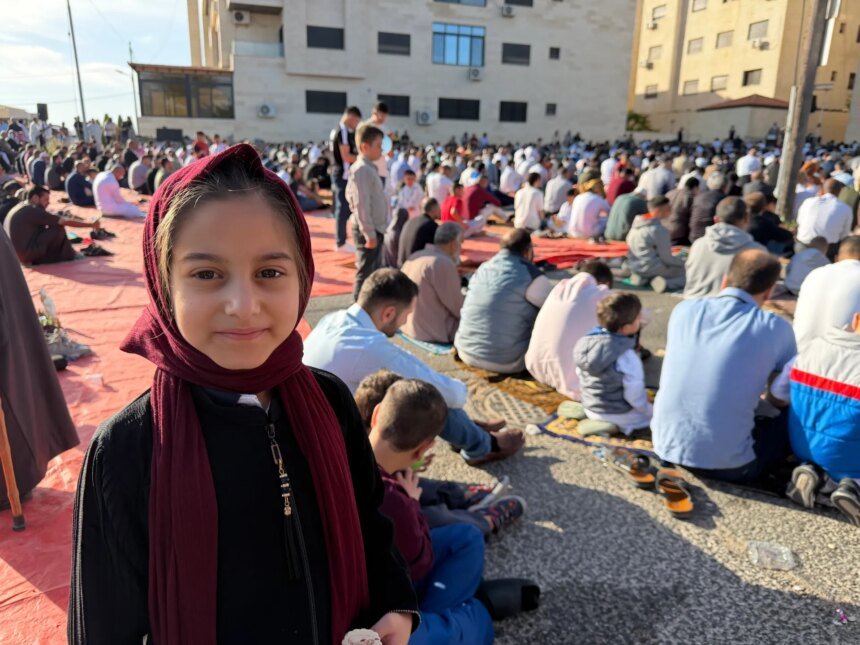
Oman – During the current Eid al-Adha season, Jordanian markets are witnessing a state of caution in spending, in light of the high costs of living and the decline in purchasing power among a wide segment of citizens, which has been clearly reflected in the customs of families associated with the Eid, starting with buying sacrificial animals and meat, passing through clothes and sweets, all the way to family visits, Eid gifts, and going out with the children.
Although many families maintain the social and religious character of Eid, this is now done within the framework of careful financial calculations and continuous attempts to balance the “joy of Eid” with economic capacity.
Read also
list of 3 itemsend of list
In the markets for selling sacrificial animals, activity appeared to be less than usual, according to what traders and livestock breeders confirmed, who pointed out that the rise in prices led many families to hesitate before purchasing or to search for less expensive alternatives.
Sheep trader Ali Al-Sakarna told Al-Jazeera Net that the demand this year is more towards municipal sheep compared to “imported” Romanian sheep, despite the high prices, explaining that citizens are planning early to secure the price of the sacrifice, and some of them may start saving their value months before the Eid.
He added that citizens are making a “careful calculation” before making a purchase decision, in light of the current economic conditions and the rise in prices in general.
Poor turnout
For his part, sheep merchant Abdullah Al-Abadi told Al Jazeera Net that demand is “weak,” stressing that many employees and people with limited income are no longer able to buy sacrificial animals as before, especially after their prices rose to about 250 and 300 dinars (about 352 and 423 dollars), compared to much lower prices in previous years.
As for sheep trader Tayseer Al-Sakarna, he said in a statement to Al Jazeera Net that prices did not differ much from last year, noting that the shortage of local livestock and the rise in imported prices contributed to the pressure on the market.
In the same context, the butcher Muhammad Nabil told Al Jazeera Net that the rise in the prices of sacrifices was reflected even in the method of distributing meat to the needy, as he noticed that the owners of the sacrifices began to reduce the amount of meat in each portion with the aim of distributing it to a larger number of needy people.

Purchasing austerity
In the clothing markets, the scene was similar, as commercial activity registered less boom than previous seasons, with a clear trend towards reducing purchases and focusing on the basics only.
Clothing merchant Mohamed Attia told Al Jazeera Net that the demand this year is weak compared to Eid al-Fitr and previous years, explaining that many families are trying to preserve a large portion of their salaries to cover the expenses of the remainder of the month.
The head of the Clothing and Textile Merchants Syndicate, Sultan Allan, said that trade activity began to gradually improve as Eid approached, especially in the last days and the “Arafat Pause,” but he expected sales to be lower compared to the last Eid al-Adha.
Allan added in a statement to Al Jazeera Net that merchants presented competitive offers and prices to encourage citizens to buy, in light of their fear of not selling seasonal goods.
Citizen Fares Al-Zyoud said in a statement to Al-Jazeera Net that he had to buy only one piece of clothing for his children, while reusing clothes that he bought on Eid Al-Fitr and that are still in good condition, in an attempt to achieve a balance between making the children happy and reducing expenses.

Home alternatives
In the sweets sector, many families have resorted to preparing homemade Eid cakes and pastries instead of buying them ready-made, as a way to reduce costs.
Sweets merchant Ahmed Al-Sulaihat told Al-Jazeera Net that the demand for buying sweets and chocolate was less than expected, despite the offers put forward by the shops, indicating that many families preferred making sweets at home as it is more plentiful and has a family character.
On the other hand, the head of the Syndicate of Restaurant and Sweets Owners, Omar Awad, explained to Al Jazeera Net that the demand for sweets during Eid al-Adha remains lower than last Eid al-Fitr, because a large portion of spending goes toward purchasing sacrifices and other Eid requirements.

Reducing expenses
Family visits and going out with children no longer take place at the same pace as in previous years, as families are looking for less expensive options to maintain the Eid atmosphere, without placing additional burdens on their budgets.
Jordanian citizen Muthanna Ahmed told Al Jazeera Net that many families have come to depend on free events and places provided by official agencies and municipalities, especially for families with several children, because going to parks and private entertainment places has become expensive.
Ahmed pointed out that families are trying, despite economic pressures, to preserve children’s feelings of Eid joy because of its social and religious importance.
Financial caution has also been reflected in “Eidiyat” (cash gifts given to children on Eid), as some families have begun to reduce their value or limit it to children only, in addition to reducing banquets and hospitality and limiting themselves to simple family visits, which is the approach followed by citizen Muhammad Nassar.
Nassar told Al Jazeera Net that everyone has come to understand the difficult living conditions, without any blame between family and relatives, in light of a state of cooperation and collective adaptation to economic pressures.

Uneven recovery
While restaurants witnessed limited activity before Eid, workers in the sector expected activity to improve during the Eid holiday, with increased reliance on ready-made meals and delivery services due to the large number of family visits and movements.
The head of the Syndicate of Restaurant and Pastry Owners indicated that the Eid holiday (which continues until the day after tomorrow, Saturday) may contribute to revitalizing the sector, especially with some families heading out, or reducing the time that housewives spend preparing food.
As for the tourism sector, the head of the Jordanian Hotel Association, Hussein Hilalat, said in a statement to Al Jazeera Net that occupancy rates witnessed differences between the regions of the Kingdom, as Aqaba recorded occupancy rates exceeding 95%, compared to lower rates in the Dead Sea and Amman, which reflects the continued ability of some families to travel and entertain, while another segment is moving towards reducing spending.
Despite the difficult circumstances, Al Jazeera Net’s field interviews show that Jordanian families are still trying to preserve the social and religious character of Eid al-Adha, albeit in simpler and less expensive ways.
The alternatives that families resort to vary between participating in sacrifices, reducing the amount of meat and hospitality, reusing clothes, making home sweets, and relying on free activities, in an attempt to maintain the “form of Eid” and bring joy to children within the available capabilities.