When Winston Churchill used the expression “special relationship” to describe the ties between the United Kingdom and the United States, he did not realize that this term would last for decades, between a power that had been the superpower since the beginning of the nineteenth century and another that had inherited the title from the middle of the twentieth century until now.
The relationship between the two “superpowers” is not just a military alliance or political rapprochement, but rather a complex historical extension that combines language, culture, and interests, and often goes beyond circumstantial differences.
With the visit of King Charles III to the United States this week, this relationship is back in the spotlight, at an international moment fraught with tension, against the backdrop of the escalation of the American-Israeli war on Iran, and the differing views within the Western camp on this matter, as well as other matters.
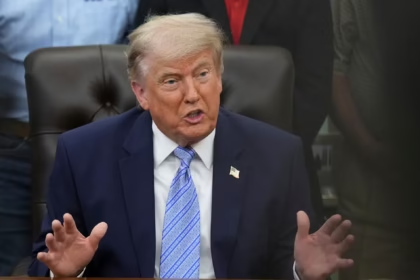
“What a beautiful British day.” This is how Trump described last Tuesday, when he received King Charles at the White House, at the beginning of his four-day visit.
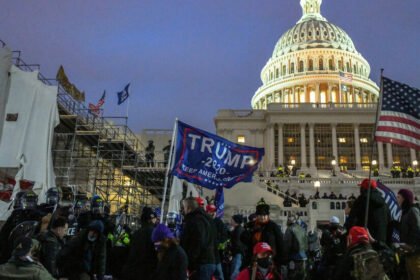
The next day, the King of Britain stood under the dome of the Capitol to deliver a speech to Congress, the first since his mother, Queen Elizabeth II, in 1991, apparently to say that the wisdom of kings seeks to restore relations and address the impulses of presidents.
The speech, which coincided with the 250th anniversary of the independence of the United States from “Great” Britain, was remarkable. The king did not speak as an opponent who came to blame, but rather as a guide trying to tame the impulse of the “rebellious daughter” before she fell into the trap of blind force.
As for the visit as a whole, it may appear on the surface to be protocol in nature, but at its core it carries deep political messages related to the future of the historic alliance between the two sides of the Atlantic.
Therefore, American newspapers expressed their belief that Trump in his speech was not keen to celebrate the special relationship as much as he was trying to restore it or at least prevent its further erosion.
What do you think, dear reader, that we first go on a tour of history, both good and bad, before we return to follow the present and wonder about the future?

History: A mother and her daughter
We will begin with distant history, where the relationship between the two sides began from the womb of painful separation, where the American colonies were an integral part of the British imperial body, before Crown taxes ignited the spark of revolution to begin the stage of independence that lasted since July 4, 1776 AD.
Revolutionaries from 13 British colonies in North America fought an eight-year war for independence during the time of King George III, Charles’ fourth grandfather, before independence was declared after the Crown was accused of seeking to establish a tyrannical system of rule.
Britain was the mother who gave her daughter language and culture, as well as the legal system, parliamentary structure, management style, economy, and even the map of global influence later.
Over the course of a century, the relationship began to gradually transform from “open hostility” to what can be described as “forced partnership” and then “great reconciliation.”
Leadership transition: from London to Washington
Then came the twentieth century, which was not only the scene of two world wars, but was also a time of a radical shift in the international balance of power. Before World War II, Britain sat on the throne of the global system, leading a vast empire, and controlling the aspects of the international economy and trade. However, the war exhausted it economically and militarily, opening the door to the rise of the United States as a new superpower.
What is interesting about this transformation is that it did not take the form of a traditional conflict between rising and declining powers, but rather came closer to a quiet “hand over and hand over.” London realized the limits of its ability, and chose to position itself as a strategic partner for Washington, rather than its competitor, and since then, a special equation was formed: American leadership of the international system, supported by British experience and a historical network of influence.
But what are the most prominent stages of reconciliation that transformed colonial hostility into an existential partnership?
- “The Great Delivery” (1895-1915):
In one of the cleverest maneuvers in history, Britain decided not to fight the American rise, but to embrace it. London handed over the “keys of the seas” safely to Washington, ensuring that its cultural and political influence remained under the emerging American umbrella. - “The Trenches of Destiny” (1941): World War II melted the two countries into one crucible. Here the term “special relationship” was born, coined by Churchill.
- The Five Eyes Alliance, away from the limelight, established the highest levels of intelligence cooperation between the two countries, which made the military secrets of both sides of the Atlantic an open book between them.
The alliance includes America and Britain, along with Canada, Australia and New Zealand, and is considered one of the strongest information exchange networks in the world. - The third station: “Gunpowder Partners (1991-2026) From the liberation of Kuwait to the invasion of Iraq to the current crisis with Iran, Britain remained the “first ally” that gives American moves international legitimacy and political cover that no one else has.
However, this reconciliation was not without stages of tension and turmoil, the most prominent of which can be summarized in three stages:
- “Suez Stab” (1956): The cruelest episode in London’s history, when Washington forced British forces to withdraw from Egypt. This is a moment that some consider a kind of “forced weaning” for Britain, and confirmation for the last time that America is the sole master in the new world order.
- “Vietnam and the Cold Divorce” (1966): When Britain refused to send its soldiers to fight in the jungles of Vietnam, which led to a deep diplomatic rift, it proved that London had the ability to say “no” when it felt that the American ally was rushing toward suicide.
- The era of Trump and rebellion: (2024-2026) which can be described as a clash between Keir Starmer’s sobriety and Trump’s clamor, as London rejects the policy of “eradicative strikes” against Iran, and fears the collapse of NATO, which necessitated the intervention of the “Crown” as a final moral reference.
Perhaps this history was in the background of the British King as he visited Washington and delivered his speech in Congress. Even with his focus on common interests, there were hidden references to issues that caused division between the United States and the United Kingdom, especially with regard to global affairs.
The visiting king said that the two countries “cannot rely on the achievements of the past,” in light of the war with Iran testing their relationship. He also called for a “firm determination” to support Ukraine against Russia, praising at the same time the North Atlantic Treaty Organization (NATO), whose position Trump has repeatedly weakened.
Protocol reprimand
American newspapers picked up on what they considered to be the focus of the speech, which was that even though Charles did not mention Trump by name or attack him explicitly, he inserted into his speech a series of polite messages that seemed, taken together, closer to a high-protocol rebuke of an American president who is shaking – in the eyes of many – the traditional rules of governance and the foundations of the transatlantic alliance.
Therefore, these newspapers considered that what was striking was not what Charles said about the common history and ancient reconciliation between the two countries, but rather his choice to remind from within Congress that the executive authority is subject to checks and balances.
The Washington Post, for example, says that even if the king avoided the details of the recent tension, he painted a picture of America’s role in the world that contradicts in its essence what Trump is pushing for. He pointed to an independent judiciary, balanced institutions, and diverse societies that are a source of strength, not a place of weakness.
Politico also believed that invoking the Magna Carta was not an innocent historical detail, but rather a clear reminder that even the king himself is not above the law, at a moment when Trump’s opponents accuse the president of expanding executive authority at the expense of other institutions.
The Wall Street Journal read in part of the speech a quiet appeal to the American president not to turn his back on the transatlantic alliance, nor on the special relationship with Britain, at a moment when fears are growing in London of a more isolated American mood and less concern for Europe.
As for the New York Times, it considered that Charles inserted his messages into a speech that was characterized by calm and discipline, but did not leave much doubt about their meaning.

But what has pushed the relations of the two allies towards tension recently?
The clash over Iran’s strategy
According to the New York Times, London is still angry about Trump’s pressure on Britain to engage in the war against Iran, and the British have not forgotten his repeated attacks on Prime Minister Keir Starmer nor his mockery of British aircraft carriers.
Since Trump returned to power, his isolationist policies and hard-line stances toward European allies have become clearer, and then the war on Iran came, placing a new barrier between Washington’s quest to adopt more severe stances versus London’s quest to maintain a delicate balance between deterrence and diplomacy, benefiting from its extensive relations in the region.
The future of NATO
Trump repeatedly questioned the feasibility of the alliance and the commitment of its members, and threatened to withdraw the security umbrella from countries that do not pay their share, which sparked anger in Europe in general, and Britain, which considers NATO the cornerstone of its national security, and was forced to play the role of mediator trying to dissuade Trump from undermining the alliance from within.
Ukrainian file
Britain, along with the rest of the European powers, insists on continuing to support Ukraine in the face of Russia, while Trump repeatedly threatens to cut off aid to Ukraine or force it into a peace agreement that Russia is satisfied with.
Tariff and trade war
Trump returned to the “America First” policy by imposing new customs duties that included vital British exports, which frustrated London’s hopes of concluding a major “free trade agreement” that it had aspired to since its exit from the European Union (Brexit), which made some in Britain feel that the “American friend” had become a difficult trading partner.
Washington is pressuring London to take “more aggressive” positions and completely disengage economically from Beijing, while Britain is trying to balance its relationship with China (as a huge trading partner) with a commitment to an alliance with Washington, which has created a state of tension and constant American pressure.
Missing chemistry between leaders
There is an ideological and personal gap between Keir Starmer, who has a legal and institutional background, and Trump, who is famous for his impulsiveness and volatility.

Signs of optimism
Although the British King’s visit to the United States has not yet ended, there are many early indicators that indicate that it will achieve success in its main mission.
Take, for example, what Trump said explicitly yesterday, Wednesday, when he considered that his good relationship with King Charles of Britain would likely contribute to improving matters with British Prime Minister Keir Starmer.
In this regard, American newspapers were keen to highlight Trump’s reaction to Charles’s speech before Congress, and quoted him as saying that it was wonderful, before adding, in a tone mixed with joking and jealousy, that the king had succeeded in making the Democrats stand up for him, which he himself had not succeeded in achieving.
Trump also spoke playfully about his mother’s admiration for Charles, who was originally from Scotland, noting that she died in 2000 at the age of 88, one year after the death of her husband, Fred Trump.
Trump also recalled the old anthem, “God Save the King,” which encouraged Charles to move forward toward what observers considered an attempt to moderate the American rush in the Ukraine and Iran files.
Trump said that his ancestors and King Charles’ ancestors, if they were alive now, “would have been overwhelmed by feelings of admiration and pride that the Anglo-American revolution in the field of human freedom is still standing to this day,” as he described it.
As for the bilateral meeting between Trump and Charles in the Oval Office, the former described it as a very good meeting, before describing the British king as a “wonderful person.”
The few indications that have emerged indicate that the king – who is 77 years old – may have succeeded in using soft power to drag Trump, who is two years older than him, into his own court, in light of fears across the world about the repercussions of recent American policies.
Some believe that the king’s hand may help give Trump a logical justification to reverse some of his policies without losing his prestige, considering that Washington, no matter how powerful it is, will always need the wisdom and sobriety of Mother Britain.
In light of the profound transformations that the world is witnessing, some of which appear to take precedence over others, especially with regard to the rise of new powers and the relative decline of Western hegemony, Britain and the United States may find themselves forced to redefine their relationship and strengthen their ties, in a way that suits a more pluralistic international reality.