Published On 4/29/2026
The Cold War left a legacy that cannot be erased by a peace treaty or regime change: a legacy that is buried, somewhat silently, at the bottom of the Norwegian and Kara Seas. We are talking here about the wrecks of Soviet nuclear submarines, veritable time bombs that today, after decades of reassuring oblivion, are beginning to show signs of structural collapse. Like any unpaid debt, interest is now being paid at radiation rates that defy logic.
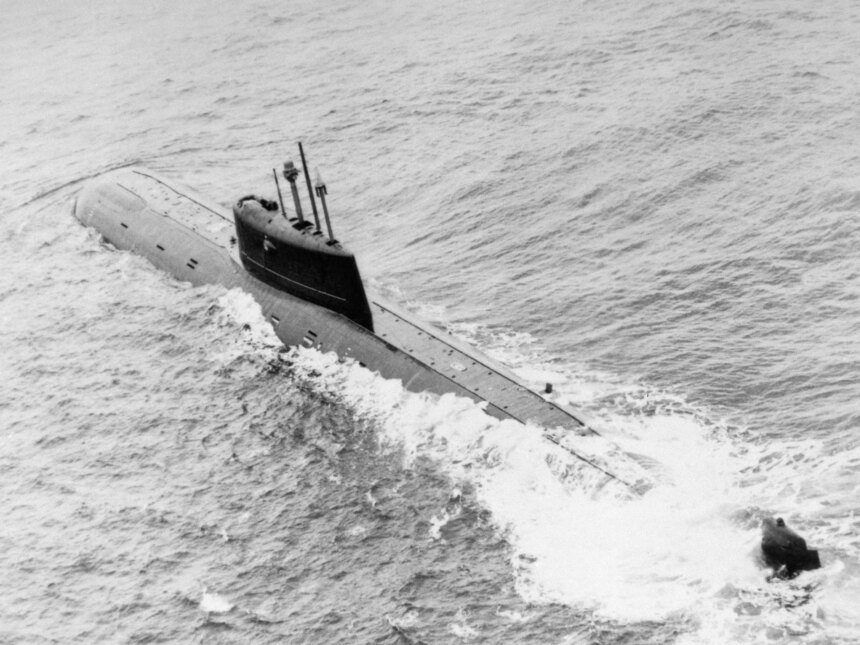
For years, the official doctrine – the product of a hasty dismantling economy – was simple: at a depth of 1,600 metres, cold and pressure would freeze any danger. The case of the K-278 (Komsomolets) submarine, the pride of Soviet titanium engineering, which sank in 1989, is a notable example of this.
However, recent discoveries have dashed the optimism: levels of cesium-137 near its wreck were found to be 800,000 times higher than normal. This is not just a statistical prediction, but a reality. Radiation does not stay at the bottom. Rather, it uses what scientists call the “hidden scale.” Phytoplankton absorb particles, small fish feed on the plankton, concentrating the material, and large predators (such as cod and tuna) arrive at our tables carrying radiation levels thousands of times greater than the levels of the surrounding waters.

“Hidden” inventory and the collapse of the Soviet Union
The real problem is not just what we know, but the “hidden inventory.” After 1991, the Russian nuclear fleet became an instant financial disaster. Without funding to dismantle nuclear facilities, the Arctic becomes a logical dumping ground (from a direct costs perspective):
- More than 17,000 containers of radioactive waste were dumped into the sea.
- Deliberately sinking 19 ships loaded with nuclear materials.
- Dumping 14 nuclear reactors into the ocean.
In economic terms, this was a transfer of risk across generations. It would have been better to bury the problem today than to finance it with a non-existent ruble and hope that “tomorrow” will not come. But tomorrow has a specific date, which is the nuclear transition window (2040-2060). In less than twenty years, the hulls of the ships of the 1960s will reach a state of structural collapse. It will crash, releasing radioactive and toxic material back into the sea.
Economic repercussions: fishing and markets
Here the focus shifts from the environment to the economy. The North Atlantic fishing sector transports millions of tons of fish and billions of euros. If consumers’ perceptions of “radioactive fish” change, the entire fishing sector could collapse at lightning speed.
The estimated cost of recovering the six most dangerous shipwrecks exceeds $300 million. It’s a number no one seems willing to mention, preferring the old “neither confirm nor deny” strategy, as Arctic ice retreats and currents change, making ancient sediments more fragile.