Published on 4/30/2026
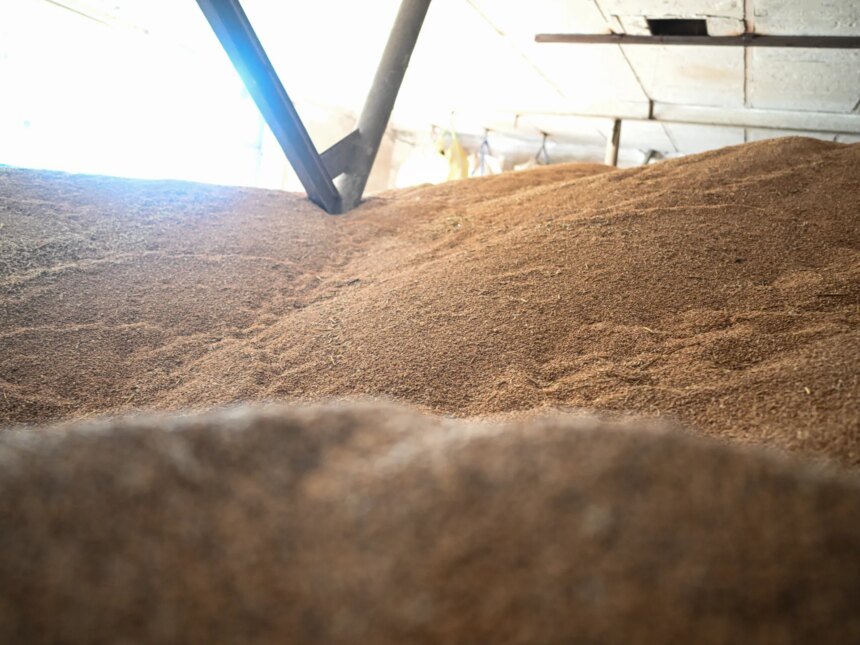
In his article published in Haaretz, Israeli writer Gideon Levy turns the incident of Israel’s purchase of wheat that the newspaper says was looted by Russia from Ukraine into a broader criticism of the state of political and moral superiority that he sees as governing Israel’s behavior toward the world.
Levy, who is known for his sharp stances against the occupation and the policies of Israeli governments, opened his article with a hurtful question: “How is it possible that Israel always sides with the wrong side of history, justice, and humanity?”
Read also
list of 3 itemsend of list
The writer recalls what he calls “the cunning of the state” in Israeli memory, recalling the seizure of five ships from the port of Cherbourg from France (the theft of five missile ships in 1969), when “Israel glorified its heroes who committed this theft,” without anyone asking: “Is this how a state governed by the law behaves?” Here, in his opinion, the theft becomes part of a national myth that is not subject to accountability.
Hence, he links the looted wheat to what he considers to be a recurring Israeli logic, which is that anything is permissible when it comes to Israeli interests. This tendency appears, according to the article, in the response of Foreign Minister Gideon Saar, who did not discuss the essence of the accusation, but rather “blamed Ukraine for not submitting its protest in a timely manner.”

Levy then moves on to ridicule a familiar Israeli mechanism, predicting that “Ukraine will be accused of anti-Semitism” as well as “European countries angry at the war of extermination in Gaza,” referring to the use of this sword to confuse critics and push them into silence.
What is more profound in the article is linking this policy to the idea of Jewish superiority, as the writer says that Israel is saying to the world: “We are the forest in your villa,” in a sarcastic reversal of an old Israeli saying about being a “villa in the forest.”
The writer is not satisfied with history, but rather links the incident to a broader record, which is supplying “the worst regimes in the world with weapons” and refusing to join central international treaties such as the Rome Statute, the Mine Ban Treaty, and the Arms Trade Treaty.
Then he asks: “As for the Chosen People, what does this have to do with international treaties?” In this sense, Levy does not treat the wheat crisis as a separate scandal, but rather reveals through it a psychological and political structure that believes that Israel is above accountability. It buys “wheat stained with blood,” rejects international restrictions, and brandishes anti-Semitism when criticizing it, and then returns to saying that “the entire world is against us.”