Published On 4/27/2026
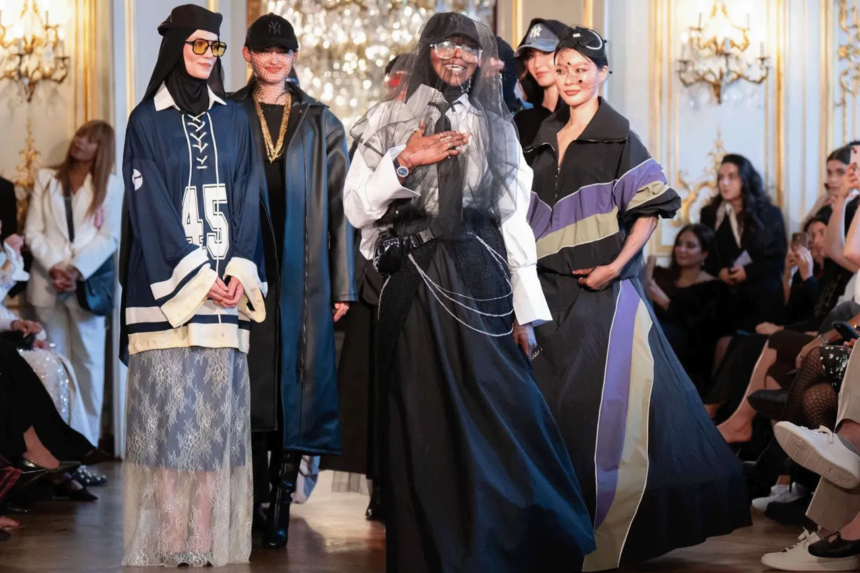
In a historic palace not far from the Champs-Élysées, loose designs, long lines and brightly colored headdresses came together in an unusual scene on the Parisian fashion platforms.
Modest fashion week in the heart of Paris
According to a BBC report, Paris hosted the first Modest Fashion Week in an event that brought together about 30 designers from different countries, presenting a new vision of fashion that blends religious identity and modern trends.

From the hijab to the beret
The fashion shows witnessed the presence of designs inspired by nature, dominated by pink colors and calm tones, in addition to bolder pieces that were closer to street fashion preferred by younger generations.
Wide coats, shiny fabrics and headwear coordinated with French beret hats emerged, in an attempt to merge local cultural symbols with the features of modest fashion.

The organization of this event comes in a context that carries significance beyond the world of fashion, as France is one of the most controversial European countries regarding religious symbols in the public space.
It has prohibited the wearing of the hijab in public schools for more than two decades, and in recent years it has expanded the restrictions to include abayas within educational institutions, as part of its adherence to the principle of “laïcité,” which separates religion and state institutions.

Loose clothes and pink colors under the lights of the Champs-Élysées
Despite this context, participants in the event saw that holding a modest fashion week in the heart of Paris reflects a gradual shift in perception of this style of fashion, which is no longer seen only as a choice linked to religious identity, but rather a growing trend within the global fashion industry.
According to specialized research estimates, global spending on the modest fashion sector is set to exceed $400 billion in the coming years, in a market that is no longer limited to Muslim female consumers, but has begun to attract broader segments from various religious and cultural backgrounds, driven by the increasing demand for loose clothing and designs that combine comfort and elegance.

Burkini on the fashion catwalk
The offers were not limited to daily and special occasion fashions, but also extended to modest swimwear, the “Burkini,” which is still the subject of widespread controversy in France. It is forbidden to wear it in most public swimming pools, while it is allowed on beaches, in a paradox that reflects the continuing tension between freedom of clothing and public policies.

For a number of young Muslim women who attended the event, the show was not just a fashion event, but a symbolic moment that, in their view, signaled a broader space for acceptance and representation within French society, and the growing presence of an identity that has long been placed at the center of political and cultural debate in the country.
Between the catwalks and identity discussions, it seemed that “Modest Fashion Week” in Paris was not just a passing event in the world of fashion, but rather an occasion that reposed an old question in a new form: Can fashion turn into a space for expressing diversity in a country whose religious symbols are still controversial?