Published On 4/26/2026
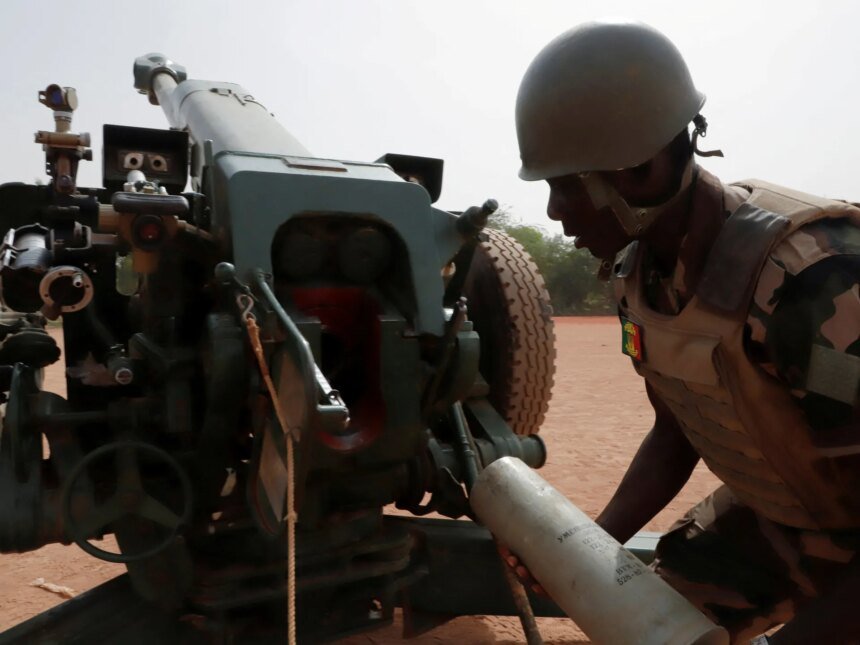
Malian Defense Minister Sadio Camara was killed in an attack by Al-Qaeda’s Jamaat Nusrat al-Islam wal-Muslimin, supported by Tuareg militants, on his residence at the Kati military base near the capital, Bamako, while the separatist Movement for the Liberation of Azawad announced its control of the main city of Kidal in the north.
The Group to Support Islam and Muslims, along with the Tuareg rebels, claimed responsibility for the coordinated attacks that began yesterday, Saturday, in the vicinity of the capital, Bamako, in gold-producing areas and other places across Mali, in one of the most daring operations by the rebels in their campaign against the army-led government.
The sound of gunfire in the town of Kati indicates that the fighting is continuing for the second day, despite the army’s announcement to re-impose its control.
What is happening in Mali specifically, what is the reason for these attacks, and what are the rebels’ goals?

What happened?
A UN security memo reported “simultaneous complex attacks” on Saturday evening in Kati near Bamako airport and in cities and towns in the north, including Mopti, Gao and Kidal.
The army initially said it had been attacked by unidentified “terrorist” groups in several places.
Videos on social media showed convoys of armed men on trucks and motorcycles moving through the empty town streets of Kati, as residents watched in fear.
Other clips in the cities of Kidal and Gao in the north of the country also showed an exchange of gunfire in the streets and bodies lying on the ground.
Expert Ulf Leising, head of the Sahel Program at the German Konrad Adenauer Foundation, described what happened as the largest coordinated attack in years.
What did the government say?
Government spokesman Issa Ousmane Coulibaly said that 16 people were injured and that the situation was under complete control in all areas that were attacked. A night curfew was also imposed for 3 days.
Later, security sources reported that the Minister of Defense and second man in the ruling military junta in Mali, Sadio Camara, died of severe injuries as a result of a suicide attack that targeted his residence in the city of Kati.
The Foreign Minister accused neighboring countries, without naming them, of supporting “terrorist groups,” adding that foreign powers outside the region were also involved, but he did not provide evidence of that.
What caused the attacks?
Mali is being ravaged by insurgencies led by groups affiliated with Al-Qaeda and the Islamic State, as well as a separatist insurgency in the north. These movements have different goals in Mali:
- The separatist movement of Azawad
The Tuareg-linked movement has been fighting for years to seek the establishment of the state of Azawad in northern Mali. The movement removed security forces from the region before a 2015 peace deal collapsed, paving the way for some former rebels to integrate into Mali’s army.
The movement claims full control of Kidal, a major city in the north of the country, after recent attacks. It also claims control over several sites in the Gao region, in the north.
On Sunday, Agence France-Presse reported that rebels in the movement had reached an “agreement” allowing the army and soldiers of the Russian African Legion to withdraw from the city of Kidal.
The group posted a video that it claims shows troops leaving amid cheers from armed men outside Camp No. 2.
- Extremist organizations
As is the case in most Sahel countries, groups affiliated with Al-Qaeda and the Islamic State in West Africa seek to control areas and subject them to their rule, relying on lightning and surprise attacks.
In September 2024, the Group to Support Islam and Muslims attacked a security forces training school near Bamako airport, killing about 70 people.
A year later, the group declared a blockade on fuel imports and attacked fuel tankers under military guard in southern and western Mali, demonstrating its ability to operate in areas where it had not operated before.
Who rules Mali?
The Malian government, headed by Assimi Goeta, took power after two coups in 2020 and 2021, with a pledge to restore security, but it faces difficulties in achieving this.
The Goeta government relies on Russian military contractors for support, and after initially refusing to cooperate with Western countries, it began seeking to strengthen its relationship with Washington.
In November 2023, the Malian army regained control of the city of Kidal, the stronghold of the Tuareg rebellion, with the support of fighters from the Russian paramilitary group Wagner, ending more than a decade of Tuareg control.
But the latest attacks indicate a possible escalation in the insurgency that began in 2012.

What are the international community’s responses?
The United Nations called for an international response to “acts of violence and terrorism” in the Sahel region of West Africa, while the organization’s Secretary-General, António Guterres, expressed grave concern over reports of attacks in several locations across Mali, and strongly condemned the acts of violence.
The United States also condemned the “terrorist attack”, affirming its solidarity with the Malian people and government. A State Department statement said that the United States stands with the people and government of Mali, stressing its continued support for efforts aimed at achieving peace, stability, and security in the country and the region.
The US Embassy in Mali urged its citizens to remain where they are and avoid heading to Kati and Modibo Keita International Airport in Bamako. Advice was also issued to Britons not to travel to Mali.
In turn, the German embassy in Bamako issued a statement addressed to German citizens in the country, saying that the situation is not clear. She added that the airport was closed and advised citizens to go to safe places and avoid the city area.