In an expected step, Iran presented a new proposal for negotiations with the United States of America through Pakistani mediators, amid faltering efforts to hold a second round of direct negotiations in Pakistan.
The new proposal is based on separating the files: ending the war and opening the Strait of Hormuz first, and postponing the nuclear negotiations until a later stage, according to what the American website Axios reported.
But does Washington accept this separation? What distinguishes this proposal from the previous one? Why does America insist on linking everything to the nuclear file?
What is the new Iranian proposal?
Axios, citing an American official and informed sources, revealed that Iran has presented, through Pakistani mediators, a new proposal aimed at reaching an agreement to reopen the Strait of Hormuz and end the war, while postponing negotiations related to the nuclear program to a later stage.
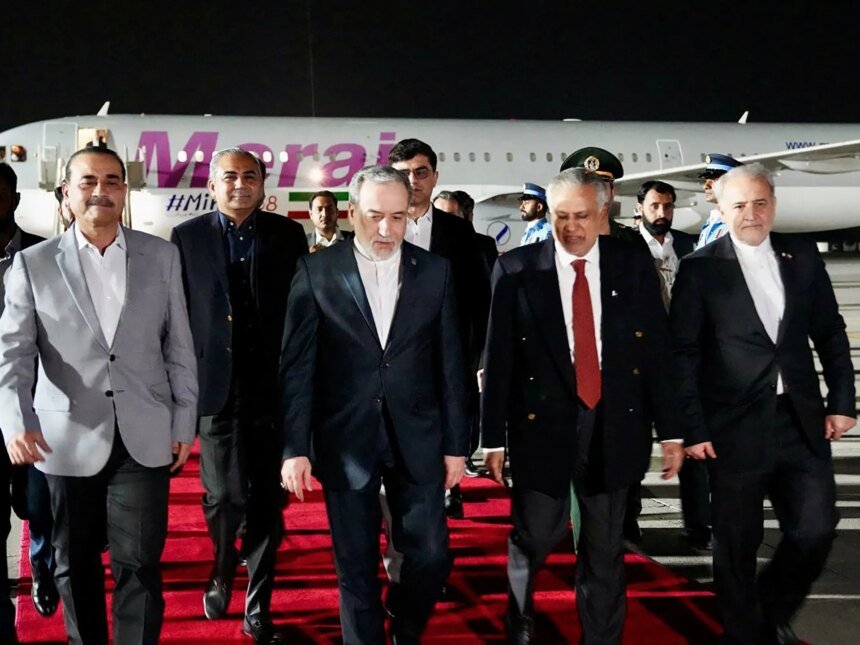
According to the sources, the new proposal was discussed during the visit of Iranian Foreign Minister Abbas Araqchi to Pakistan, and it focuses on addressing the Strait of Hormuz crisis and the American naval blockade as a priority.
The sources add that the proposal indicates the possibility of extending the ceasefire for a long period, or reaching a permanent agreement to end the war, with nuclear negotiations starting at a later stage after the reopening of the strait and the lifting of the blockade.
In statements to Al Jazeera, Dr. Hussein Royoran, a researcher specializing in regional issues from Tehran, detailed the Iranian plan by saying that it “consists of three stages and comes from the womb of negotiations in Islamabad”:
- The first stage: resolving the issue of war and ending the aggression completely, not just extending the ceasefire.
- The second stage: Opening the Strait of Hormuz as America wants as a priority and deciding it.
- The third stage: the nuclear issue. Royoran explained, “Iran said that it is possible to get rid of 60% uranium by converting it to 20% for use in hospitalization.”
He pointed out that “these three steps have their counterparts on the Iranian side, such as lifting sanctions on Iran, the fines (compensations) demanded by Iran, and Iranian funds that have been frozen since the beginning of the Islamic Revolution.”
How is this proposal different from the previous one?
The fundamental difference lies in the separation of files and prioritization.
While the previous proposals linked everything to the nuclear file – as Washington insists – the new proposal says: Let us solve the Strait crisis first, and then talk about the nuclear issue later.
According to Axios, Araqchi explained to the mediators that “there is no consensus within the Iranian leadership regarding the demands of US President Donald Trump regarding enriched uranium,” stressing that the proposal aims to overcome these internal divisions.
There was nothing from the Iranian side denying or confirming the submission of this proposal, but Mehr Agency quoted Araghchi as saying that excessive American demands caused the negotiations to fail to achieve their goals, and that Pakistan played an important role in mediation within the Iranian-American negotiations, and therefore “consultation and review of the current situation was with our friends in Pakistan,” as he described it.
The Iranian News Agency also quoted the Presidency of Parliament as saying that all pillars of the regime are “united against the enemy” and that there is no disagreement between them.
In statements made by Araghchi in Moscow ahead of his talks with his Russian counterpart and President Vladimir Putin, he said that safe passage through the Strait of Hormuz is an important global issue.
The American position: “Uranium first”
According to Axios, the Pakistani mediators presented the Iranian proposal to the White House, but “it is not clear that the United States is willing to study it.”
Axios reported that Trump will hold an emergency meeting today, Monday, in the White House Situations Room to discuss the new Iranian offer and war options.
A White House spokeswoman said that these deliberations fall within “sensitive diplomatic discussions,” stressing that the United States “does not negotiate through the media.”
She added that President Trump stressed that “the final decision rests with Washington,” and that “any agreement will not be concluded except in what serves the interest of the American people first,” reiterating that the United States “will not allow Iran to possess a nuclear weapon.”
On Al Jazeera, Adolfo Franco – a strategic analyst in the Republican Party – said from Washington that “the devil is in the details,” adding, “What is clear at the present time is that all matters and issues are linked to the issue of uranium that Iran possesses, and all other issues – whether reopening the Strait of Hormuz or lifting sanctions – are part of the negotiations, but all of that is linked to the issue of uranium.”
Does America accept postponing the nuclear talks?
Franco believed that “the positions of the two countries are far from each other so far,” pointing out that “all other matters are easy and can be dealt with and resolved if the basic knot that led to the outbreak of this war (the nuclear file) is solved.”
He added, “Yes, the negotiations may lead to a comprehensive, comprehensive agreement, but we cannot go to the second rule before we go beyond the first rule, as in the game of tennis.”
Regarding the possibility of extending the ceasefire, Franco said, “I believe that the United States will be open to an extension, but not permanently,” citing two reasons, one of which is Iran’s continued uranium enrichment, and the other is that “extending the ceasefire indefinitely will enable Iran to rebuild its forces in a way that enables it to strike more distant targets,” he said.
Academic and expert in Middle East politics, Dr. Mahjoub Al-Zwairi, confirmed that “when President Donald Trump stopped America’s commitment to the nuclear agreement with Iran in 2018, the reason for this was the existence of what he describes as a bad agreement,” explaining that “the essence of what Trump is thinking about is another agreement, but with fewer details regarding the nuclear program.”
It seems that the issue of the Iranian missile program has declined in the list of American priorities, and this is what Al-Zwairi explains: “There are two reasons for America and Israel to back down from the request to destroy the Iranian missile program:
- The first is that America and Israel said that they had destroyed hundreds of missile bases, and therefore they would undermine their credibility in victory if they kept the file on the negotiating table.
- The second is that Iran said it was not subject to negotiation.”
What are the Iranian demands?
According to Royoran, every American demand has its counterpart on the Iranian side, and the list of Iranian demands includes: lifting sanctions on Iran, as well as the fines (compensations) that Iran is demanding as a result of the war against it, and thirdly, the release of Iranian funds that have been frozen since the beginning of the Islamic Revolution.

The role of mediators
On April 11, Pakistan hosted a round of talks between the two parties that did not lead to an agreement, after which the US President announced the extension of the truce with Iran at Pakistan’s request “until Tehran presents its proposal,” without specifying a period for that.
It seems that traditional Omani mediation is also returning to the forefront, as the Sultan of Oman, Haitham bin Tariq, received the Iranian Foreign Minister, and discussed with him developments and ways to resolve the crisis, which indicates that Muscat’s expected role in the next stage is “essential,” especially with regard to the Strait of Hormuz file, according to Al Jazeera’s correspondent in the Sultanate of Oman, Samir Al-Nimri.
Al-Nimri pointed out that the Sultanate of Oman played the role of “the main channel for negotiations between Washington and Tehran over a period of about 16 years, whether in the nuclear file that led to the 2015 agreement or in the files of the exchange of detainees and frozen funds.”
Future outlook
It is not yet known how Washington will react to the new Iranian proposal, but observers believe that it faces fundamental obstacles, most notably Washington’s insistence on linking everything to the nuclear file.
While Iran – according to the new proposal – wants to separate the files and resolve the Strait crisis first, America insists that uranium is the key.
Therefore, the most important question remains: Which comes first, the enriched uranium file, as Washington says, or the Strait of Hormuz, as Iran sees it? Between these two issues, negotiations take place.