Published On 4/26/2026
|
Last update: 07:06 (Mecca time)
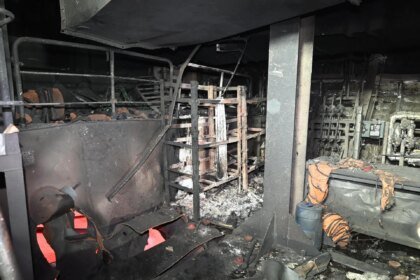
An Al-Qaeda affiliate and Tuareg rebels claimed responsibility for simultaneous and coordinated attacks across Mali on Saturday, described as one of the boldest operations launched against the Malian army-led government.
Helicopters flew over the Malian capital, Bamako, and around the international airport, and it was reported that clashes were recorded at a nearby military base, which prompted the American Embassy and the British Foreign Office to advise their citizens to remain in their homes.
The Malian army stated that it killed hundreds of attackers, and repelled the attack that targeted multiple sites in and near Bamako, adding that a large-scale combing operation was underway in the capital, the neighboring city of Kati, which includes military barracks, and other areas in the gold-producing country.

“The largest coordinated attack in years”
A group calling itself “In Support of Islam and Muslims” affiliated with Al-Qaeda issued a statement claiming responsibility for the attacks in Kati, on Bamako airport, and in areas further north, including Mopti, Sevare and Gao.
The group also reported that Gao, another city in the northeast of the country, was captured in an operation coordinated with the Front for the Liberation of Azawad, a Tuareg-dominated rebel group.
The spokesman for the Front for the Liberation of Azawad, Mohamed Mouloud Ramadane, had previously stated on social media platforms that the Front’s forces had taken control of a number of sites in Gao, and one of the two camps in Kidal.
The Movement of Azawad has been waging a rebellion for years to establish the state of Azawad in northern Mali, and had previously expelled security forces from the region, before a 2015 peace agreement, which later collapsed, paved the way for the integration of some former rebels into the Malian army.
Ulf Leising, head of the Sahel Program at the German Konrad Adenauer Foundation, described the attacks as “the largest coordinated attack in years.”
Airport closure and countries warn their citizens
The American embassy in Mali urged its citizens to remain where they are, while advice was issued to Britons not to travel to the country, as the army said it had been subjected to attacks by unidentified “terrorist” groups in several places.
The airport was closed, flights were returned or cancelled, and one traveler indicated that people who tried to reach the airport south of Bamako found themselves almost inside a combat zone amid heavy gunfire and the flight of helicopters.
Eyewitnesses and residents reported hearing two powerful explosions and continuous gunfire near the main Kati military base, north of the capital, Bamako, while others reported that the house of Defense Minister Sadio Camara in Kati was destroyed in the attack.
“The choice of goals was interesting.”
The choice of targets was striking, said Henny Nsibia, senior West Africa analyst at the Armed Conflict Location and Event Data Project, adding that Kati and Bamako were “at the heart of the regime” while Kidal, the site of a symbolic military victory in 2023, was central to the “government’s narrative of taking back control.”
“Jama’at Nusrat al-Islam wal Muslim and the Front for the Liberation of Azawad launched coordinated attacks in Mali, and numerous positions of the army and the Africa Corps (a Russian armed organization) remain targeted in Kati, Kidal, Sevare and Gao,” Mintel World Africa researcher, Mintel World Research Company, Hasret Kargin, summed up the situation.
He pointed out that “the chances of regaining cities like Kidal and Gao without military air support are very slim,” adding, “Air support will be a decisive factor for both sides.”
Night curfew
The army said on Saturday that the situation was under control, but a resident of Gao, a major military center in the north, reported hearing a loud explosion and an exchange of gunfire between soldiers and rebels around noon.
The source added that by the evening, a cautious calm prevailed in Gao, as the governor declared an overnight curfew.
Today’s attacks indicate a possible escalation in the insurgency that began in 2012.
In September 2024, the Al-Qaeda affiliate attacked a security forces training school near Bamako airport, killing about 70 people.
A year later, the group declared a blockade on fuel imports and attacked fuel tankers under military guard in southern and western Mali, demonstrating its ability to operate in areas where it had not operated before.

External links
The Malian government, headed by Assimi Goeta, took power after two coups in 2020 and 2021, with a pledge to restore security, but it faces difficulties in achieving this.
Like its counterparts in Niger and Burkina Faso, the military government in Mali severed its relations with the former colonial power France and a number of Western countries, moving towards strengthening political and military cooperation with Russia.
The Russian Wagner Group, which has been fighting alongside the Malian forces since 2021, announced the end of its mission in June 2025, to be replaced by the “Africa Corps,” which is directly under the Russian Ministry of Defense.
The military junta pledged to hand over power to civilians by March 2024, but in July 2025 it granted Goeta a presidential term for a period of 5 years, renewable “as much as necessary” and without holding elections.
On the other hand, the administration of US President Donald Trump sought to establish contacts with the three military councils, while Togo tried to lead a mediation between Western countries and these three countries that formed the Sahel countries alliance.
Since the beginning of the unrest, thousands of people have been killed in attacks inside Mali, which is rich in natural resources, while tens of thousands of Malians have sought refuge in neighboring countries, including Mauritania, in recent years.
Last Monday, the Malian Foreign Minister said that neighboring countries and foreign powers support “terrorist groups,” but he refrained from mentioning countries by name.