Published on 4/25/2026
In the wake of intense air strikes that claimed the lives of civilians and an explicit acknowledgment by the Israeli occupation army of eliminating members of the Palestinian police in the Gaza Strip, the field escalation is entering a phase aimed at striking what remains of civilian stability in the Strip.
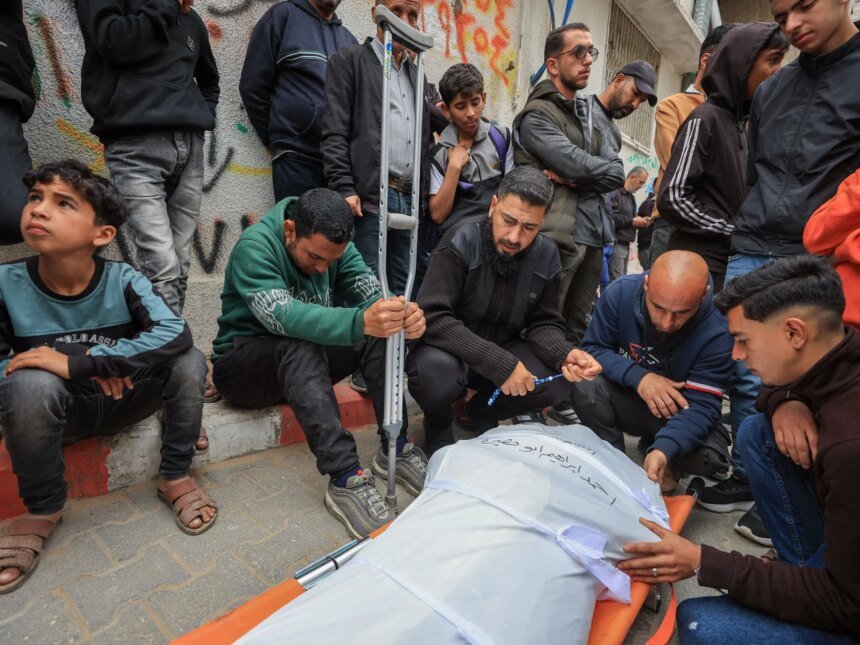
Thirteen Palestinians were martyred in the Gaza Strip since last Friday morning, as a result of Israeli raids that targeted various locations in the Strip.
The Gaza Civil Defense reported that 8 people were killed, including a child, and others were injured, as a result of an Israeli raid that targeted a police car in the Al-Mawasi area in the city of Khan Yunis, south of the Gaza Strip.
A woman and her two children were also martyred as a result of an Israeli artillery shelling that targeted homes near Kamal Adwan Hospital, north of Gaza City.
In a third attack, an Israeli plane targeted another police car in Gaza City, killing two people and wounding two others, according to the Civil Defense.
Experts and analysts in the “Beyond the News” program dismantled the scene, as they considered that Israel intends, through these tactical and strategic targets, to disrupt any path leading to stopping the war, which puts the internal front in Gaza and the international agreements at a dangerous juncture.
According to the writer and political analyst from Gaza, Ahmed Al-Tanani, targeting police personnel and security services represents a clear Israeli desire to spread comprehensive chaos and undermine the system that manages the daily affairs of citizens.
Al-Tanani believes that the occupation is trying to normalize international public opinion with the daily killings, by justifying them with flimsy security pretexts, in order to make the Gaza Strip an unlivable environment, which forcibly pushes the population towards displacement options.
Al-Tanani also pointed out that the occupation took advantage of these operations to expand its field control, as it now devours more than 60% of the Gaza Strip’s area through “buffer zones.”
For his part, the academic and researcher on Israeli affairs, Muhannad Mustafa, suggested that the tactical goal of all these Israeli violations to implement Trump’s plan to stop the war in Gaza lies in the continuation of military operations in preparation for an “imminent broad operation” that the occupation is planning to re-impose its absolute control.
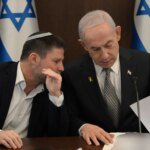
As for strategy, Mustafa confirmed that the government of Israeli Prime Minister Benjamin Netanyahu – who is wanted by the International Criminal Court – refuses to calm any front, whether in Gaza, Lebanon or Iran, because the maintenance of a state of war is the only guarantee for its continued political survival.
He pointed out that the occupation is betting on “freezing” the status quo. So that half of the sector remains occupied, with sufficient humanitarian aid prevented from entering, to obstruct any progress towards a political or reconstruction solution in the foreseeable future.
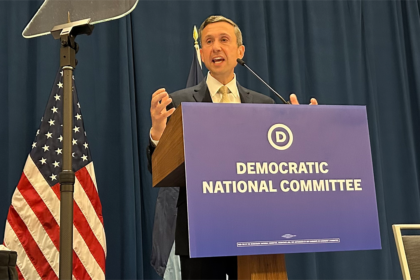
On the other hand, Adolfo Franco, a strategic analyst in the Republican Party from Washington, presented the opposite point of view adopted by circles in the American administration, considering that the stalemate in Gaza is due to what he described as “the intransigence of the Islamic Resistance Movement (Hamas)” regarding the disarmament issue.
According to Franco, the second phase of the agreement depends on any stability on the entry of international stability forces and the surrender of weapons, considering that Israel will not stop its operations as long as Hamas remains an “armed and active organization.”
Franco claimed that the occupation may be forced to undertake the task of disarmament by force if diplomatic solutions are rejected, which the Palestinian parties see as a condition aimed at imposing absolute surrender and emptying the agreement of its content.
For his part, Al-Tanani responded to confirm the resistance’s commitment to all the terms of the agreement and not to commit any violations against it, in contrast to what the Israeli occupation forces did, which did not stop their targeting since the first day of the agreed upon truce taking effect.
He also pointed out that the number of food and medicine trucks agreed upon in the terms of the agreement did not enter the Gaza Strip, as the number that arrived in the Strip did not exceed 40% of the agreed upon total, which reflects the manipulation practiced by the occupation during the last period.