Published On 4/26/2026
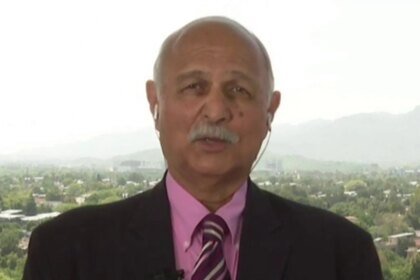
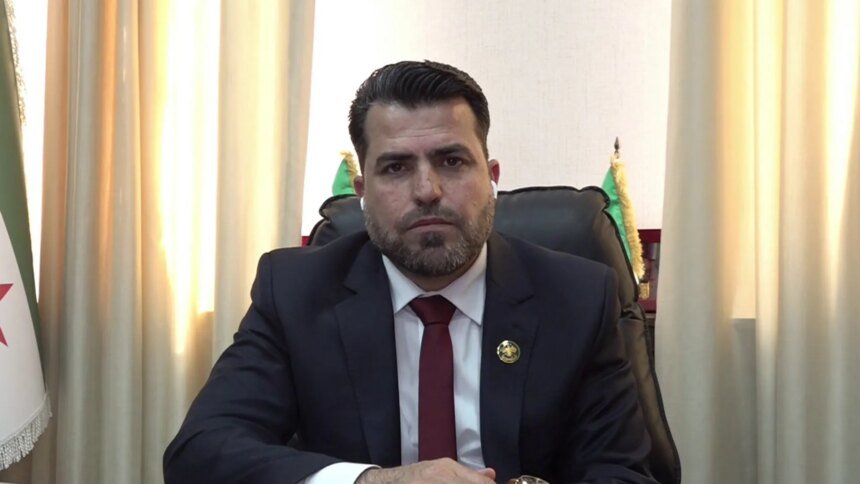
Damascus Public Prosecutor Hossam Khattab said that the Fourth Criminal Court witnessed, today, Sunday, the start of the first public trial in the presence of Atef Najib, one of the most prominent symbols of the former regime, who is accused of committing grave violations against Syrians at the beginning of the revolution in 2011.
Khattab added, in an interview with Al Jazeera Mubasher, that Najib’s appearance in the dock carries a great symbolic significance, as he is one of the first officials to give orders to shoot peaceful demonstrators in Daraa Governorate (southern Syria), noting that this trial represents the actual beginning of the transitional justice path from “the first to commit violations against the Syrians.”
He explained that the choice of the former security official to open the trials of symbols of the former regime reflects a clear approach to holding those responsible accountable for the crimes that occurred since the beginning of the events, stressing that the Syrian state and the judiciary are serious about holding accountable everyone whose hands are stained with the blood of Syrians.
He stated that the trial was held publicly to prove the transparency and independence of the judiciary, pointing out that the session also included summoning other defendants in absentia, including Bashar al-Assad, his brother Maher al-Assad, and a number of symbols of the former regime, in accordance with established legal procedures.
Atef Najib is a relative of the ousted President Bashar al-Assad. He previously served as head of the Political Security Branch in the Daraa Governorate in the south of the country, the region that witnessed the start of popular protests, where he was accused of being responsible for a campaign of repression and widespread arrests in that early stage of the revolution.
Neglected for those fleeing
The Public Prosecutor of Damascus indicated that the court granted the fugitive defendants a legal deadline to report a second time of 10 days in preparation for completing the trial in a subsequent session scheduled for the tenth of next month.
Regarding the judicial procedures, Khattab said that the case went through multiple investigation stages, which began with the competent authorities in the Ministry of Interior, before it was referred to the investigating judge responsible for transitional justice, then to the referral judge, all the way to the Criminal Court, which began its first session today, in accordance with legal principles.
He stressed that the charges against Najib include murder and shooting at demonstrators, which are acts punishable by death according to the Syrian Penal Code, noting that these trials are currently being conducted in accordance with the laws in force, with the possibility of including them within the Transitional Justice Law if approved.
Khattab pointed out that these crimes “have no statute of limitations on the perpetrator,” stressing that all those involved, whether inside or outside the country, will be served by justice no matter how long it takes, within the framework of a path aimed at bringing justice to the victims and redressing their harm.
He pointed out that the start of the trial of Atef Najib, whose name was linked to the events in Daraa, reflects an approach to starting the path of justice from the starting point of the Syrian revolution itself.