Published on 4/25/2026
|
Last update: 11:48 (Mecca time)
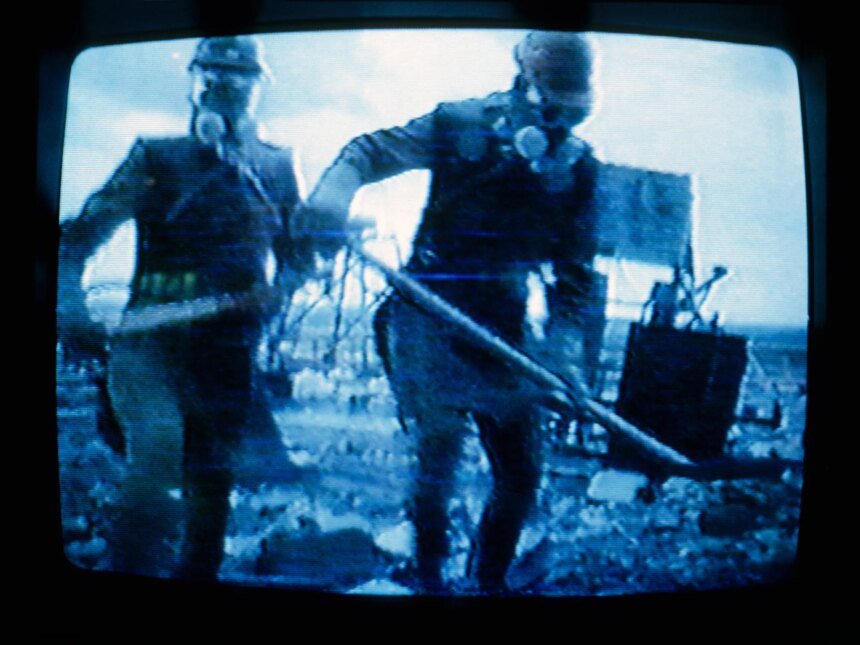
Forty years after the Chernobyl disaster, the memory of thousands of Kazakhs who were sent to the site of the explosion still lives in silence and oblivion, even though they were on the front lines of the most dangerous environmental mission of the twentieth century.
Wikipedia defines Chernobyl “liquidators” as “civilian and military personnel who were called upon to deal with the aftermath of the 1986 Chernobyl nuclear disaster in the Soviet Union, at the site of the accident itself. These liquidators are widely credited with limiting the immediate and long-term damage caused by the disaster.”
Some sources estimate the number of civilian and military personnel, including firefighters, miners and soldiers, who worked from 1986 to 1989 to contain this disaster, at about 600,000 people.
Press reports indicate that they were exposed to intense, often unmonitored, levels of radiation while building the initial cover, cleaning the site, and disinfecting the surrounding areas.
The Kazakhs played a major role in that mission. In the days following the explosion of the nuclear reactor on April 26, 1986, the Soviet authorities pushed more than 30,000 Kazakhs into the heart of the disaster, as part of what was known as “liquidators,” in a mission aimed at containing the radiation and preventing its spread to the rest of Europe.
“We did not know that we were approaching death,” one of the survivors, who was a young conscript at the time, told Le Monde newspaper, describing those moments by saying: “They told us that we were going on a clean-up mission, they did not tell us that we were entering an area contaminated with radiation. We did not see the danger, but it was all around us.”
In those early days, chaos was the headline, protective equipment arrived only late, and teams of soldiers and civilians worked long hours near the core of the collapsed reactor, where radiation levels were deadly, according to the newspaper report.
Le Monde quoted Pavel Sekula, a researcher in the history of nuclear energy in Eastern Europe, as saying: “Liquidators from Central Asia, including the Kazakhs, participated in the most dangerous tasks, such as cleaning the surfaces of Reactor No. 3 close to the explosion, an area that was highly polluted.”
But despite the seriousness of what they did, their role remained almost absent from the official narrative, compared to the symbolic images of the disaster. According to Le Monde, “We saved Europe, but no one saved us,” as one of these liquidators says bitterly: “We did not fight an army, but rather we fought something unseen. We saved millions of people from a greater disaster, but no one remembers us.”

Le Monde adds that many survivors today suffer from chronic diseases, most notably cancer, respiratory and heart diseases, in addition to profound psychological effects.
According to local medical certificates, a large percentage of those participating in the cleanup operations developed serious diseases during the following years, but the official link between these diseases and exposure to radiation is still limited in Kazakhstan.
The newspaper quotes a local doctor as saying: “The biggest challenge is not only the disease, but also proving the relationship between it and what happened 40 years ago.”

Suspended memory
In the city of Karaganda in central Kazakhstan, the Karaganda Memorial stands as a witness to that stage, where pictures and tools from the time of Soviet nuclear tests are displayed, along with testimonies about the liquidators who participated in the Chernobyl operations.
However, activists point out that official recognition is still weak, and that compensation is not commensurate with the extent of the damage.
Le Monde points out that the irony today is that Kazakhstan, which was part of the largest nuclear test in the Soviet era, is moving towards developing a new civilian nuclear program, while survivors of the past are demanding basic rights, including recognition and honor.
One of them says: “We don’t want much…just for them to acknowledge that we were there, and that we are no longer the same.”