


Published On 4/21/2026
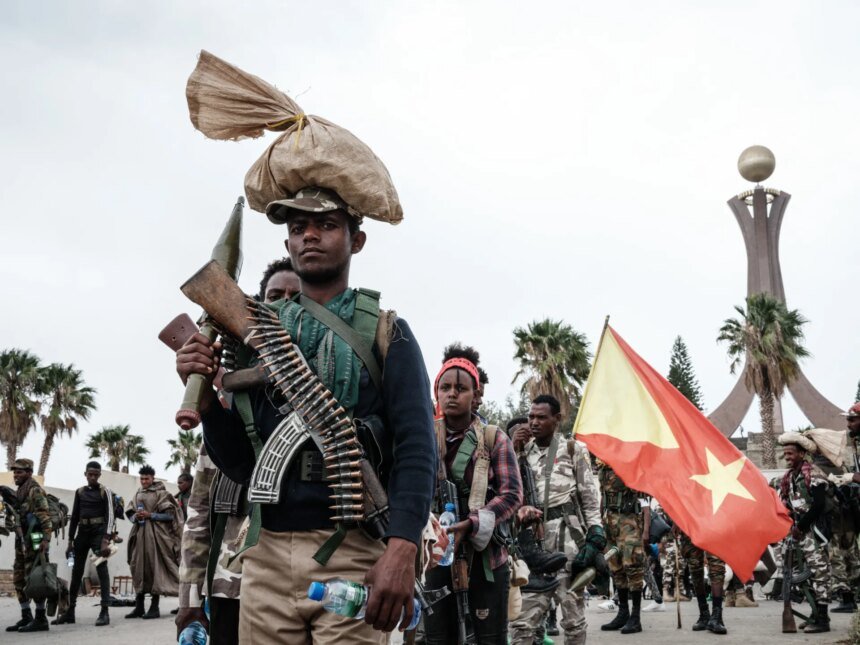
The Popular Front for the Liberation of the Tigray Region in northern Ethiopia decided to regain control of the government in the region, in a move that threatens the collapse of the peace agreement with the federal government.
In a statement, the Front accused the federal government of violating the Pretoria Agreement, provoking an armed conflict in the region, withholding the funds needed to pay the salaries of civil servants in the region, and extending the term of the head of the interim administration without consulting it.
The Front claimed that the federal government is in a hurry to wage a bloody war again, stressing that it will restore executive and legislative authority in Tigray instead of the interim administration, and will strengthen friendships with the peoples of neighboring Ethiopian regions and neighboring countries, she said.
Commenting on the TPLF’s announcement, Getachew Reda – advisor to Ethiopian Prime Minister Abiy Ahmed – said on the X platform that the TPLF’s statement constitutes a “clear rejection” of the situation established by the Pretoria Agreement after the war.

Disastrous conflict
Getachew – who served as head of the interim administration in Tigray before his dispute with the Front and his removal last year and the appointment of another in his place – called on the international community to take action to avert the risk of a catastrophic conflict erupting in a region that cannot bear it.
The federal government did not comment on the recent developments, but it had previously confirmed its commitment to the Pretoria Agreement, and accused the Tigray People’s Liberation Front of conspiring against it with Eritrea, which gained its independence from Ethiopia in 1993. The two countries fought a border war between 1998-2000, while the People’s Front and Eritrea deny cooperation between them.
Pretoria Agreement
The civil war – which took place during 2020 and 2022 between the forces led by the Tigray People’s Liberation Front and the Ethiopian army – claimed the lives of hundreds of thousands of people, as a result of direct violence, the collapse of health care, and famine, while the African Union estimates that at least 600,000 people were killed.
The war broke out after the collapse of relations between the Tigray People’s Liberation Front, an armed movement that turned into a political party that dominated Ethiopian politics for nearly three decades, and Abiy Ahmed, whose appointment as prime minister in 2018 ended the Front’s dominance.
In May 2025, the Ethiopian National Electoral Commission announced the cancellation of the registration of the Tigray People’s Liberation Front as a recognized political party.
The war ended in late 2022 with the African Union-brokered Pretoria Agreement, which called for the formation of an interim administration for Tigray to be established through dialogue between the two sides, to replace the region’s elected bodies until new elections could be organized.
Although some progress has been made in implementing the agreement, the implementation process has come under pressure in recent months, as armed clashes have erupted since January between LTTE forces, the federal army, and pro-government fighters.
The Pretoria Agreement put an end to the two-year war, which was one of the bloodiest conflicts of the twenty-first century, but this agreement now faces challenges after recent developments.
Last February, harbingers of conflict returned in Tigray, as it witnessed huge military build-ups and exchanges between the Ethiopian federal army, which besieged the region, and the Tigray forces, which spread towards its borders.


