Published on 6/28/2026
|
Last update: 23:42 (Mecca time)
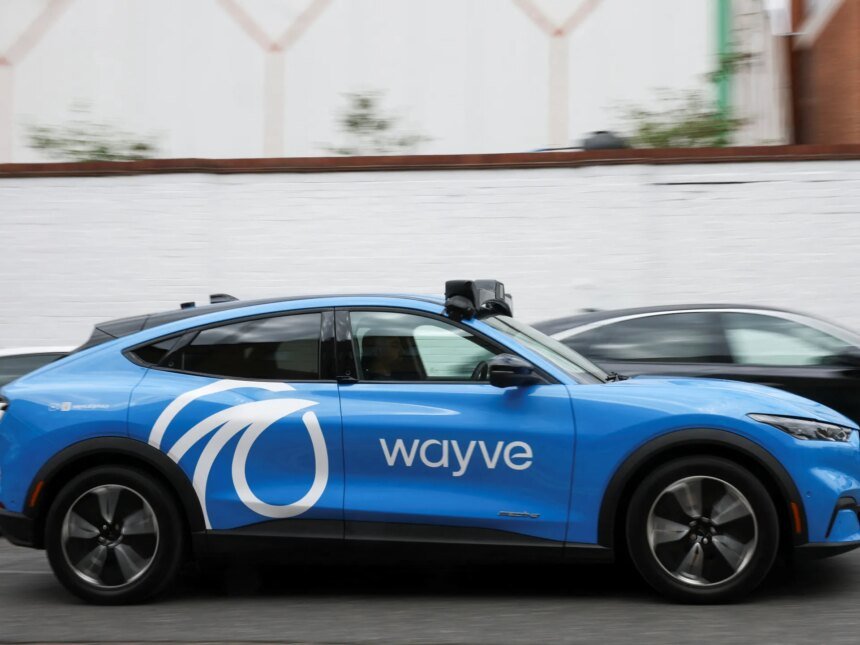
The British startup Wave has emerged as a new competitor in the race to develop self-driving car technologies, after concluding agreements with Stellantis and Nissan to provide their cars with driving systems based on artificial intelligence, in a move aimed at competing with the solutions of Tesla and Waymo, a subsidiary of Alphabet, according to the American newspaper The Wall Street Journal.
Stellantis announced that it will integrate the “smart driver” system developed by Wave into the vehicles of its brands, including Jeep, Chrysler, Dodge and Ram, starting in 2028, while Nissan is preparing to launch the technology in Japan at a date that may be sooner.
Read also
list of 3 itemsend of list
The technology allows the car to be driven on highways and within cities without the use of hands, with the requirement that the driver remain alert and ready to intervene when needed, similar to the fully supervised self-driving system developed by Tesla.
Wave is betting on selling its technology to various car companies instead of manufacturing its own cars, considering that this model gives it an opportunity to reach most global car manufacturers.
The system relies on an artificial intelligence model that learns from millions of driving videos, instead of traditional software that relies on pre-programmed rules to deal with every situation on the road.
The company believes that this approach makes the technology more able to adapt to different environments, without the need for detailed maps in advance, which it proved during tests it conducted in more than 500 cities around the world.

Huge investments
The British company has attracted the attention of investors over the past two years, as it raised $1.05 billion in 2024 with support from Japan’s SoftBank, Microsoft, NVIDIA, and Uber, before this year obtaining additional financing worth $1.5 billion, raising its valuation to $8.6 billion, with the participation of Stellantis, Mercedes-Benz, and Nissan, along with chip manufacturers AMD, ARM, and Qualcomm.
However, Wave’s approach still raises controversy within the automotive sector, as companies such as “Emo” and “Apollo Go”, a subsidiary of the Chinese company Baidu, rely on hybrid systems that combine artificial intelligence, high-resolution maps, and traditional software rules to ensure higher levels of safety.
Like Tesla, Wave also relies on cameras and radars without using expensive lidar sensors, while Stellantis and Nissan are moving to add lidar sensors to their commercial vehicles to enhance safety levels.
The British company is also preparing to launch the first test of self-driving taxis in cooperation with Uber in London this summer, in preparation for expanding the service to other cities, as part of its efforts to consolidate its position in the self-driving market in the world.