Published on 6/28/2026
An educational massacre took place at the “Jeel Al-Raed” School in the city of Al-Obeid in the Sudanese state of North Kordofan, whose vital facilities and homes have become continuous targets of artillery and air bombardment by drones belonging to the Rapid Support Forces.
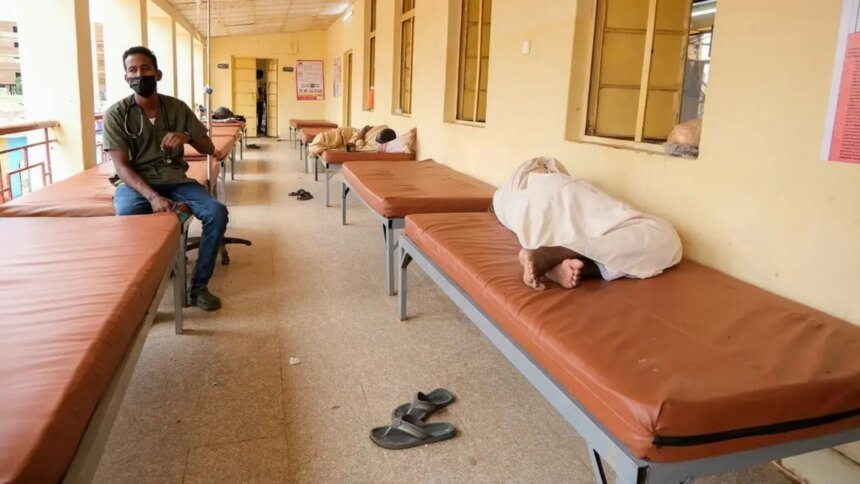
Inside the corridors of Al-Daman Hospital, the injured lay struggling with their pain and telling bone-chilling stories. From the recovery bed, one of the wounded who were struck by drone missiles, which left five civilian casualties, spoke with a strangled cry: “Where is the living human conscience? Pay attention to what is happening here… These are inhumane and immoral acts that the human conscience cannot bear.”
If the hospital includes the living injured, the “airport neighborhood” still smells of death. Just two weeks ago, the neighborhood woke up to a violent bombardment that claimed the lives of 15 civilians at once, and buried entire families under the rubble of their homes.
Eyewitnesses from the site described the massive scale of destruction in words filled with sorrow, stressing that the missiles did not miss their targets, but rather deliberately targeted defenseless citizens, who had no role in this armed conflict or any other role.
The tragedy in Al-Abyad is not limited to direct killing; Rather, it extends to the basic necessities of life, and in this context, the North Kordofan state government accused the Rapid Support Forces of deliberately “suffocating the city,” through systematic targeting of power plants and sources of potable water.
Local officials described these attempts as failed, aimed at forcibly displacing the population and emptying the city of its people, stressing at the same time that these targets – despite their cruelty – “will not hinder the continued pulse of life in the state.”
At the international level, the voices of international organizations condemned these attacks, which they described as “horrific.” The international community and humanitarian organizations held the Rapid Support Forces fully responsible for the catastrophic consequences of any potential attack that might be launched on the city in the coming days, demanding an immediate and unconditional cessation of all military operations targeting Al-Obeid.
Perhaps the greatest regret in the souls of the residents of Al-Obeid is that the military attacks on their city went beyond the physical destruction of buildings and infrastructure, leaving a deep, bleeding wound in the collective memory of the city’s people. Children were injured while holding their pens, and families disappeared under the rubble of their homes, while the world cautiously awaits the escalation of the pace of condemnation, at a time when everyone fears the expansion of this human tragedy that does not appear to be abating on the near horizon.