


Islamabad:
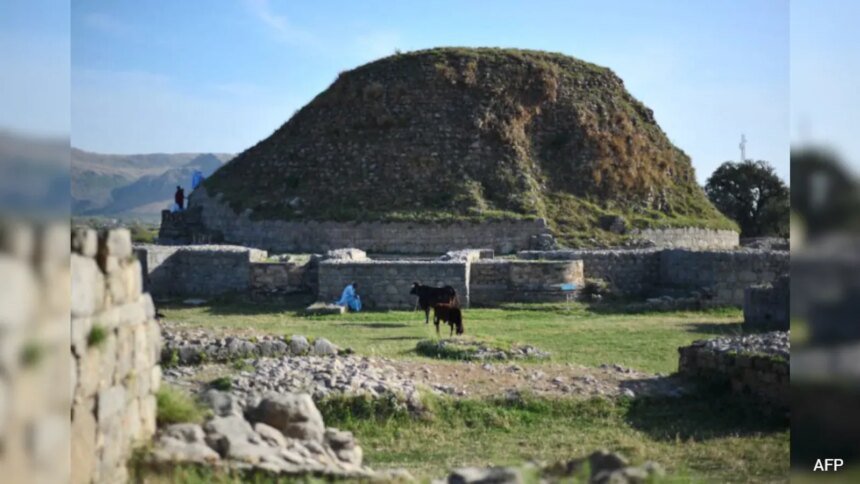
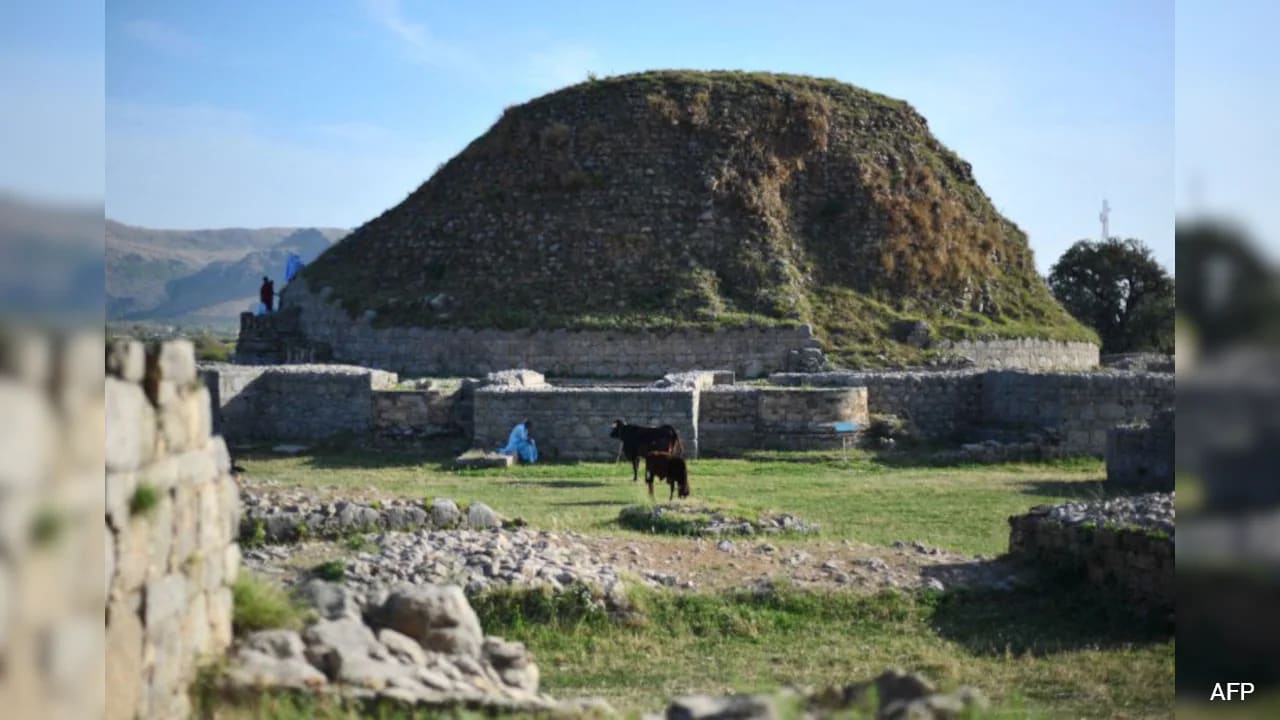
The Pakistani government’s so-called “reconstruction” work at the ancient archaeological complex of Taxila has come under scrutiny after UNESCO, the cultural arm of the United Nations, asked Islamabad to reverse “conservation work” that “undermined the integrity” of the Vedic-era site. Taxila, a UNESCO World Heritage site, is one of South Asia’s most significant mahavihara complexes.
The UN agency, in a recent meeting, warned senior government officials that if the “unnecessary interventions” at the historical sites at Mohra Moradu and Sirkap are not reversed, the complex would be placed on the agency’s “danger list,” the Dawn newspaper reported, quoting sources.
UNESCO also warned that it would not hesitate to “delist” the sites, just like it had “delisted” a World Heritage Site in Germany if the actions were not reversed.
Where Is Taxila
Taxila, located in the Rawalpindi district of Pakistan’s Punjab province, is a vast serial site that includes a Mesolithic cave and the archaeological remains of four early settlement sites, Buddhist monasteries, and a mosque and madrassa.
The ruins of the four settlement sites at Taxila reveal the pattern of urban evolution on the Indian subcontinent through more than five centuries, according to the UNESCO website.
Why UN Warned Pak
In March, a visitor shared information and pictures with Pakistan’s Permanent Delegate to UNESCO in Paris, highlighting reconstruction works by the Punjab archaeology department. The visitor observed interventions that could “affect the authenticity and integrity of the property, specifically original walls being replaced with new construction or their height being raised,” the report said.
Against this controversy, UNESCO, on June 12, conducted a joint technical visit with Pakistan‘s Department of Archaeology and Museums (DOAM) and the Ministry of National Heritage and Cultural Division to the Taxila Museum.
During the visit, the Punjab archaeology department tried to justify its stance. But the department was unable to provide the specific documentation regarding Mohra Moradu and Sirkap about the conservation and restoration works requested by UNESCO.
Later, an official told Dawn that the Punjab Archaeology Department used “cement” to erect walls of World Heritage sites. Photos also showed that fresh masonry works had replaced some ancient walls, and reconstruction was carried out to increase the height of the walls, the report said.
It was easy to discern between old stones, which are irregular in size, and modern building material, which seems polished and uniform in size, the paper reported.
“Restoration and using cement to erect walls of World Heritage sites is a serious violation of UNESCO rules for conservation of archaeological monuments of historical value. This weakens Pakistan’s position, which is endeavoring to have 24 more sites of historical importance included in Unesco’s World Heritage list since 1997,” the official said.
Subsequently, UNESCO cautioned that “unnecessary interventions” compromised the authenticity and integrity of these sites and could put them at risk of being placed on the “danger list.”
What Pak Authorities Said
Punjab archaeology department director General Malik Zaheer Abbas said that characterising the ongoing work at Sirkap and Mohra Moradu as “reconstruction” was not accurate, the Dawn reported.
“The interventions being undertaken are conservation measures based on internationally accepted conservation principles, with the primary objective of stabilising vulnerable archaeological remains, preventing further deterioration, and preserving the authenticity and integrity of these World Heritage properties,” he said.
“At present, there is no question of ‘reversing reconstruction’ because the works are conservation interventions, not reconstruction,” the official added.